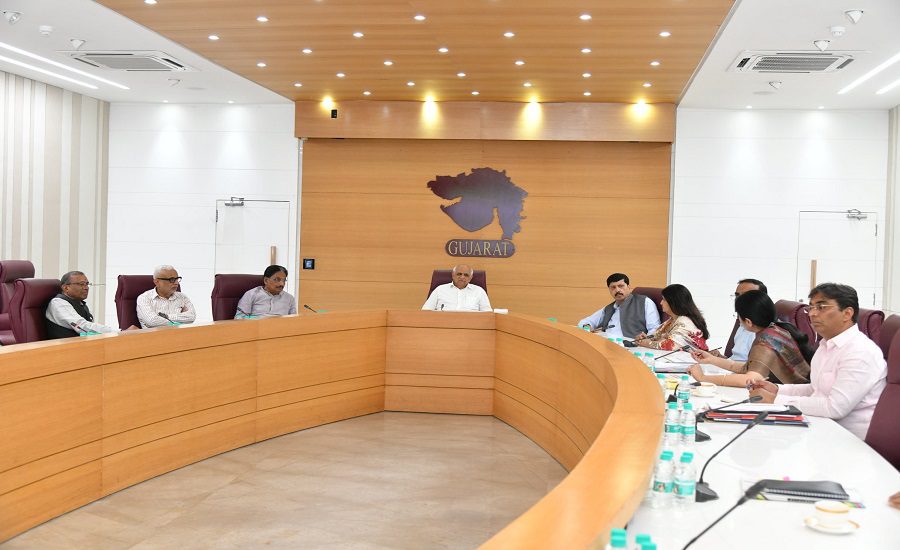
Gandhinagar: Gujarat Chief Minister Bhupendra Patel has taken a major administrative decision to improve the Ease of Doing Business and simplify government processes in the state. The decision significantly enhances the financial powers of District Collectors and District Development Officers (DDOs) for the allotment of government land and Gamtal plots.
The move is aimed at accelerating infrastructure development, industrial growth, social and public-purpose projects and rural development initiatives across Gujarat. By delegating greater decision-making powers to district-level officials, the state government expects to make the land allotment process faster, simpler and more efficient.
The decision will also reduce the need for applicants, government departments and institutions to travel to Gandhinagar for follow-up procedures, as many cases can now be resolved at the district level.
Gujarat Government Enhances Financial Powers of District Collectors
Under the new decision, the financial limits available to District Collectors for government land allotment have been substantially increased.
The revised limits include:
- State Government Boards and Corporations: The financial limit for allotting up to 2 hectares of land has been increased from ₹15 lakh to ₹1 crore.
- Central Government Departments: The limit for allotting up to 1 hectare of land for public purposes has been increased from ₹15 lakh to ₹50 lakh.
- Residential Purposes: The financial limit for land allotment for government employees and individuals has been increased from ₹1 lakh to ₹20 lakh.
- Cooperative Housing Societies: The limit has been increased from ₹6 lakh to ₹50 lakh.
- Commercial Purposes: The financial limit for land allotment through auction has been increased from ₹1 lakh to ₹5 lakh.
- Cooperative Godowns and Other Institutions: The limit has been increased from ₹3 lakh to ₹15 lakh.
The enhanced powers are expected to enable District Collectors to take decisions on a wider range of land allotment cases without requiring the same level of higher-level administrative intervention.
DDOs Get Enhanced Powers for Gamtal Plot Allotment
The Gujarat government has also increased the financial powers of District Development Officers (DDOs) for the allotment of Gamtal plots.
The revised financial limits are:
- Individual Residential Plots: Increased from ₹20,000 to ₹1 lakh.
- Cooperative Housing Societies: Increased from ₹1.5 lakh to ₹7.5 lakh.
- Milk Cooperatives, Cooperative Godowns and Rural Grid: Increased from ₹20,000 to ₹1 lakh.
The move is expected to make the allotment of Gamtal plots more efficient and reduce delays in rural areas.
Faster Government Land Allotment Expected to Boost Development
The Gujarat government’s decision is expected to speed up the allotment of government land for various development activities.
Faster land allotment can help accelerate:
- Government infrastructure projects
- Industrial development
- Public-purpose projects
- Social infrastructure
- Rural development initiatives
- Employment generation
With greater powers delegated to district-level authorities, eligible projects can move forward more quickly, potentially reducing administrative delays associated with land allotment.
Applicants Can Complete Follow-Up at District Level
One of the key benefits of the decision is the decentralisation of administrative procedures.
With District Collectors and DDOs now empowered to take decisions within the enhanced financial limits, applicant institutions and government departments will be able to complete follow-up procedures at the district level in many cases. This means applicants will no longer need to travel to Gandhinagar for every stage of the process.
Since land records and site-related information are already available at the local level, district authorities can process cases more efficiently and reduce the time required for decision-making.
Decision Aims to Improve Ease of Doing Business in Gujarat
The decision is part of the Gujarat government’s broader approach towards improving the Ease of Doing Business through administrative reforms and simplification of procedures.
By reducing unnecessary administrative layers and delegating greater authority to district-level officials, the government aims to create a more responsive and efficient system for land allotment.
The reform is particularly significant for government departments, public institutions, industrial projects, cooperative organisations and social-purpose initiatives that require government land.
Earlier Deposit of Land Premium to State Treasury
The decision is also expected to ensure that the possession price or premium amount for government land is deposited into the State Treasury at an earlier stage.
This can help streamline the financial aspects of the land allotment process while ensuring that government revenue is received without unnecessary delays.
The overall process is expected to become more efficient as district authorities will have greater powers to handle land-related cases locally.
District Collectors Get Power to Grant Extensions in Certain Cases
The government has also introduced an administrative relaxation regarding the payment of possession price or premium for land allotted to State Government Boards and Corporations and Government of India departments.
If the possession price or premium is not deposited within 90 days after the District Collector’s intimation is generated, the Collector will now have the authority to grant an extension.
The extension can be granted until the completion of the three-year tenure of the District Land Valuation Committee.
This provision is expected to reduce repetitive administrative procedures and make the process more practical for concerned government institutions and departments.
Decision Expected to Accelerate Industrial and Employment Growth
The enhanced financial powers of District Collectors and DDOs are expected to have a wider impact on development activities across Gujarat.By making government land allotment faster, the state government aims to facilitate quicker implementation of infrastructure, industrial and social projects.
The reform could also contribute to employment generation by helping industrial and development projects move forward without prolonged administrative delays.Overall, the decision reflects the Gujarat government’s continued focus on administrative decentralisation, procedural simplification and improving the ease of doing business while strengthening development at the district and local levels.