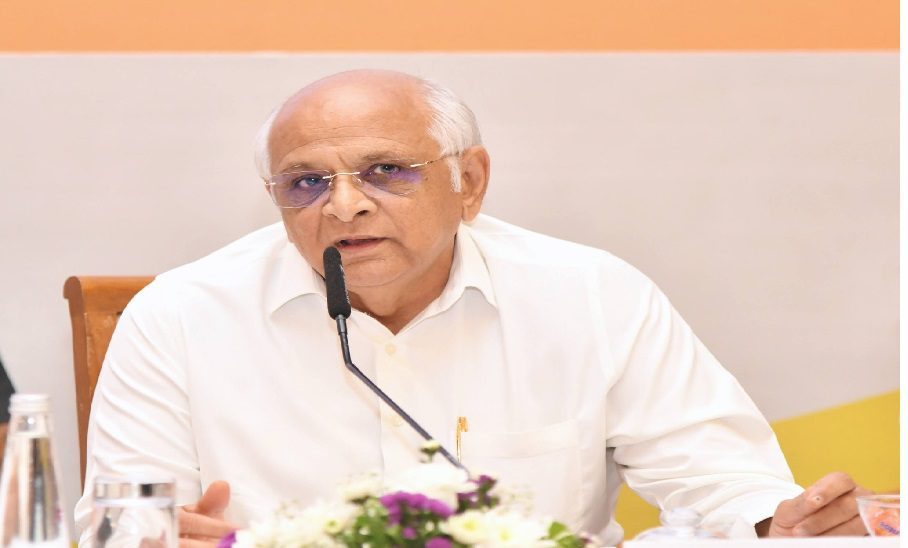
Gandhinagar: The Gujarat Cabinet, chaired by Chief Minister Bhupendra Patel in Gandhinagar, has granted in-principle approval to the ambitious “Gujarat Wire-Free City Mission.” The initiative aligns with Prime Minister Narendra Modi’s broader vision of developing green and smart cities across India.
Spokesperson Minister Jitu Vaghani briefed the media, stating that the mission aims to make all cities in Gujarat wire-free in a phased manner by 2030.
Objective: Building Smart, Safe, and Aesthetic Cities
The core objective of the mission is to transform urban areas into modern, visually cleaner, and safer spaces by removing overhead electrical wires and replacing them with underground cable networks.
The initiative will cover:
- All 17 Municipal Corporations in Gujarat
- 151 Municipalities across the state
Officials said the project will significantly improve urban aesthetics while also enhancing public safety and power reliability.
₹500 Crore Allocated for Phase One Implementation
The Gujarat government has sanctioned ₹500 crore for the first phase of the project. This initial phase will focus on critical upgrades in the power distribution system, particularly in densely populated urban regions.
Key infrastructure targets include:
- Over 14,600 circuit kilometres of high-tension (HT) overhead lines
- Over 31,400 circuit kilometres of low-tension (LT) overhead lines
These will be gradually shifted underground as part of the phased execution plan.
Phased Conversion of Power Distribution Network
The mission will follow a structured implementation approach:
Phase 1: High-Tension Line Undergrounding
The first stage will focus on converting 11 kV overhead power lines into underground cables. This step is expected to significantly reduce technical faults and improve grid stability.
Subsequent Phase: Low-Tension Network Upgradation
In the next stage, low-tension distribution lines will also be shifted underground, completing the transition toward a fully wire-free urban power network.
Improved Safety and Disaster Resilience
Officials highlighted that the underground cabling system will help address long-standing challenges associated with overhead power lines, including:
- Snapped wires during storms or accidents
- Short circuits during heavy rains and cyclones
- Frequent power disruptions caused by weather conditions
The upgraded system is expected to make electricity distribution more resilient during natural disasters while ensuring uninterrupted power supply.
Toward a Smarter and More Reliable Power Infrastructure
Beyond aesthetics, the mission is designed to modernize Gujarat’s electricity distribution network. Underground cabling is expected to:
- Reduce technical faults and outages
- Improve power quality and reliability
- Enhance overall urban infrastructure efficiency
A Long-Term Vision for a “Wire-Free Gujarat” by 2030
Calling the initiative a “historic and transformative step,” Minister Vaghani emphasized that the mission goes beyond routine infrastructure work. It is intended to build a smarter, safer, and more visually appealing Gujarat in line with 21st-century urban development goals. If implemented as planned, the Gujarat Wire-Free City Mission could become one of the largest urban underground cabling transformations in India.