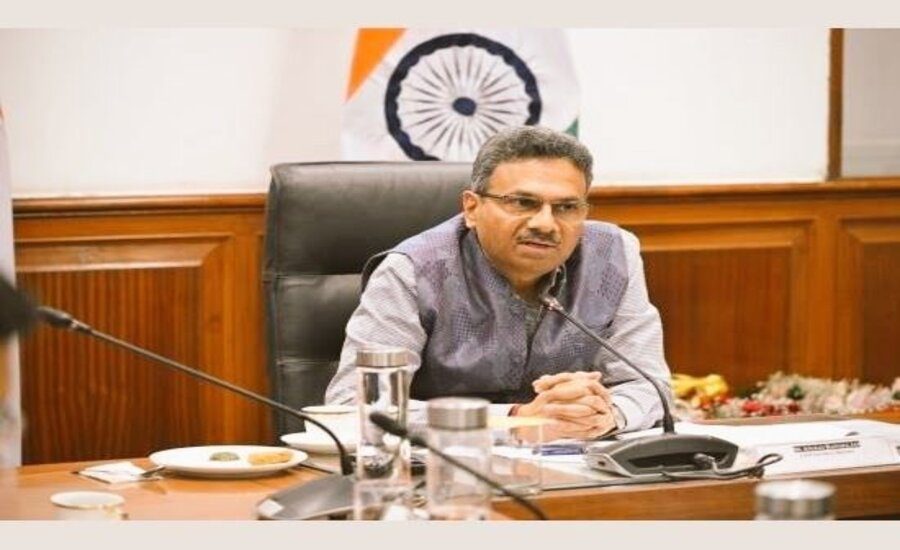
Chandigarh: The Haryana Government has directed all Administrative Secretaries, Heads of Departments, and Chief Administrators to ensure that government employees residing in Chandigarh Administration-allotted government accommodation submit their option-cum-undertaking forms regarding the use of rooftop solar power systems by July 10.
The directions have been issued by Haryana Chief Secretary Anurag Rastogi, an IAS officer of 1990 batch, following a communication from the House Allotment Committee, Chandigarh Administration, which is implementing the Union Government’s initiative to achieve saturation of rooftop solar installations in government residential buildings.
Drive Aimed at Expanding Rooftop Solar Coverage
The initiative is part of the Centre’s broader push to maximise the installation and utilisation of rooftop solar systems in government residential complexes.
According to the Chandigarh Administration, the exercise was initiated after receiving representations from several government employees regarding the levy of solar user charges. To address these concerns and obtain clear consent from occupants, the administration has asked all eligible employees to formally indicate their choice through a prescribed undertaking form.
Employees Must Choose One of Three Options
Government employees have been asked to exercise one of the following options in the undertaking form:
- Consent to use electricity generated through the rooftop solar plant and agree to pay the applicable solar user charges.
- Decline to use the rooftop solar power facility.
- Indicate that the option is not applicable, wherever relevant.
The exercise is intended to help the Chandigarh Administration effectively manage rooftop solar systems installed on government residential buildings while ensuring clarity regarding the use of the electricity generated.
Consent Includes Payment of User Charges
The undertaking clearly states that employees opting to use the rooftop solar facility will be required to:
- Pay the applicable solar user charges as prescribed.
- Permit authorized personnel to enter the premises for inspection, operation, and maintenance of the rooftop solar power plant whenever required.
These provisions are aimed at ensuring the smooth functioning and upkeep of the solar installations.
What Happens If Employees Decline?
Employees choosing not to use the rooftop solar facility will be required to acknowledge that the electricity generated from the rooftop solar plant will be transferred to the electricity distribution licensee through the gross metering mechanism, in accordance with applicable rules and regulations.
This ensures that electricity generated from installed solar systems is not wasted and continues to contribute to the power grid.
No Response Will Be Treated as Non-Consent
The House Allotment Committee has clarified that if an employee fails to submit the undertaking by July 10, it will be presumed that the individual has not consented to using the rooftop solar power facility.
Accordingly, departments have been asked to ensure that all eligible employees submit their forms within the stipulated timeline.
Chief Secretary Directs Departments to Ensure Compliance
Chief Secretary Anurag Rastogi has instructed all Administrative Secretaries, Heads of Departments, and Chief Administrators to coordinate with employees residing in Chandigarh Administration-allotted accommodation and ensure timely submission of the prescribed undertaking forms.
The completed forms are to be routed through the respective Heads of Departments and forwarded to the Office of the House Allotment Committee, Chandigarh, for further action.
The directive is expected to facilitate the effective implementation of the Union Government’s rooftop solar initiative while streamlining the management of solar power usage in government residential accommodations.