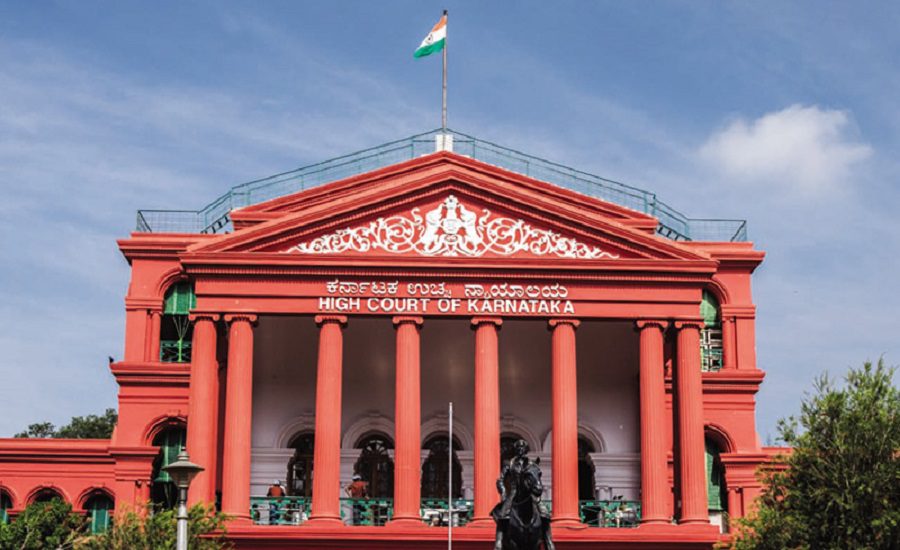
Bangalore: In a strong warning against caste-based discrimination, the Karnataka High Court recently rejected the anticipatory bail plea of a police constable accused of refusing to marry a woman from a Scheduled Caste because of her caste background.
The case, filed under the Scheduled Castes and Scheduled Tribes (Prevention of Atrocities) Act, 1989 (SC/ST Act) and other offences, highlights how the judiciary is increasingly taking up matters of caste bias and personal relationships under the lens of atrocity law.
Background of Karnataka SC/ST Act marriage case
The accused, Bagvantha Ray Basavantha Ray Biradar (a police constable), and the complainant, a woman also working as a constable, allegedly entered into a relationship and even performed a symbolic marriage in front of a photo of Lord Sai Baba.
The complainant asserted that the accused repeatedly held physical relations with her, gave assurances of formalising the marriage later, but then refused to accept her as his wife, citing her belonging to a Scheduled Caste. In her complaint, she further alleged assault when she pressed for recognition of their marriage.
Karnataka SC/ST Act Marriage Case: Major Accusation
The accused is a constable in the Karnataka police, which adds a layer of seriousness, since as a law-enforcement official he is held to higher standards of equal treatment. The case involves multiple charges: under the new Bharatiya Nyaya Sanhita, 2023 (BNS) sections for assault, outraging modesty, and under the SC/ST Act for caste-based discrimination. The bench of Justice S. Rachaiah took the view that the complaint’s averments indicate refusal to marry solely on caste grounds, satisfying the ingredients of an offence under the SC/ST Act (specifically Section 18A).
Importance of the Decision
This ruling is important for several reasons:
- It reaffirms that the SC/ST Act is applicable not only in classic atrocity contexts (violence, property destruction) but also in personal relationships when a person from a Scheduled Caste is treated as inferior in the context of marriage.
- The decision emphasises that public servants (police officers) must not exploit their position to discriminate on caste grounds — reinforcing institutional accountability.
- It strengthens legal protections for Dalit women who often face layered discrimination, particularly in areas of marriage, relationship and consent.
- It sends a wider message to society that caste-based refusals in marriage or relationships cannot hide behind personal choice if the refusal is based on discriminatory grounds.
Key Challenges in Enforcement & Legal Implications
However, even as this case sets a precedent, challenges remain:
- Proof of “refusal to marry because of caste” is inherently sensitive and complex. The complainant must demonstrate that caste was the operative reason.
- The SC/ST Act contains high-threshold criteria (offence ingredients, non-bailable presumption) so many victims may hesitate to approach courts.
- Institutional bias and societal norms persist — enforcement depends heavily on police investigation and witness cooperation.
- The accused’s status as a law-enforcement officer may intimidate victims from fully participating in the case.
The legal implication is that the court will apply the bar under Section 18A of the SC/ST Act which restricts anticipatory bail for offences under the Act — as the bench noted in this case.
Way Forward
To enhance the impact of this decision, several steps should be considered:
- Awareness and training for police personnel about caste-related provisions and the need to treat relationships between castes without bias.
- Victim support mechanisms especially for Dalit women in employment and government service, so they feel safe to file complaints.
- Monitoring and statistical tracking of cases under the SC/ST Act in the context of inter-caste relationships and marriage refusals — to identify patterns and ensure enforcement.
- Legal-policy review to update or clarify guidelines when the SC/ST Act applies to refusal of marriage or relationship solely due to caste, thus making victims’ access easier.
- Community dialogue and social reform to address the deep-rooted caste prejudice in matrimonial choices, including through educational outreach.
Read Also: System Failed Him: How Haryana IPS Y Puran Kumar’s Death Sparks Caste Bias Row Against Top Officials