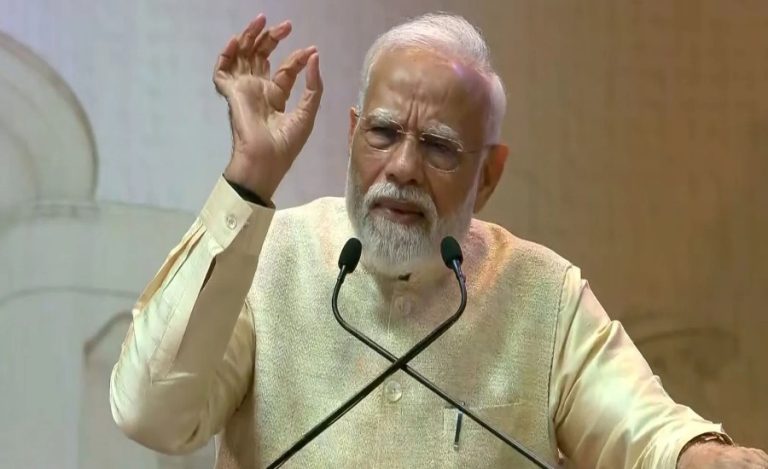
Belém: At the opening plenary of the 30th session of the United Nations Framework Convention on Climate Change (UNFCCC) in Belém, Brazil, India reaffirmed its firm commitment to equity, climate justice and multilateralism. Speaking on behalf of both the BASIC (Brazil, South Africa, India, China) and the Like-Minded Developing Countries (LMDC) groups, India emphasised that the upcoming CoP must become a “CoP of Adaptation” and called for decisive outcomes on finance, technology and transitions.
Background of CoP of Adaptation
The global climate conference CoP30 is being held in Belém, Brazil, marking a decade since the Paris Agreement entered into force. India welcomed this milestone while stressing that many nations’ commitments (NDCs) still fall short of the rapidly shrinking carbon budget.
India’s statement also reaffirmed the principle of Common But Differentiated Responsibilities and Respective Capabilities (CBDR-RC), a cornerstone of the UN climate regime since the Rio Earth Summit and now embedded in the Paris Agreement architecture.
Importance of the CoP of Adaptation
- India’s stance is pivotal because it signals one of the largest developing countries emphasising equity and justice, rather than simply committing new targets.
- By calling for the CoP to focus on adaptation, India shifts attention to the needs of vulnerable populations and developing nations, which often face the worst impacts of climate change despite contributing least.
- The insistence on technology access as a right—not a bargaining chip—highlights the importance of enabling developing countries to leapfrog into cleaner economies.
- It also sends a message that multilateral cooperation and agreed rules (rather than unilateral trade or climate measures) must govern global climate action.
Key Challenges to Watch
Climate finance gap: India noted that adaptation finance flows today need to increase nearly 15 times to meet global needs.
Definition ambiguity: India called for a clear and universally agreed definition of “climate finance” to avoid confusion and enable accountability.
Technology transfer hurdles: Intellectual property rights and market barriers continue to hamper access to clean technologies for developing nations.
Unilateral measures risk: India cautioned that climate-related trade measures could become protectionist, undermining global cooperation and Article 3.5 of the UNFCCC.
Credit for action vs support: Developing nations are asked to act, but India stressed that developed countries must also step up early decarbonisation and fulfil their historical obligations.
Implications of CoP of Adaptation
- The messaging may shape the negotiations at COP30 toward stronger adaptation outcomes, more finance flows and clearer technology transfer mechanisms.
- By taking a leadership role for BASIC and LMDC, India strengthens its diplomatic influence and positions itself as a bridge between Global South and global climate governance.
- The emphasis on rejecting trade-barriers and protectionism in the climate domain may influence how border-carbon adjustments or other climate-related trade policies are negotiated.
- If developing countries’ demands for greater finance and technology access are met, it could accelerate their low-carbon transitions, benefiting global emissions and resilience.
- Conversely, failure to bridge the finance/technology gap may risk widening the divide between the Global North and South, undermining trust in multilateral systems.
Way Forward
- India will monitor how COP30 finalises the Global Goal on Adaptation (GGA), including a minimum package of indicators and realistic flexibility for country circumstances.
- Push for developed nations to honour Article 9.1 of the Paris Agreement, making climate finance a legal obligation rather than voluntary.
- Encourage mechanisms where technology transfer is streamlined, affordable, and not trapped behind patents or uneven market access.
- Advocate for a robust “Just Transitions Work Programme” under UNFCCC that ensures people and communities are at the centre of transitions—not left behind.
- Maintain vigilance to ensure the architecture of the Paris Agreement remains intact, with CBDR-RC as its bedrock, and avoid any dilution via side-agreements or unilateral measures.