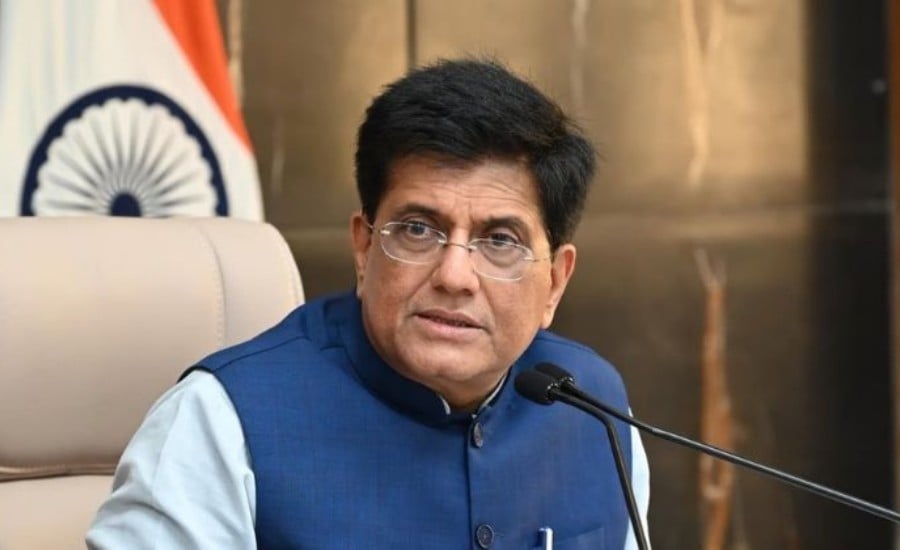
Mumbai: The India–European Union Free Trade Agreement (FTA) is set to open significant opportunities for Indian farmers, MSMEs, startups, manufacturers and service providers, Union Commerce and Industry Minister Piyush Goyal said at the India–Belgium High-Level Dialogue in Mumbai.
With the agreement bringing together a market of around 2 billion people, Goyal said India and the EU could expand cooperation across emerging technologies, manufacturing, agriculture, food processing and clean energy. Belgian Prime Minister Bart De Wever also highlighted the potential of the pact to strengthen trade, investment and economic resilience.
All 27 EU Nations Back Early Implementation
Goyal said all 27 EU member states were supportive of the India–EU FTA and keen to complete the formalities required to bring it into force at the earliest.
Read Also: Japan’s Institutional Investors Eye India’s Next Growth Wave as Piyush Goyal Pushes for More Capital
He said the agreement had taken 25 years to reach the conclusion stage and had been negotiated while protecting sensitive sectors on both sides. Recent reports also said Goyal expects the pact to come into effect after the necessary signing and ratification process.
According to Goyal, the agreement represents:
- A market of around 2 billion people
- Around one-fourth of global GDP
- Around one-third of global trade
- A combined market valued at about USD 24 trillion
Five Areas Identified for India-Belgium Cooperation
Goyal highlighted five broad areas where India and Belgium can deepen economic cooperation:
- Gems and jewellery: Greater collaboration in technology, certification and lab-grown diamonds, connecting the major diamond centres of Antwerp, Mumbai and Surat.
- Semiconductors: Combining Belgium’s micro-electronics research capabilities with India’s scale, skills and talent.
- Green hydrogen and logistics: Linking India’s Green Hydrogen Mission with Antwerp-Bruges’ bunkering and green shipping infrastructure.
- Defence and advanced manufacturing: Exploring cooperation in areas including counter-drone systems, electronic warfare and precision manufacturing.
- Agriculture and food processing: Expanding cooperation in potato processing, cold chains and sustainable agricultural value chains.
Goyal said India and Belgium’s economies were complementary and could combine Belgian technology, innovation and capital with India’s scale and talent.
Antwerp-Bruges Positioned as Gateway for Indian Exports
Belgian Prime Minister Bart De Wever highlighted the importance of the Port of Antwerp-Bruges as a logistical link between India and Europe.
Goyal described the port as a potential gateway through which the benefits of the India–EU FTA could translate into greater movement of goods between the two markets. The port itself has identified India as a strategic growth market and is seeking to strengthen trade links with the country.
De Wever said the FTA would create opportunities in sectors such as diamonds, food processing, pharmaceuticals, maritime services, green hydrogen and infrastructure. He also highlighted tariff reductions covering a large share of Indian and European goods exports.
India-EU Trade Nears USD 140 Billion
Goyal said India’s trade with the European Union has doubled over the past decade to nearly USD 140 billion, underlining the scale of the economic relationship.
He said India and Belgium now had an opportunity to build stronger and more predictable economic partnerships amid global protectionism, supply-chain disruptions and geopolitical uncertainty.
“We choose to build, we choose to connect, we choose to work together.”
Semiconductors, AI and Nuclear Energy Among India’s Growth Priorities
Goyal also highlighted India’s expanding capabilities in strategic and emerging technologies.
He pointed to the country’s semiconductor programme, AI Mission, Critical Minerals Mission and nuclear energy plans as areas where international partnerships could support future growth.
He said the semiconductor programme was expected to catalyse substantial investment, while India’s nuclear energy sector has been opened to greater private-sector participation under the new framework.
Goyal also highlighted the expansion of India’s space sector, saying it is expected to grow significantly over the coming years, driven by private companies, startups and innovators.
R&D Investment to Support Innovation
The Commerce Minister highlighted India’s recently launched USD 12-billion research and development fund, aimed at strengthening innovation and technological development.
He invited Belgium and the wider European Union to partner with India by combining European technology, innovation and capital with India’s scale, talent and young workforce.
Focus on Skills and Workforce Mobility
Goyal also called for greater cooperation in human capital, particularly through:
- Workforce mobility
- Mutual recognition of qualifications
- Joint skill-development programmes
- Dual-degree education programmes
- Greater opportunities for students and researchers
He said such cooperation could help address talent shortages in Belgium while creating new opportunities for Indian professionals and students.
A Partnership Built Under Global Economic Uncertainty
Both sides positioned the India–EU FTA as an opportunity to build stronger economic resilience at a time of increasing protectionism and supply-chain disruptions.
De Wever described the agreement as an expression of strategic openness and said India and Europe had chosen partnership amid growing trade uncertainty.
Maharashtra Chief Minister Devendra Fadnavis, who was also present, invited Belgian companies to invest in Maharashtra and use the state as a base to serve the Indian and global markets.
Goyal concluded by drawing an analogy with diamond-making under pressure, saying India and Belgium could build an enduring partnership that benefits not only the two countries but the wider world.
“Let India and Belgium form something just as enduring, just as beautiful and precious as a diamond. A diamond not only for Belgium and India, a diamond not only for Europe, a diamond for the world.”
The India–EU FTA is expected to deepen trade and investment ties while creating new avenues for Indian businesses, innovators and exporters. Stronger India-Belgium cooperation could further connect Indian capabilities with European technology, capital and markets.