New Delhi: India’s IAC-III aircraft carrier is emerging as a futuristic maritime platform, with the Defence Research and Development Organisation (DRDO) advancing cutting-edge manned-unmanned teaming (MUM-T) technologies.
The proposed 65,000-tonne carrier, often referred to as INS Vishal, is expected to redefine naval warfare by integrating fighter jets with stealth drones.
This next-generation concept reflects India’s long-term strategy to build a powerful and technologically advanced blue-water navy, capable of handling modern threats with precision and reduced risk to human pilots.
Details of IAC-III Aircraft Carrier
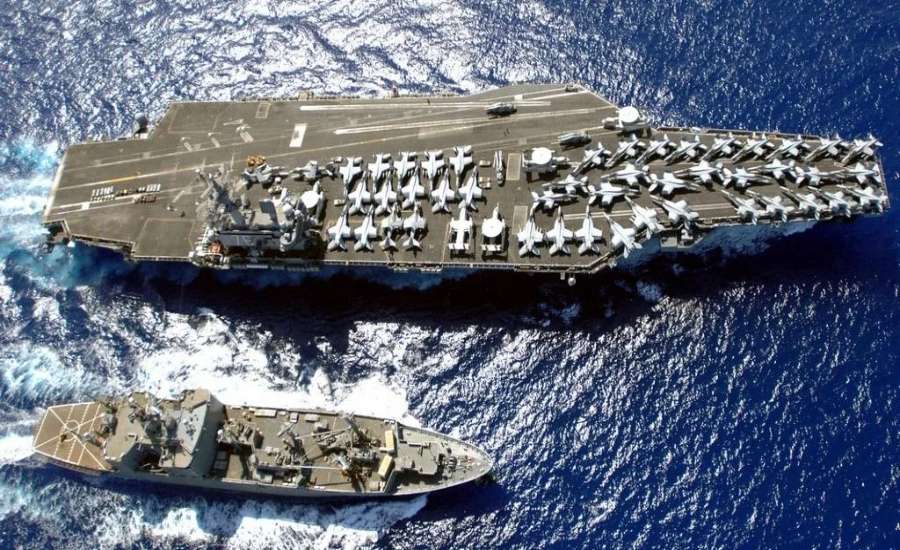
The Indian Navy is developing the Indigenous Aircraft Carrier-III (IAC-III) as a major upgrade over existing carriers like INS Vikrant.
Read also: Indian Navy Inducts Malwan ASW SWC: Key Features, Role and Strategic Importance Explained
- Expected displacement: 65,000–70,000 tonnes
- Air wing capacity: 50+ aircraft
- Planned role: Advanced strike, surveillance, and electronic warfare
This makes IAC-III significantly larger and more capable than the current 45,000-tonne INS Vikrant, marking a shift toward a supercarrier-class platform.
While India is also planning a second Vikrant-class carrier (IAC-II) for near-term needs, IAC-III represents the long-term technological vision for naval dominance.
MUM-T Integration with IAC-III Aircraft Carrier
One of the most important features of IAC-III is the integration of manned-unmanned teaming (MUM-T).
What is MUM-T?
It is a system where:
- Fighter jets (piloted aircraft)
- Work together with autonomous drones (UCAVs)
This allows:
- Better surveillance
- High-risk missions without risking pilots
- Coordinated precision strikes
DRDO’s ongoing research and test programs are focused on making this system operational for future naval aviation.
Role of Stealth Drones Like Ghatak in IAC-III Aircraft Carrier
A key part of this strategy is India’s stealth drone program, especially the DRDO Ghatak.
- Based on flying-wing stealth design
- Capable of autonomous operations
- Can carry weapons internally
- Designed for deep strike missions
Recent approvals for large-scale procurement of such drones highlight their importance in India’s future defence plans.
Additionally, DRDO’s SWiFT (Stealth Wing Flying Testbed) has successfully demonstrated:
- Autonomous flight
- Stealth features
- Advanced control systems
These technologies are directly shaping the design of carrier-based drones for IAC-III.
Hybrid Air Wing: Fighters + Drones
The IAC-III will operate a hybrid air wing, including:
- Manned fighters like Rafale M and future TEDBF
- Stealth UCAV squadrons
- Surveillance and electronic warfare drones
This combination will:
- Increase strike power
- Expand operational range
- Reduce risk in high-threat zones
Such hybrid operations are expected to become the standard for future naval warfare globally.
A Shift in Naval Warfare Doctrine
The IAC-III project signals a major doctrinal shift:
- From traditional carrier operations
- To network-centric, AI-driven warfare
With drones acting as force multipliers, the Navy can:
- Conduct deep strikes
- Gather real-time intelligence
- Operate safely in contested environments
Read also: Indian Navy 2035 Vision: Inside the 200 Warships Induction Under Atmanirbhar Bharat Plan