New Delhi: India’s pharmaceutical sector has undergone a remarkable transformation over the past 12 years under the leadership of Prime Minister Narendra Modi, emerging as a stronger global healthcare hub while significantly expanding access to affordable medicines across the country.
According to the Department of Pharmaceuticals under the Ministry of Chemicals and Fertilisers, a combination of people-centric healthcare initiatives, manufacturing incentives, innovation-driven policies and infrastructure development has strengthened India’s pharmaceutical ecosystem and reinforced its reputation as the “Pharmacy of the World.”
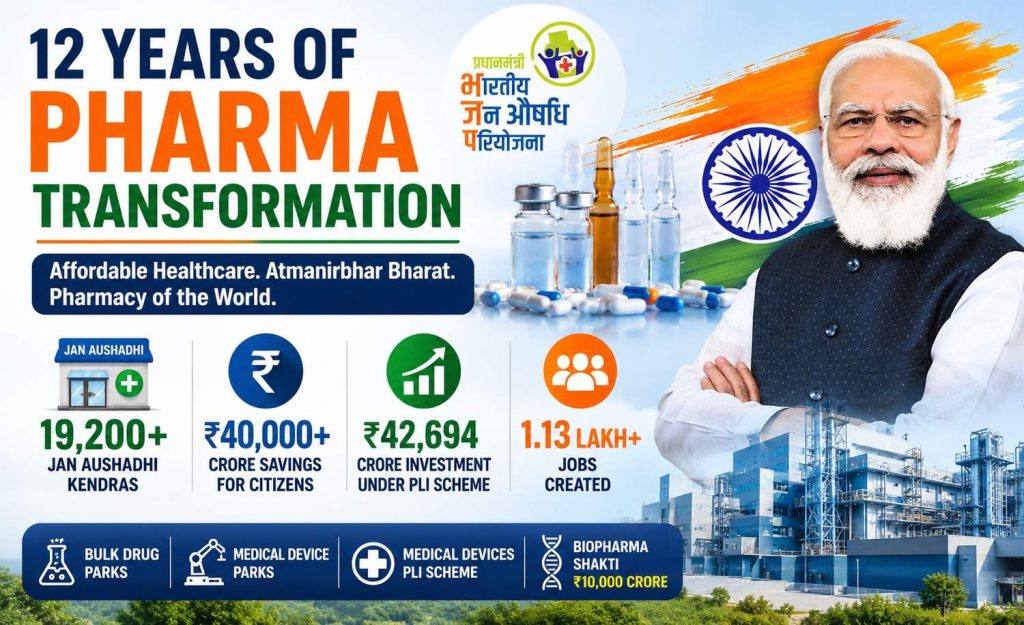
The achievements include a massive expansion of the Pradhan Mantri Bhartiya Janaushadhi Pariyojana (PMBJP), successful implementation of Production Linked Incentive (PLI) schemes, establishment of Bulk Drug Parks and Medical Device Parks, and the launch of the ambitious Biopharma SHAKTI programme.
Jan Aushadhi Network Expands From 84 to Over 19,200 Kendras
One of the most significant milestones has been the rapid growth of the Pradhan Mantri Bhartiya Janaushadhi Pariyojana.
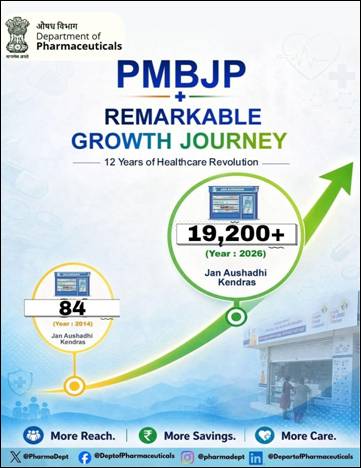
In 2014, India had only about 84 functional Jan Aushadhi Kendras. By 2026, the number has surged to more than 19,200 Kendras spread across the country, ensuring access to quality generic medicines at affordable prices for millions of citizens.
The initiative has witnessed remarkable penetration even in remote and underserved regions.
North-East Records Exceptional Growth
The eight North Eastern states collectively had only one Jan Aushadhi Kendra in 2014. Today, the region hosts 417 Kendras, reflecting the government’s focus on inclusive healthcare access.
Top States by Number of Jan Aushadhi Kendras
Several states have recorded substantial expansion under the scheme:
- Uttar Pradesh – 4,042 Kendras
- Kerala – 1,791 Kendras
- Karnataka – 1,665 Kendras
- Tamil Nadu – 1,591 Kendras
- Bihar – 1,183 Kendras
- West Bengal – 937 Kendras
- Gujarat – 918 Kendras
- Odisha – 852 Kendras
- Maharashtra – 741 Kendras
- Rajasthan – 718 Kendras
Significant Growth in Other Regions
Delhi: 4 to 645 Kendras
Jammu & Kashmir: 6 to 358 Kendras
Punjab: 20 to 556 Kendras
Himachal Pradesh: 8 to 76 Kendras
Tripura: 1 to 33 Kendras
By making generic medicines available at substantially lower prices, the scheme has reportedly helped citizens save more than ₹40,000 crore on healthcare expenses.
PLI Scheme Strengthens Domestic Pharmaceutical Manufacturing
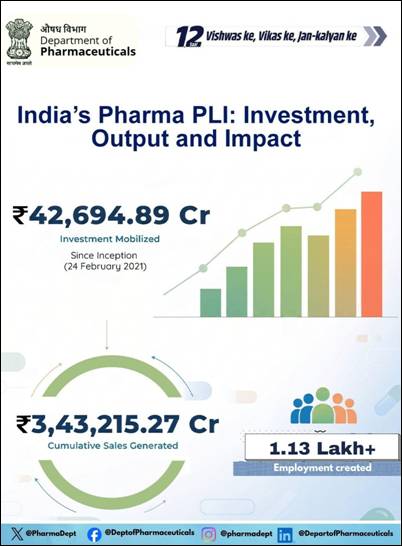
To reduce import dependence and enhance domestic manufacturing capabilities, the Government launched the Production Linked Incentive (PLI) Scheme for Pharmaceuticals during 2020-21.
The scheme has generated impressive results.
Key Achievements of Pharma PLI Scheme
- Total investment attracted: ₹42,694.89 crore
- Cumulative sales generated: ₹3,43,215.27 crore
- Employment created: Over 1.13 lakh jobs
The scheme has encouraged production of high-value pharmaceutical products including:
- Biopharmaceuticals
- Complex generic medicines
- Advanced formulations
Officials say the initiative has significantly strengthened India’s manufacturing capabilities while enhancing global competitiveness.
Medical Devices Sector Witnesses Rapid Growth
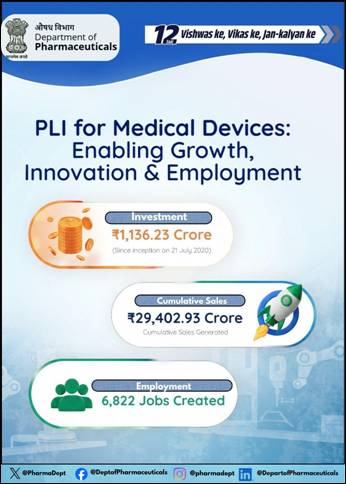
The PLI Scheme for Medical Devices has also emerged as a major success story.
Medical Device PLI Achievements
- Investment attracted: ₹1,136.23 crore
- Sales generated: ₹29,402.93 crore
- Jobs created: 6,822
The initiative is helping India build self-reliance in the medical technology sector and reduce dependence on imported medical devices.
Bulk Drug Parks to Reduce Import Dependence
As part of efforts to strengthen pharmaceutical supply chains, the Government is developing three Bulk Drug Parks in:
- Andhra Pradesh
- Gujarat
- Himachal Pradesh
These parks are expected to provide world-class infrastructure for manufacturing active pharmaceutical ingredients (APIs) and bulk drugs, helping reduce India’s dependence on imports and improving supply chain resilience.
Medical Device Parks Under Development
To promote domestic production of medical equipment and devices, Medical Device Parks are being established in:
- Tamil Nadu
- Uttar Pradesh
- Madhya Pradesh
The parks are designed to provide shared infrastructure facilities, lower production costs and boost India’s manufacturing ecosystem for medical devices.
PMPDS Enhancing Industry-Government Collaboration
The Pharmaceutical & Medical Device Promotion and Development Scheme (PMPDS) has been supporting policy development and stakeholder engagement.
Under the scheme:
- 47 stakeholder events have been conducted
- 12 sector-specific studies have been completed
The initiative aims to promote innovation, strengthen industry-government coordination and facilitate evidence-based policymaking.
Biopharma SHAKTI: ₹10,000 Crore Push for Future Growth
In another major initiative, the Union Budget 2025-26 announced Biopharma SHAKTI (Strategy for Healthcare Advancement through Knowledge, Technology and Innovation).
The programme has an outlay of ₹10,000 crore over five years and seeks to:
- Strengthen India’s biopharmaceutical ecosystem
- Promote biologics and biosimilars manufacturing
- Enhance affordable access to advanced medicines
- Build self-reliance in next-generation healthcare technologies
Strengthening India’s Healthcare and Economic Future
The Department of Pharmaceuticals stated that the combined impact of these initiatives is helping India achieve multiple national objectives simultaneously—improving affordable healthcare access, generating employment, attracting investments, encouraging innovation and strengthening self-reliance.
As India progresses towards the vision of Viksit Bharat@2047, the pharmaceutical sector is expected to play an increasingly important role in supporting healthcare delivery, economic growth and technological advancement while maintaining India’s standing as a global pharmaceutical powerhouse.