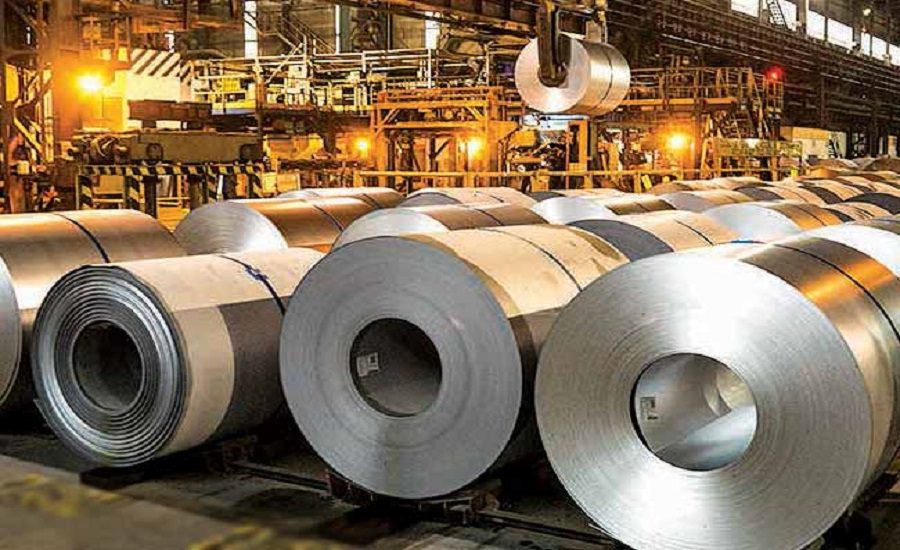
New Delhi: India’s steel sector continues to remain one of the fastest-growing “sunrise sectors,” reinforcing the country’s push towards self-reliance. India became the world’s second-largest steel producer in 2018 and has maintained this position since then.
The country’s share in global crude steel production has increased from 5.2% in 2014 to 7.9% in 2024, reflecting strong industrial expansion and global competitiveness.
Sharp Rise in Steel Consumption and Production
Steel consumption in India has more than doubled over the past decade. Finished steel consumption rose from 77 million tonnes in 2014–15 to 163.7 million tonnes in 2025–26, driven by infrastructure growth, urbanisation, and manufacturing expansion.
Crude steel production has also seen consistent growth, increasing from 43.44 million tonnes in 2004–05 to 168.4 million tonnes in 2025–26, reflecting strong domestic demand and capacity expansion.
Read also: Ministry of Steel Launches Skill Devt Courses at NISST to Boost Secondary Steel Sector Workforce
Strong Trade Performance and Reduced Imports
India’s steel sector has shown improved trade performance, with exports rising and imports declining.
In March 2026, steel exports increased by 29.1% year-on-year, while imports fell by 9.5%. This shift highlights growing domestic capability and reduced dependency on foreign supply.
Key export destinations include Vietnam, Belgium, and Taiwan, which together account for more than half of India’s finished steel exports.
Government Push Through PLI Scheme and Investments
Under the Production Linked Incentive (PLI) scheme for specialty steel, the government has committed significant support to boost high-value steel production.
Key outcomes include:
- ₹23,022 crore investment realized
- 2.4 million tonnes of specialty steel production
- Over 13,000 direct jobs created
- ₹6,000 crore import substitution achieved
- 24 million tonnes of new specialty steel capacity added
The scheme aims to reduce imports, enhance exports, and move India up the global steel value chain.
Infrastructure, Employment and Economic Growth
Steel remains a core driver of India’s infrastructure development, accounting for nearly 68% of total consumption in construction and infrastructure sectors.
The expansion of steel production is also generating large-scale employment across manufacturing, logistics, engineering, and allied industries, strengthening regional economic growth.
National Steel Policy Targets and Progress
Under the National Steel Policy 2017, India aims to reach:
- 300 million tonnes of crude steel capacity by 2030–31
- 255 million tonnes of production
- Higher per capita steel consumption of 158 kg
India has already achieved around 66% of its crude steel production target, marking steady progress toward long-term goals.
Focus on Self-Reliance and Domestic Manufacturing
Government initiatives such as the Domestically Manufactured Iron and Steel Products (DMI&SP) policy and “melt and pour” rule are promoting indigenous production and reducing import dependence.
These measures ensure that steel used in government procurement is largely domestically produced, strengthening the Atmanirbhar Bharat vision.
Green Steel and Decarbonisation Goals
India is also focusing on sustainable steel production through green steel initiatives. The country aims to achieve net-zero emissions by 2070.
Key steps include:
- Use of renewable energy in steel production
- Adoption of green hydrogen technology
- Carbon capture, utilisation and storage (CCUS) projects
- Increased scrap recycling to reduce emissions
India has also introduced its first Green Steel Taxonomy, defining emission-based classification of steel production.
Digitalisation and Future Innovation in Steel Sector
The government is promoting AI-based solutions, digital platforms, and modern logistics systems such as PM GatiShakti to improve efficiency in steel production and supply chains.
These innovations aim to make the sector more technology-driven, efficient, and globally competitive.
Outlook: A Stronger and Self-Reliant Steel Industry
India’s steel sector is on a strong growth trajectory supported by rising demand, policy reforms, investment incentives, and sustainability initiatives. With increasing production capacity, expanding exports, and a clear shift toward green steel, the sector is set to play a central role in India’s economic future and global industrial leadership.
Read also: ECLGS 5.0 Approved: Govt Announces ₹2.55 Lakh Crore Credit Support for MSMEs, ₹5,000 Cr for Airlines