New Delhi: India has taken another step towards developing its domestic artificial intelligence ecosystem with the release of three indigenous foundation models under the IndiaAI Mission. The models—EKA-1 by Soket Labs and Dhīr 2B and Dhīr 5B by ZenteiQ AiTech Innovations—are designed to address different requirements, ranging from multilingual reasoning and coding to secure, offline-capable AI applications.
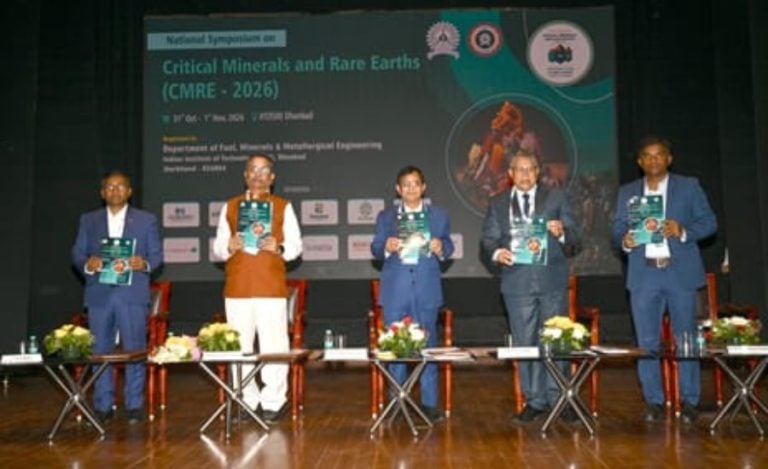
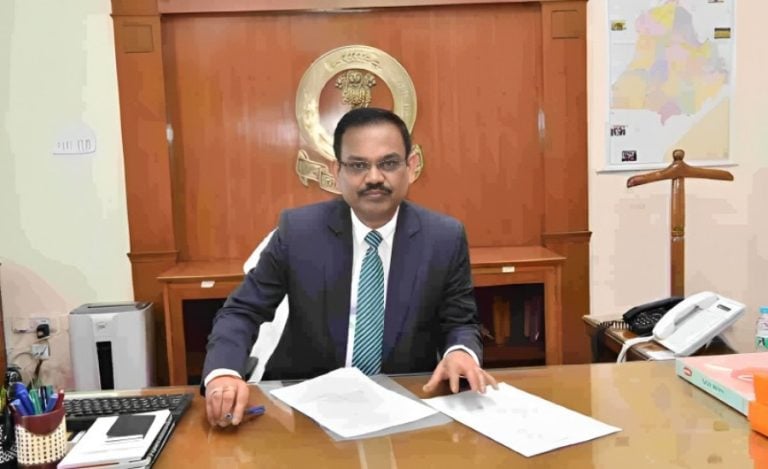
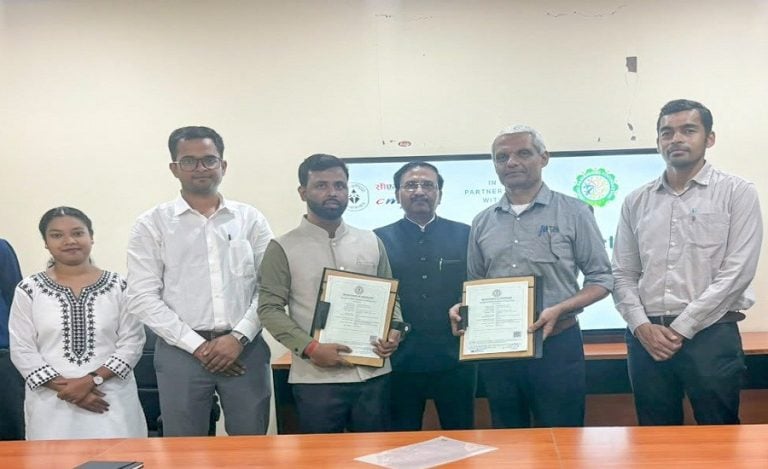
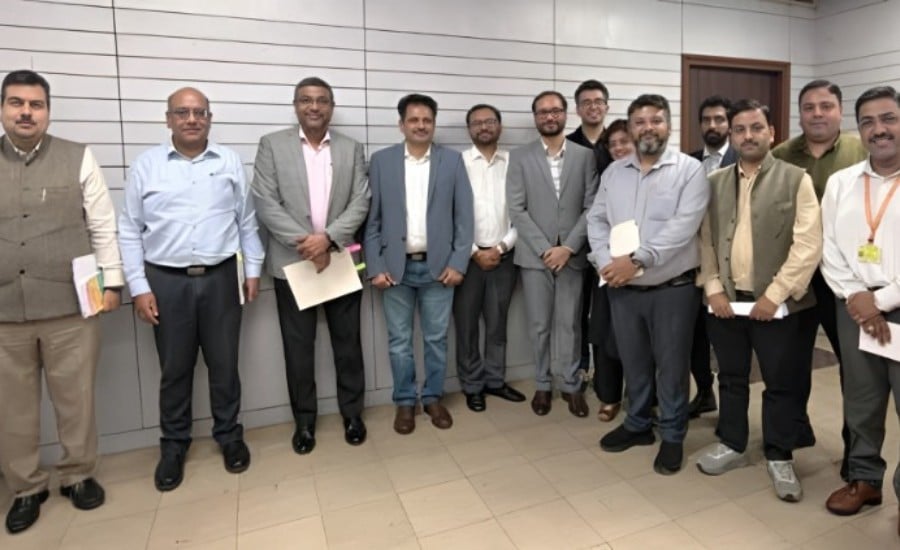
The models were unveiled at an event in New Delhi in the presence of S. Krishnan (IAS: 1989: TN), Secretary, Ministry of Electronics and Information Technology (MeitY), senior ministry and IndiaAI officials, and representatives of the two companies.
Developed under the IndiaAI Innovation Centre’s Foundation Models pillar, the models received support through subsidised access to national AI computing infrastructure and assistance for associated research expenses.
The launch is part of the government’s efforts to strengthen indigenous AI development and reduce dependence on externally developed technologies.
EKA-1: 26.3-Billion-Parameter AI Model Covers All 22 Scheduled Indian Languages
Developed by Soket Labs Technology and Research Private Limited, EKA-1 is an open, sparse hybrid foundation model featuring 26.3 billion parameters.
Read Also: NIELIT, Intel India Launch Two Agentic AI Programmes to Build India’s Future-Ready Workforce
The model has been trained on approximately 7.5 trillion tokens and supports all 22 scheduled Indian languages, along with English.
Its capabilities are designed to address a range of advanced AI applications, including:
- Mathematics: Supporting mathematical problem-solving and related tasks.
- Coding: Assisting with programming and code-related applications.
- Reasoning: Handling tasks requiring logical analysis and contextual understanding.
- Agentic applications: Supporting AI systems designed to perform tasks through multi-step processes.
According to Soket Labs CEO Abhishek Upperwal, the model has been developed with particular attention to India’s banking, financial services and cybersecurity landscape.
He said the model aims to address sector-specific requirements and understand the country’s evolving digital ecosystem.
Dhīr 2B and Dhīr 5B: Open-Source AI Models Designed for Secure Deployment
ZenteiQ AiTech Innovations has introduced two open-source multilingual models, Dhīr 2B and Dhīr 5B.
Unlike models designed primarily for cloud-based access, these assistants are intended to support secure, on-premise deployment. They can also operate in offline-capable environments, making them relevant for organisations that handle sensitive information or work in areas with limited connectivity.
The models support English and 10 Indian languages and are designed for applications such as:
- Document-grounded automation.
- Knowledge retrieval and information management.
- Citizen-facing services.
- Enterprise assistance and workflow support.
- Applications in defence, government, industry and education.
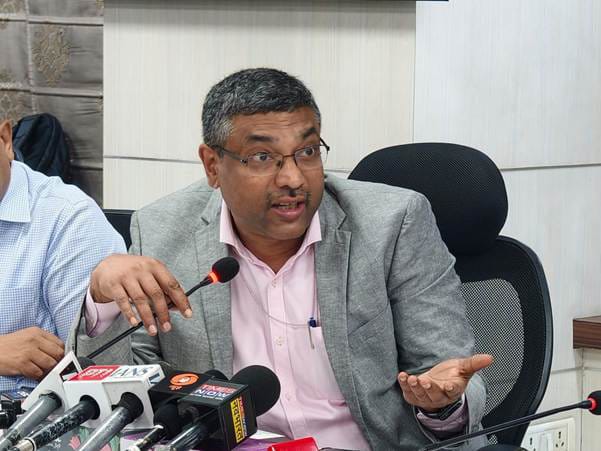
ZenteiQ CEO Professor Sashikumar said the models can operate across different computing platforms, including Graphics Processing Units (GPUs) and Tensor Processing Units (TPUs).
Their lightweight architecture also allows deployment on mobile devices, including phones, without requiring continuous cloud connectivity. This can help organisations process information locally while retaining greater control over their data.
EKA-1 and Dhīr: How the Two Model Families Differ
The three models address different technical and operational requirements within India’s AI ecosystem.
EKA-1 by Soket Labs
- Developer: Soket Labs Technology and Research Private Limited.
- Model size: 26.3 billion parameters.
- Language support: All 22 scheduled Indian languages and English.
- Architecture: Open, sparse hybrid language model.
- Key capabilities: Mathematics, coding, reasoning and agentic applications.
- Deployment focus: Advanced multilingual and sector-specific applications.
Dhīr 2B and Dhīr 5B by ZenteiQ
- Developer: ZenteiQ AiTech Innovations.
- Model sizes: 2 billion and 5 billion parameters, respectively.
- Language support: English and 10 Indian languages.
- Architecture: Open-source models.
- Key capabilities: Document-grounded automation, knowledge retrieval and citizen or enterprise services.
- Deployment focus: Secure, on-premise and offline-capable applications across government, defence, industry and education.
Together, the models demonstrate two different approaches to indigenous AI development: building advanced multilingual capabilities and creating lighter systems that can operate securely in resource-constrained or sensitive environments.
MeitY Highlights India’s Strategic and Technological Autonomy in AI
Addressing the launch, MeitY Secretary S. Krishnan said the development of indigenous foundation models strengthens India’s technological and strategic autonomy in artificial intelligence.
He noted that such models could improve productivity and efficiency across government, industry, research and education.
Krishnan also highlighted the role of AIKosh, the IndiaAI Datasets Platform, in making AI resources accessible to researchers, students, innovators and the wider public.
IndiaAI COO Sudeep Shrivastava said the mission’s support ecosystem was intended to make artificial intelligence more accessible and better suited to India’s requirements.
He described EKA-1 and Dhīr as examples of progress across different AI applications, from lightweight solutions for everyday devices to more powerful models for complex enterprise requirements.
IndiaAI Mission’s Seven Pillars
The development of EKA-1 and Dhīr falls under the IndiaAI Mission’s Innovation Centre pillar, which focuses on building indigenous foundation models and large language models.
Approved by the Union Cabinet on March 7, 2024, the mission aims to establish a comprehensive and inclusive artificial intelligence ecosystem in India.
It operates through seven key pillars:
- IndiaAI Compute Capacity: Building domestic computing infrastructure for AI development.
- IndiaAI Innovation Centre: Supporting the development of indigenous foundation models and AI technologies.
- IndiaAI Datasets Platform (AIKosh): Facilitating access to datasets for research and innovation.
- IndiaAI Application Development Initiative: Encouraging AI applications to address India’s specific needs.
- IndiaAI FutureSkills: Expanding AI education, training and skill development.
- IndiaAI Startup Financing: Supporting startups working on AI-based innovations.
- Safe & Trusted AI: Promoting responsible, secure and reliable AI development and deployment.
Building an Indigenous AI Ecosystem for India
The release of EKA-1, Dhīr 2B and Dhīr 5B adds to India’s efforts to develop AI systems suited to its linguistic diversity, technological priorities and sector-specific requirements.
While EKA-1 focuses on advanced multilingual capabilities, the Dhīr models emphasise secure deployment, local data processing and applications in environments where continuous internet access may not be available.
Through the IndiaAI Mission, the government is seeking to connect public computing infrastructure, research institutions, technology developers and industry to strengthen domestic AI innovation under the vision of “Making AI in India and Making AI Work for India.”
Read Also: What is Frontier AI Regulation? Inside the India’s Efforts to Make AI Safe