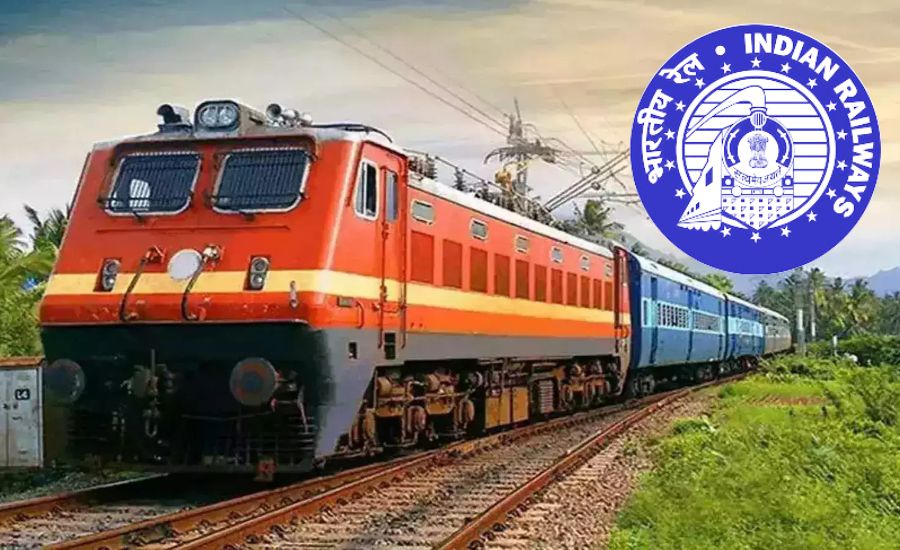
New Delhi: Indian Railways has made unprecedented strides in passenger safety, earning widespread public trust through advanced track technology, real-time monitoring systems, and systemic reforms. Union Minister for Railways, Ashwini Vaishnaw, emphasized that safety is “a matter of public trust, not just a technical metric”, highlighting measurable improvements across the network over the past decade.
Decade-Long Safety Transformation
Since 2014, Indian Railways has placed safety at the core of all operations, moving beyond expansion and connectivity. Key achievements include:
- Rail fractures reduced by 92% and weld failures down by 93%
- Consequential train accidents fell from 135 in 2014–15 to 16 in 2025–26, an 89% reduction
- Consequential Accident Index improved from 0.11 to 0.01, aligning India with global safety standards for large mixed-traffic networks
- Daily operations now cover over 25,000 trains transporting 2 crore passengers without compromising safety
Vaishnaw noted, “The focus is on saving lives, preventing catastrophic failures rather than just responding to them.”
Read also: Indian Railways Introduces Composite Sleepers and AI-Based Track Monitoring to Boost Safety
Record Financial Commitment to Safety
Safety modernization has been backed by substantial financial investment:
- Annual safety expenditure increased from ₹39,200 crore in 2013–14 to ₹1,17,693 crore in 2025–26
- ₹1,20,389 crore planned for 2026–27, supporting systematic upgrades to tracks, signaling, rolling stock, and safety systems
“Consistent budget commitment separates genuine transformation from one-off initiatives,” Mr. Vaishnaw stated.
Kavach: India’s Indigenous Train Protection System
The Kavach Automatic Train Protection system has been deployed across 1,452 km on high-density Delhi-Mumbai and Delhi-Howrah routes. It:
- Automatically prevents collisions if signals are missed
- Enforces speed limits, enhancing operational reliability
- Represents India’s commitment to world-class railway safety technology
Landmark Elimination of Unmanned Level Crossings
All unmanned level crossings on the broad gauge network were eliminated by January 2019, reducing human-rail accidents. This achievement was supported by the construction of over 14,000 road overbridges and underpasses nationwide.
Advanced Tracks and Rolling Stock Safety
- 60 kg rails and longer welded panels have significantly strengthened track safety
- 42,600 LHB coaches produced since 2014 prevent telescoping during collisions
- Rolling stock modernization includes 1,674 locomotives and 6,677 LHB coaches in FY 2025–26
- Improved welding techniques and ultrasonic flaw detection have minimized derailment risks
GPS-Based Fog Devices and Digital Stations
Technological adoption at the field level has enhanced real-time safety monitoring:
- 30,000 GPS-based Fog Safety Devices deployed across fog-affected zones
- Provides alerts on approaching signals, level crossings, and landmarks
- Nearly 4,000 railway stations are now digital, enabling centralised, real-time operational oversight
Human Factor: Staff Welfare as Safety Investment
Mr. Vaishnaw highlighted that safety depends on well-supported staff:
- Improved air-conditioned restrooms
- Regulated duty hours and counseling support
- Better rest facilities for running staff
“Safety today is reinforced not only by systems but by the people who trust them,” he said.
Data-Driven Success: The Absence of Headlines
The minister stressed that true safety often goes unnoticed. Trains that do not crash do not make news, yet the decade-long decline in accidents demonstrates a sustainable, reliable, and life-saving safety ecosystem across India’s rail network.