17 October 2026
ADVERTISEMENT
ADVERTISEMENT

NASA Space Apps Challenge 2025: Indian Team Wins Major Award for Innovative Satellite Broadband Solution

An innovative satellite internet concept developed by an Indian team has earned global recognition at the NASA Space Apps Challenge 2025. The project aims to bridge India’s digital divide by delivering broadband connectivity to remote and underserved regions.
NASA Space Apps Challenge 2025
Indian Masterminds Stories

New Delhi; India has once again demonstrated its growing prowess in space technology and digital innovation as an Indian team’s satellite internet concept secured a top global honour at the NASA Space Apps Challenge 2025, one of the world’s largest and most prestigious innovation hackathons.

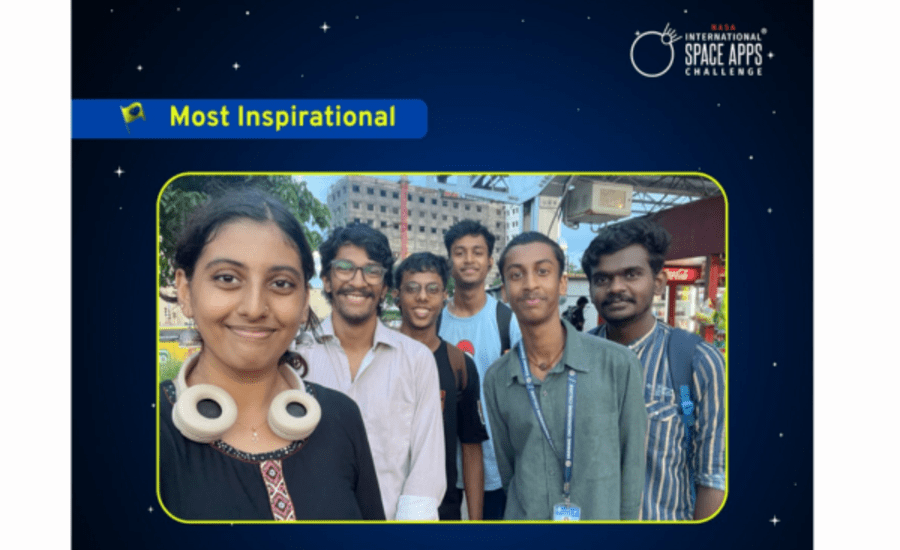
The Chennai-based team Photonics Odyssey emerged as a global winner, receiving the “Most Inspirational Award” for their forward-looking proposal aimed at expanding broadband connectivity across remote and underserved regions of India.

This achievement highlights India’s expanding footprint in global science, technology, engineering, and mathematics (STEM) innovation, particularly in the space and satellite communications domain.

What is NASA Space Apps Challenge 2025

The NASA International Space Apps Challenge is an annual global hackathon organised by NASA to encourage collaborative problem-solving using open-source data provided by space agencies.

Key Facts About the NASA Space Apps Challenge 2025 Edition

  • Participation from over 114,000 innovators
  • Events held across 500+ locations
  • Representation from 167 countries and territories
  • One of the largest collaborative STEM platforms globally

Since its launch in 2012, the challenge has grown into a powerful ecosystem fostering innovation, entrepreneurship, and real-world problem-solving using space science and technology.

The Winning Indian Concept: A Vision for Universal Connectivity

The award-winning proposal presented by Photonics Odyssey focuses on developing a sovereign, phased-array satellite internet infrastructure designed specifically for India’s geographical and demographic challenges.

Core Objectives of the Project

  • Expand broadband access to remote and rural regions
  • Reduce dependency on terrestrial internet infrastructure
  • Improve resilience during natural disasters and emergencies
  • Enable inclusive digital growth across India

According to estimates cited during the challenge, more than 700 million people in India still lack reliable broadband access, particularly in rural, hilly, tribal, and geographically isolated areas.

How the Satellite Internet System Works

The concept leverages phased-array satellite technology, which allows electronic beam steering without mechanical movement. 

Read also: India’s Next Telecom Leap: TEC-IIT Bombay MoU to Drive 6G, Satellite & Open-RAN Innovations in India

This technology offers several advantages over conventional satellite systems:

  • Faster signal acquisition
  • Lower latency
  • Higher reliability
  • Better scalability for large populations

By deploying an indigenous satellite-based broadband network, the project envisions last-mile connectivity even in regions where fibre and mobile networks remain economically or geographically unviable.

NASA Space Apps Challenge 2025: Meet the Team Behind the Innovation

The winning team members, as acknowledged by NASA Space Apps 2025 include:

  • Manish D. M.
  • K. Prasanth G.
  • Rajalingam N.
  • Rashi M.
  • Sakthika R.

Their interdisciplinary approach combined expertise in photonics, satellite communications, systems design, and problem-solving — a key factor behind their global recognition.

Global Recognition for Indian Innovation

NASA highlighted that Indian-American students and participants of Indian origin featured prominently among the winners, reflecting the strong global presence of Indian talent in cutting-edge technological innovation.

This recognition not only celebrates a single project but also symbolises India’s broader innovation ecosystem, which increasingly contributes solutions to global challenges.
Read also: EO-SAAW Seeker Technology Breakthrough: The Indian Weapon That Strikes Without Entering Enemy Airspace


Indian Masterminds Stories
Join our WhatsApp Channel
ADVERTISEMENT
ADVERTISEMENT
Related Stories
ADVERTISEMENT
ADVERTISEMENT
NEWS
SAIL Rourkela Steel Plant Gold Awards
SAIL Rourkela Steel Plant Wins Four Gold Awards at CCQC 2026, Highlights Quality and Safety 
BEL TechConnect Initiative
BEL TechConnect Engages MNIT Jaipur, NITK Surathkal to Inspire Young Engineers in Defence Technology
pfc
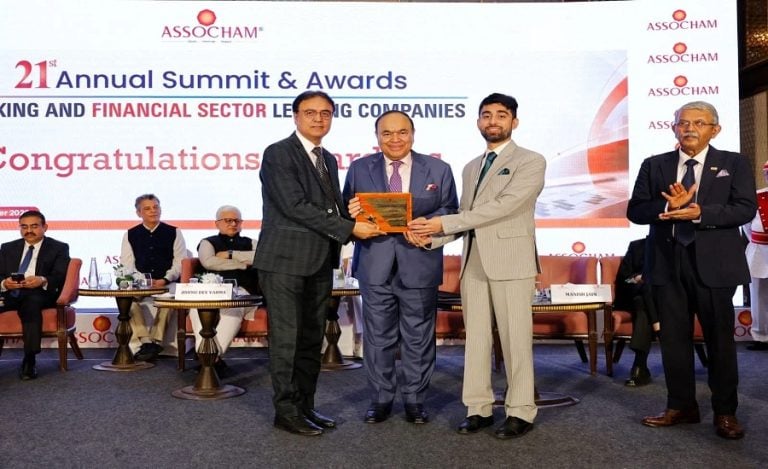
PFC Wins Gold Award at ASSOCHAM 21st Annual Summit for Overall Performance in Infrastructure Finance 
NMDC Vigilance Portal
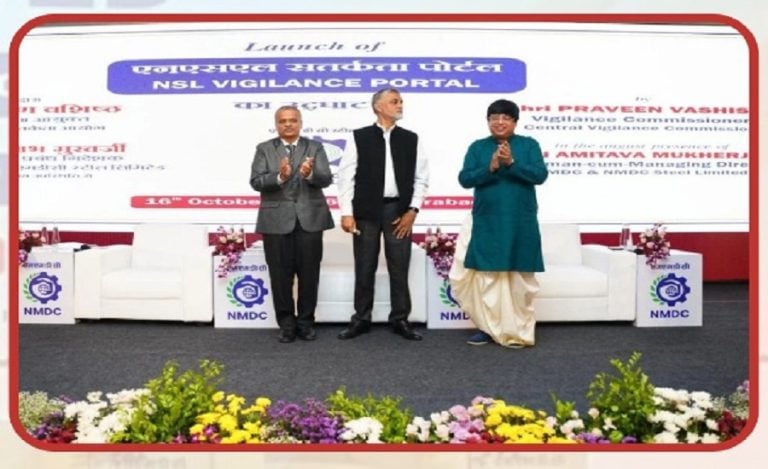
NMDC Launches NSL Vigilance Portal, Quarter Management System; Releases Vigilance Manual 2026
DFCCIL logo
DFCCIL MD Selection: PESB Recommends No Candidate, Ministry to Decide Next Steps 
RailTel SD-WAN Order
RailTel Bags ₹18.99 Crore Order from Health Insurance TPA of India for IT and Cybersecurity Solutions 
RIMS Ranchi New Departments
Jharkhand’s RIMS Plans 10 New Departments at ₹466 Crore, Proposes 256 PG and 150 Super-Speciality Seats
India’s Space Economy
India’s Space Economy to Reach USD 40–45 Billion in 7–8 Years as Private Investment Rises: Jitendra Singh 
ADVERTISEMENT
ADVERTISEMENT
Videos
Dr Saket Badola IFS
Beyond Tigers and Safaris: How Corbett Literature Festival Wants to Change the Conservation Conversation
PK Jena
Why Technology Cannot Replace Human Connection in Governance: P.K. Jena
PK Jena
The IAS Officer Who Put People Before Paperwork: How PK Jena Challenged Corruption and Reformed Governance
ADVERTISEMENT
UPSC Stories
Umar Janj UPSC CAPF
15+ Failures Couldn’t Stop Him: Umar Janj Secures AIR 160 in UPSC CAPF 2025
After multiple SSB setbacks, a CAPF interview miss by 12 marks and more than 15 failures, Umar Janj secured...
Aayush Sharma
Three CDS Attempts, Five AFCAT Qualifications & Medical Setback: How Aayush Sharma Secured CAPF AIR 135
After three unsuccessful SSB attempts, five AFCAT qualifications and a medical setback, Aayush Sharma...
Tushar Chaudhary IRMS
He Left Intel, Built COPAL-19, Spent Months at AIIMS, Ran Half Marathons, and Returned to UPSC—Tushar Chaudhary’s Journey to IRMS
UPSC ESE AIR 4 Tushar Chaudhary left a ₹25 LPA Intel job, built COPAL-19, spent months at AIIMS, ran...
CSR NEWS
NBCC India CSR Award 2026
NBCC India Wins Award for Excellence in CSR at 4th Fortune Leadership Awards 2026
The recognition honours NBCC’s community welfare initiatives and efforts to improve healthcare accessibility...
HURL ALIMCO
HURL Signs MoU with ALIMCO to Support Divyangjans and Senior Citizens in Gorakhpur, Barauni and Sindri
Under its CSR initiative, HURL will support PMD-VK Gorakhpur and facilitate the distribution of need-based...
MDL CSR Support to Divyasha Vayoshri Kendra
MDL Extends ₹3.79 Crore CSR Support to Divyasha Vayoshri Kendra in Mumbai
The initiative will strengthen access to assistive devices, prosthetics and rehabilitation services for...
ADVERTISEMENT
ADVERTISEMENT
ADVERTISEMENT
Latest
SAIL Rourkela Steel Plant Gold Awards
SAIL Rourkela Steel Plant Wins Four Gold Awards at CCQC 2026, Highlights Quality and Safety 
BEL TechConnect Initiative
BEL TechConnect Engages MNIT Jaipur, NITK Surathkal to Inspire Young Engineers in Defence Technology
ADVERTISEMENT
ADVERTISEMENT
ADVERTISEMENT
ADVERTISEMENT
ADVERTISEMENT
ADVERTISEMENT
ADVERTISEMENT
Videos
Dr Saket Badola IFS
PK Jena
PK Jena
ADVERTISEMENT
ADVERTISEMENT