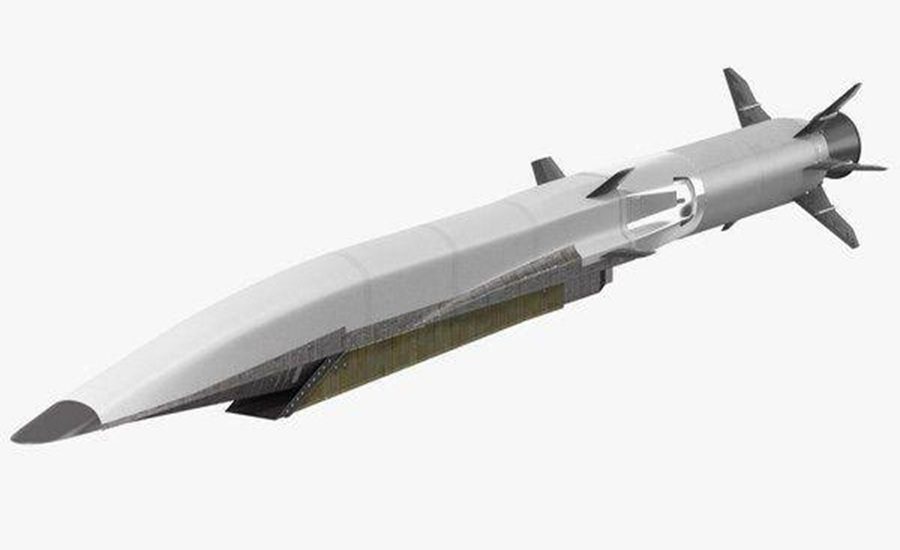
India has achieved a major technological breakthrough by successfully testing its most advanced hypersonic missile—the Extended Trajectory Long Duration Hypersonic Cruise Missile (ET-LDHCM). Developed under the Defence Research and Development Organisation’s (DRDO) classified Project Vishnu, the test marks a significant step in bolstering India’s defence capabilities and strategic standing in the Indo-Pacific region.
A Technological Leap in Range and Speed
The ET-LDHCM outpaces all current Indian missile systems with a top speed of Mach 8, or nearly 11,000 km/h. That’s almost three times faster than the BrahMos cruise missile, which operates at Mach 3. The missile also extends India’s strategic reach with a range of 1,500 kilometers—more than three times the evolved range of the BrahMos.
The missile is designed for stealth, speed, and flexibility. Capable of carrying payloads between 1,000 to 2,000 kilograms, it supports both conventional and nuclear warheads. Its low-altitude flight profile allows it to evade radar systems, while its pinpoint targeting precision makes it ideal for striking critical assets in rugged terrains.
Scramjet Engine: The Core of Sustained Hypersonic Flight
At the heart of the ET-LDHCM lies a scramjet (supersonic combustion ramjet) engine, a major breakthrough in propulsion technology. Unlike traditional systems that require onboard oxidizers, the scramjet uses atmospheric oxygen for combustion. This not only reduces missile weight but also allows it to sustain hypersonic speeds over longer distances.
In April 2025, DRDO successfully ran a 1,000-second ground test of the scramjet engine—far surpassing the U.S. X-51A program, which managed just 240 seconds. The engine operates under extreme conditions, enduring temperatures above 2,000°C while managing supersonic airflow at 1.5 km/s. This positions India as a leader in scramjet development.
Designed for Multi-Platform Launch and Tactical Agility
The ET-LDHCM is built for operational versatility. It can be launched from land-based platforms, naval vessels, and aircraft, making it adaptable for use by all three armed services. This allows for seamless integration into existing defence frameworks while expanding India’s strategic options.
The missile’s advanced maneuverability allows it to alter its flight path mid-course. This, combined with its stealth characteristics and low-altitude cruise profile, enhances its survivability against modern air defence systems and boosts its effectiveness in contested environments.
Engineered for Extreme Conditions
Constructed with advanced heat-resistant materials and thermal barrier coatings, the ET-LDHCM is capable of withstanding temperatures up to 2,000°C. These coatings, co-developed by DRDO and the Department of Science and Technology, preserve the missile’s structural integrity during high-speed flight.
It also boasts oxidation-resistant properties for maritime operations and can be stored and deployed in various geographical and climatic conditions. This ensures mission readiness across India’s wide range of operational theatres—from coastal zones to high-altitude terrains.
Project Vishnu: India’s Hypersonic Ambition
The ET-LDHCM is the flagship development under Project Vishnu, DRDO’s classified program to build indigenous hypersonic systems. The project envisions twelve variants—including hypersonic glide vehicles, cruise missiles, and anti-hypersonic defence platforms.
Hypersonic glide vehicles are expected to enter service by 2027–2028, while missiles like the ET-LDHCM are targeted for operational deployment by 2030. This phased rollout will ensure continual enhancement of India’s strike capabilities while promoting technological refinement and force-wide integration.
A Strategic Message to the Indo-Pacific
India’s successful test of the ET-LDHCM not only advances its military preparedness but also signals its emergence as a hypersonic-capable power. As regional tensions rise and hypersonic technology becomes a decisive element of strategic deterrence, this development positions India among a select group of nations capable of producing and deploying such advanced systems.
With the ET-LDHCM, India not only reduces its dependency on foreign weapon platforms but also reinforces its commitment to self-reliance under the Atmanirbhar Bharat initiative. The hypersonic program enhances India’s credibility in global defence circles and elevates its influence in regional security arrangements and international strategic dialogues.