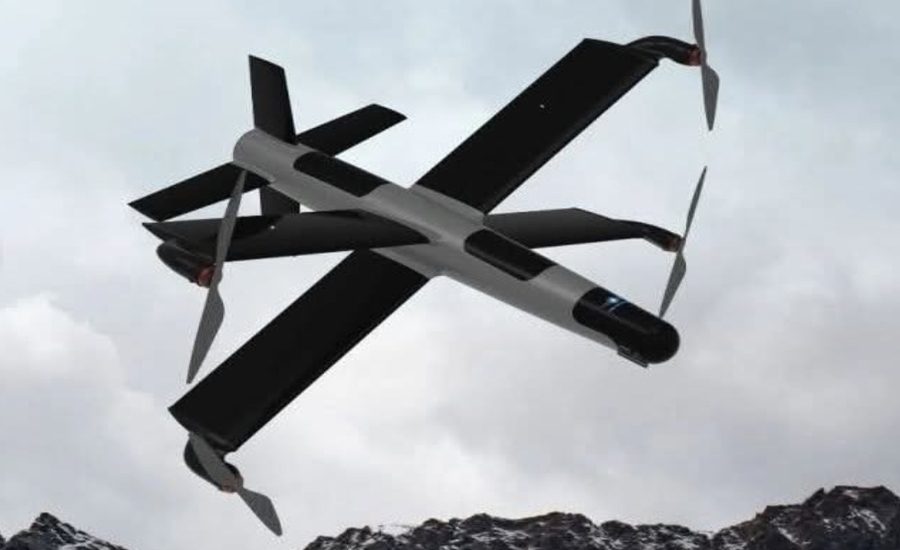
New Delhi: India is moving closer to advanced autonomous warfare capabilities as the Aeronautical Development Establishment (ADE), a key laboratory under the Defence Research and Development Organisation (DRDO), is reportedly working on a new generation of indigenous high-speed stealth swarm drone derived from the SWiFT UCAV platform.
The SWiFT UCAV stealth drone program is expected to support Intelligence, Surveillance and Reconnaissance (ISR) missions as well as precision kamikaze strikes in future battlefields.
What is SWiFT UCAV?
The Stealth Wing Flying Testbed (SWiFT) is a flying-wing unmanned combat aerial vehicle technology demonstrator developed by DRDO’s ADE in Bengaluru. It was created to test critical stealth, autonomous flight, and flying-wing technologies that will eventually support the larger Ghatak UCAV program.
Read also: What is the TARA Weapon System? And How It Can Make India Leader in Precision Warfare?
The SWiFT demonstrator successfully completed autonomous flight trials at the Aeronautical Test Range in Chitradurga, Karnataka. DRDO stated that the aircraft demonstrated autonomous take-off, waypoint navigation, and smooth landing capabilities.
The aircraft uses a tailless flying-wing design that reduces radar cross-section and improves survivability in hostile airspace.
Details of Indigenous High-Speed Stealth Swarm Drone
According to emerging defence reports, ADE is now adapting the SWiFT design into smaller, high-speed stealth drones that can operate in coordinated swarms. These drones are expected to be “attritable,” meaning they can be deployed in large numbers at lower cost without causing major strategic losses if destroyed during combat.
The drones are reportedly being designed for:
- Intelligence, Surveillance and Reconnaissance (ISR)
- Electronic warfare support
- Precision strike operations
- Kamikaze or loitering munition roles
- Saturation attacks against enemy air defence systems
The swarm approach allows multiple drones to attack or surveil targets simultaneously, making interception more difficult for enemy radars and missile systems.
Focus on Stealth and Autonomous Operations
One of the biggest highlights of the project is stealth capability. The drones are expected to use low observable airframe shaping inspired by SWiFT and Ghatak technologies.
The flying-wing design reduces radar reflection and helps the drone penetrate defended airspace with a lower chance of detection.
The drones are also expected to feature advanced autonomous flight logic. Instead of requiring continuous operator control, the swarm can reportedly coordinate internally, share battlefield information, and react dynamically to changing combat conditions.
This capability could significantly reduce pilot workload and improve reaction speed during real-time operations.
ISR and Kamikaze Roles in Indigenous High-Speed Stealth Swarm Drone
Intelligence, Surveillance and Reconnaissance (ISR)
ISR drones are used to gather battlefield intelligence, monitor enemy movement, identify targets, and support military planning.
The stealth swarm drones may carry:
- Electro-optical sensors
- Infrared systems
- Electronic intelligence payloads
- Battlefield communication relay equipment
Their small radar signature and autonomous operation could allow them to operate deep inside hostile territory.
Kamikaze and Loitering Strike Missions
In offensive missions, these drones may function as loitering munitions, often called kamikaze drones.
Such systems can:
- Search for targets autonomously
- Stay airborne for extended periods
- Dive directly onto enemy assets
- Destroy radars, command centers, vehicles, or missile launchers
This type of warfare has become increasingly important in modern conflicts around the world.
Connection With India’s Ghatak UCAV Program
The swarm drone project appears closely linked with India’s larger Ghatak stealth UCAV program.
Ghatak is DRDO’s ambitious autonomous stealth combat drone designed for deep strike missions using a flying-wing configuration. The program evolved from the earlier AURA concept and is being developed jointly by ADE and ADA.
The SWiFT aircraft acts as a technology testbed for Ghatak by validating stealth aerodynamics, autonomous controls, and unmanned combat technologies before they are integrated into the larger operational platform.
Why Indigenous High-Speed Stealth Swarm Drone Matter in Modern Warfare
Military experts worldwide consider swarm drones a major force multiplier because they can:
- Overwhelm enemy air defences
- Operate at lower cost than fighter aircraft
- Reduce risks to pilots
- Conduct coordinated multi-directional attacks
- Improve battlefield awareness
Countries including the United States, China, Russia, and Turkey are heavily investing in swarm drone technologies.
India’s move into this field could strengthen indigenous drone warfare capabilities and reduce dependence on imported systems.