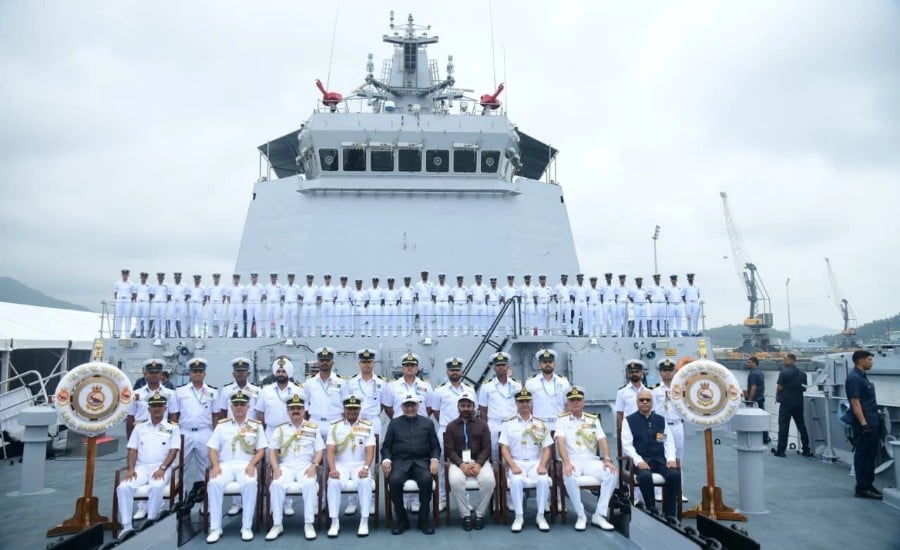
New Delhi: The Indian Navy has commissioned INS Samarthak, the first of its class of indigenous Multi-Purpose Vessels (MPVs), marking a milestone in India’s naval shipbuilding capabilities and private-sector participation in defence manufacturing.
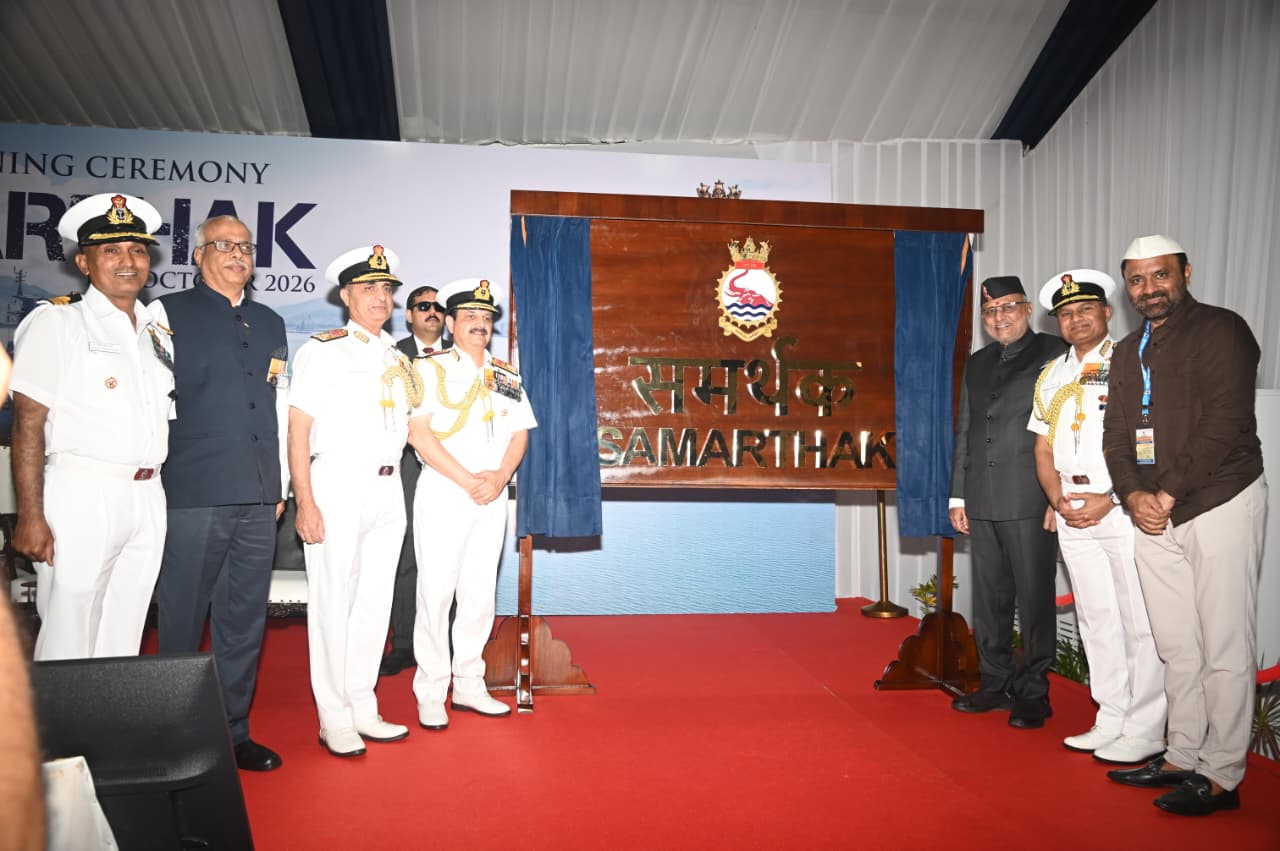
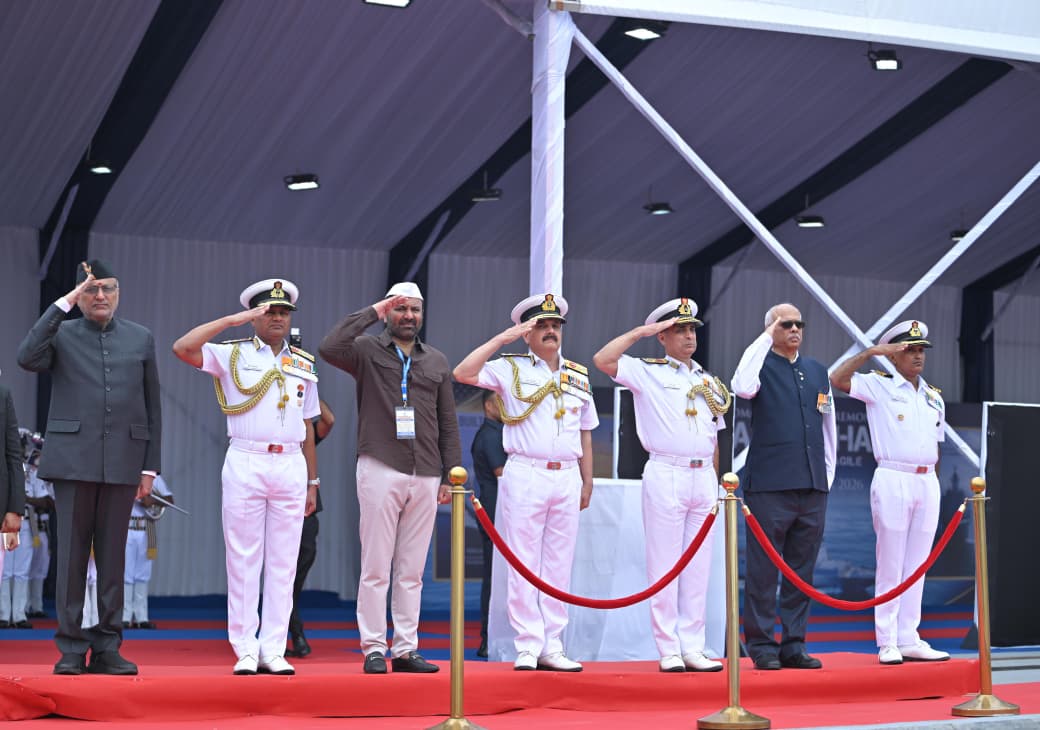
The vessel was commissioned on October 16, 2026, at a ceremony presided over by Vice-President C.P. Radhakrishnan in the presence of Chief of the Naval Staff Admiral Krishna Swaminathan and senior defence officials.
Designed and constructed by Larsen & Toubro (L&T) Shipyard, INS Samarthak has more than 75% indigenous content. The vessel is intended to support a wide range of operational and developmental activities, including maritime surveillance, offshore patrolling, humanitarian assistance and disaster relief (HADR), as well as the testing and evaluation of indigenous naval systems.
The commissioning highlights the role of India’s domestic shipbuilding industry in developing naval platforms and strengthening the country’s defence manufacturing capabilities.
INS Samarthak to Support Testing of Indigenous Naval Technologies
One of the vessel’s key roles will be to support the testing and evaluation of sensors, weapons and other systems developed by Indian industry.
Read Also: Bharat Dynamics Bags ₹1,307 Crore Indian Navy Contract for Supply of Heavyweight Torpedoes
As the Indian Navy expands the use of domestically developed defence technologies, the vessel will provide a platform for trials and training activities. Its multi-purpose design is intended to accommodate different operational and developmental requirements.
Key capabilities of INS Samarthak include:
- Testing and evaluation: Supporting trials of indigenously developed sensors, weapons and other naval technologies.
- Maritime surveillance and reconnaissance: Monitoring maritime activity and gathering operational information.
- Offshore patrolling: Supporting patrol operations in offshore areas.
- Humanitarian assistance and disaster relief: Assisting relief operations during emergencies and disasters.
- Training and developmental activities: Providing a platform for testing and evaluating new naval capabilities.
The vessel’s versatility is intended to help the Navy respond to a changing maritime environment and address a broader range of operational requirements.
More Than 75% Indigenous Content in L&T-Built Vessel
INS Samarthak was designed and constructed by L&T Shipyard, highlighting the growing contribution of India’s private shipbuilding industry to naval modernisation.
According to the Ministry of Defence, the ship incorporates more than 75% indigenous content, reflecting the participation of domestic industry in supplying and integrating equipment and technologies.
The vessel also uses modular construction and pre-outfitting techniques. These approaches allow sections and equipment to be assembled in a planned sequence, helping optimise construction processes and timelines.
The project is expected to contribute to India’s domestic industrial capabilities through employment generation, technical skill development and economic activity linked to shipbuilding and equipment manufacturing.
The commissioning also underscores cooperation between the Indian Navy, private shipyards and original equipment manufacturers involved in the development of indigenous defence systems.
Why INS Samarthak Matters for Aatmanirbhar Bharat
The induction of INS Samarthak aligns with the national objective of strengthening India’s self-reliance in defence production.
Its construction by an Indian private shipyard demonstrates the role private industry can play in developing naval platforms, alongside public-sector shipyards and domestic equipment manufacturers.
The project supports several key objectives:
- Expanding domestic naval shipbuilding capabilities.
- Increasing the use of Indian-made equipment and technologies.
- Supporting the development and evaluation of indigenous weapons and sensors.
- Generating employment and building specialised industrial skills.
- Strengthening cooperation between the Navy and domestic defence manufacturers.
The vessel’s commissioning also reflects the Navy’s focus on developing platforms that can support both operational requirements and the evaluation of emerging technologies.
INS Samarthak to Strengthen Maritime Security
The Indian Navy has highlighted the importance of versatile naval platforms in responding to an evolving maritime environment, including non-traditional maritime threats.
INS Samarthak’s combination of surveillance, patrolling and testing capabilities is intended to support the Navy’s broader operational requirements.
The vessel is also expected to contribute to India’s maritime engagement in the Indian Ocean Region. Its commissioning reinforces the Navy’s emphasis on maritime security, regional stability and cooperation with other countries in the region.
At the commissioning ceremony, the chief guest highlighted the strategic importance of indigenously built naval platforms in enhancing India’s maritime capabilities and enabling a wider range of operational and testing missions.
Vice-President C.P. Radhakrishnan Presides Over Commissioning
The commissioning ceremony took place on October 16, 2026, in the presence of senior naval and defence representatives, officials from the Ministry of Defence, and representatives of L&T and original equipment manufacturers associated with indigenous systems.
Named Samarthak, meaning “The Proponent”, the vessel is designed to serve as a versatile platform for the Navy’s operational and developmental needs.
Its induction adds a new capability to India’s naval fleet while highlighting the contribution of domestic shipbuilding and defence technology industries to the country’s pursuit of a self-reliant defence ecosystem.
Read Also: Inside the INS Mangrol That Boasts the Advanced Sonar, Torpedoes And 80% Indigenous Content