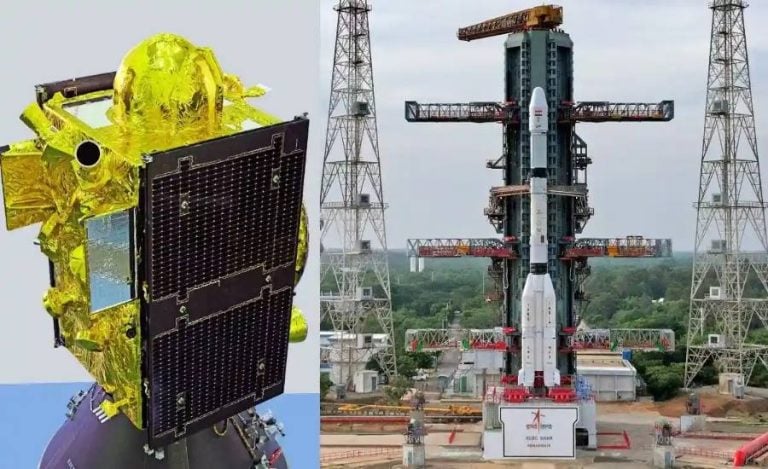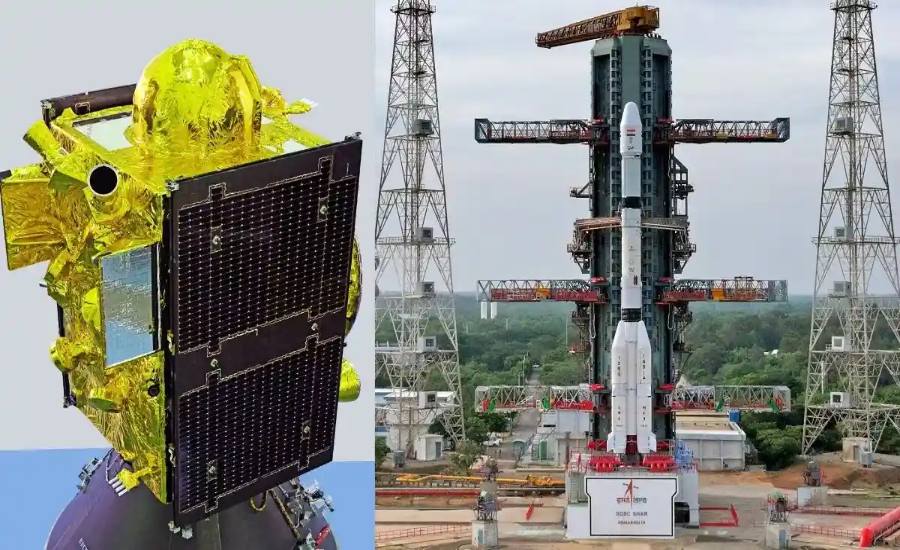
New Delhi: India has achieved another major milestone in space technology as the Indian Space Research Organisation (ISRO) successfully launched the NVS-03 satellite aboard its GSLV-F18 rocket.
The mission strengthens India’s indigenous Navigation with Indian Constellation (NavIC) system by improving navigation capabilities, introducing the L1 signal and adding an Indian-made atomic clock. The achievement is an important step towards reducing India’s dependence on foreign satellite navigation systems.
ISRO Successfully Launched NVS-03 Satellite
The Indian Space Research Organisation (ISRO) successfully launched the NVS-03 navigation satellite on October 30, 2026, at 11:51 PM IST from the Satish Dhawan Space Centre in Sriharikota, Andhra Pradesh.
Read also: ISRO NVS-03 Satellite Launch: How India’s New Atomic Clock Boosts NavIC
The satellite was carried into space by the GSLV-F18 rocket and successfully placed into its intended Geosynchronous Transfer Orbit (GTO).
The mission marked the 20th flight of India’s Geosynchronous Satellite Launch Vehicle (GSLV). It also strengthened India’s efforts to develop a reliable and independent satellite navigation infrastructure.
On November 4, 2026, ISRO announced that four orbit manoeuvres had been successfully completed. The satellite reached its designated geosynchronous orbit, and its health was reported to be normal.
What Is NVS-03 Satellite And Why Is It Important
NVS-03 is the third satellite in India’s second-generation navigation satellite series, which includes five satellites from NVS-01 to NVS-05.
The main objective of this series is to strengthen NavIC and ensure the continuity, availability and reliability of India’s regional navigation services.
The satellite carries an indigenous atomic clock along with procured atomic clocks. It also introduces the L1 navigation frequency alongside the existing L5 and S-band signals.
These improvements will support more reliable positioning, navigation and timing services for civilian, commercial and strategic applications.
What are the Features Of The NVS-03 Satellite
The NVS-03 satellite includes several important technologies designed to improve India’s navigation infrastructure.
1. Indigenous Atomic Clock
One of the most important features of NVS-03 is its Indian-developed atomic clock. Atomic clocks provide extremely accurate time measurements. Satellite navigation systems depend on precise timing to calculate the distance between satellites and receivers on Earth.
The use of indigenous technology will strengthen India’s ability to develop and maintain its own navigation infrastructure.
2. Introduction Of The L1 Navigation Signal
NVS-03 introduces the L1 frequency band alongside the existing L5 and S-band navigation signals. The addition of L1 is important because it improves NavIC’s compatibility with navigation receivers and other satellite navigation technologies.
It can help support the development of compatible navigation devices, including smartphones and other consumer applications.
3. Extended Navigation Coverage
The satellite is designed to support navigation services across India’s landmass and a region extending approximately 1,500 kilometres beyond India’s geopolitical boundary.
This coverage is important for road transportation, maritime navigation, aviation, disaster management and other applications.
4. Designed For A 12-Year Mission Life
The NVS-03 satellite is designed to provide navigation services for approximately 12 years.
Its long operational life will help strengthen the continuity of India’s next-generation satellite navigation infrastructure.
How NVS-03 Satellite Strengthens India’s NavIC Navigation System
NavIC, previously known as the Indian Regional Navigation Satellite System (IRNSS), is India’s independent regional satellite navigation system developed by ISRO. It provides Positioning, Navigation and Timing (PNT) services to users across India and nearby regions.
The system has applications in transportation, vehicle tracking, maritime operations, aviation, agriculture and disaster management.
The NVS-03 mission is particularly important because it strengthens the satellite infrastructure needed to maintain reliable navigation services. It also supports India’s efforts to reduce dependence on foreign navigation systems such as the United States’ GPS.
Why Is India’s Indigenous Navigation System Important
Satellite navigation plays an important role in modern life. It helps people find locations, navigate roads, track vehicles and support several critical services.
India’s dependence on foreign navigation systems can create challenges for certain strategic and national security applications. With NavIC, India can develop and operate its own regional navigation infrastructure.
This is especially important for defence operations, maritime security, aviation and emergency response services. An independent navigation system also gives India greater control over critical positioning and timing services.
What Happened To The NVS-02 Satellite
The NVS-03 mission is also important in the context of the earlier NVS-02 satellite mission. ISRO launched NVS-02 on January 29, 2025, aboard the GSLV-F15 rocket. However, the satellite could not reach its intended orbital position because its orbit-raising operation was unsuccessful due to a problem involving the oxidiser valves.
The NVS-03 mission adds another next-generation satellite to India’s navigation programme and supports the continuity of NavIC services. It is part of ISRO’s wider effort to improve the availability and reliability of India’s indigenous navigation system.
What Are The Future Applications Of NVS-03
The improved NavIC infrastructure can support several important sectors in India.
- Defence And National Security: Supports strategic positioning and navigation requirements.
- Road Transportation: Helps improve vehicle tracking and navigation services.
- Maritime Navigation: Supports ships and other vessels operating in Indian waters.
- Aviation: Provides additional navigation capabilities for compatible systems.
- Agriculture: Supports precision farming and location-based agricultural applications.
- Disaster Management: Helps emergency teams with location information during natural disasters.
- Mobile Navigation: The addition of the L1 signal supports wider compatibility with suitable consumer navigation devices.
These applications will depend on compatible receivers, infrastructure and the availability of the relevant NavIC services.
Read also: ISRO GSLV-F18 Launch: How NVS-03 Satellite Could Restore India’s Independent Navigation
FAQs
ISRO launched the NVS-03 satellite on October 30, 2026, at 11:51 PM IST using the GSLV-F18 rocket from Sriharikota, Andhra Pradesh.
NVS-03 is the third satellite in ISRO’s second-generation NavIC navigation satellite series. It carries an indigenous atomic clock and supports L1, L5 and S-band navigation signals.
NVS-03 will strengthen NavIC by adding an indigenous atomic clock and the L1 navigation signal. It is designed to improve navigation capabilities and support services across India and approximately 1,500 kilometres beyond its geopolitical boundary.