Ranchi: In a major push towards positioning itself as a leading destination for digital innovation and Artificial Intelligence (AI)-driven governance, the Department of Information Technology & e-Governance, Government of Jharkhand, will organise the National Stakeholders’ Consultation 2026 in New Delhi on July 8-9, 2026.
The two-day consultation will bring together policymakers, industry leaders, technology companies, academia and domain experts to deliberate on the future of Artificial Intelligence, digital governance and emerging technologies. The event will also serve as a national platform for Jharkhand to showcase its vision of becoming a digitally empowered, technology-driven and citizen-centric state.
Hemant Soren to Present Jharkhand’s Digital Transformation Vision
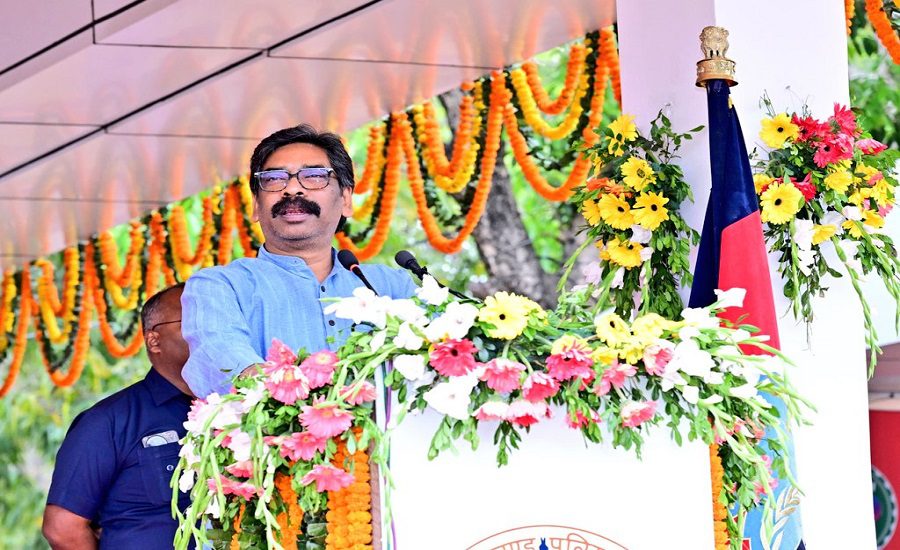
The inaugural session on July 8 will be graced by Chief Minister Hemant Soren, who will unveil Jharkhand’s roadmap for IT, IT-enabled services (ITeS), Artificial Intelligence and emerging technologies.
The Chief Minister is expected to outline the state’s strategy for leveraging AI not merely as a technological innovation but as a transformative tool for improving governance, strengthening public service delivery and promoting inclusive development.
The inaugural session will also be attended by the Chief Secretary, Development Commissioner, Secretary, Information Technology & e-Governance, and senior representatives of leading technology companies.
Read also: CM Hemant Soren Distributes 1,042 Teacher Appointment Letters, Launches CPD Programme in Ranchi
Nearly 100 Technology Companies to Participate
The first day of the consultation will witness participation from nearly 100 leading technology and IT companies from India and abroad, along with senior officials of the Government of Jharkhand.
The discussions will focus on Artificial Intelligence, digital governance, emerging technologies, public sector innovation, and collaboration between government and the technology industry.
The event aims to foster strategic partnerships that will accelerate Jharkhand’s digital transformation journey.
Ranchi IT Park to be Pitched as Premier Investment Destination
A key highlight of the consultation will be the national investment presentation of the proposed Ranchi IT Park, which the government hopes will emerge as one of eastern India’s premier destinations for IT and IT-enabled services.
Spread across 100.97 acres of contiguous, litigation-free government land in Ranchi’s Core Capital Area, the proposed IT Park enjoys strategic advantages due to its location adjacent to IIM Ranchi and close to Birsa Munda Airport.
The state government will also highlight Jharkhand’s growing talent pool, noting that over 20,000 IT graduates enter the workforce every year.
Investor-Friendly IT Policy to be Showcased
The consultation will also showcase the attractive incentives available under the Jharkhand IT Policy 2023, designed to attract technology investments.
Some of the major incentives include:
- 50% capital investment reimbursement
- 100% stamp duty exemption
- 100% electricity duty waiver
The government believes these provisions make Jharkhand one of the most competitive destinations for IT investments in eastern India.
Draft AI Policy 2026 to be Placed Before Stakeholders
One of the most significant agenda items during the consultation will be the presentation of the Draft AI Policy 2026, which will be opened for stakeholder consultations.
The proposed policy framework, covering the period 2026-2031, seeks to establish a comprehensive ecosystem for responsible, ethical and scalable adoption of Artificial Intelligence across government departments.
The policy aims to institutionalise AI-driven governance while ensuring transparency, accountability and citizen-centric implementation.
Proposal for State AI Mission
Under the proposed policy, the government plans to establish a State AI Mission, which would function under the chairmanship of the Chief Minister.
The mission would be supported by JAP-IT as the nodal implementation agency.
The draft policy also proposes the creation of a Jharkhand AI Cloud, interoperable with the Government of India’s IndiaAI ecosystem, to serve as the state’s digital backbone for AI-based governance and service delivery.
AI Use Cases Across Key Government Departments
The proposed AI framework envisions deploying Artificial Intelligence across multiple sectors to improve governance and public services.
Priority sectors include:
- Governance and public administration
- Agriculture and rural livelihoods
- Healthcare
- Mineral resource administration
The initiative aligns with the Government of India’s broader vision of “AI for All”, promoting inclusive and responsible adoption of Artificial Intelligence.
Chief Minister’s Data Intelligence Platform Proposed
The consultation will also showcase the concept of the Chief Minister’s Data Intelligence Platform (CM-DIP).
The proposed AI-enabled platform aims to integrate data from various government departments to facilitate:
- Real-time monitoring
- Evidence-based policymaking
- Data-driven governance
- Improved coordination among departments
- Enhanced citizen service delivery
Officials said the platform would help bridge the gap between government action and citizen experience through better decision-making supported by Artificial Intelligence.
Multilingual Citizen Services and Digital Governance
The proposed governance architecture also includes multilingual citizen interfaces using WhatsApp and digital kiosks at Panchayat Bhavans, enabling easier access to government services.
An Integrated Control and Command Centre is also proposed to strengthen coordination, improve responsiveness and enhance transparency in governance.
Together, these initiatives aim to create a more accessible, technology-enabled and citizen-centric governance ecosystem.
Towards an AI-Driven and Investment-Friendly Jharkhand
Through the National Stakeholders’ Consultation 2026, the Government of Jharkhand aims to position the state as a national hub for AI-enabled governance, digital innovation and technology investments.
The consultation is expected to strengthen collaboration between government, industry, academia and technology leaders while laying the foundation for the state’s next phase of digital transformation and AI-led economic growth.