Ranchi: Jharkhand Chief Minister Hemant Soren has directed officials of the Drinking Water and Sanitation Department to accelerate the implementation of the Jal Jeevan Mission, emphasizing that providing safe drinking water to every household is the government’s top priority.
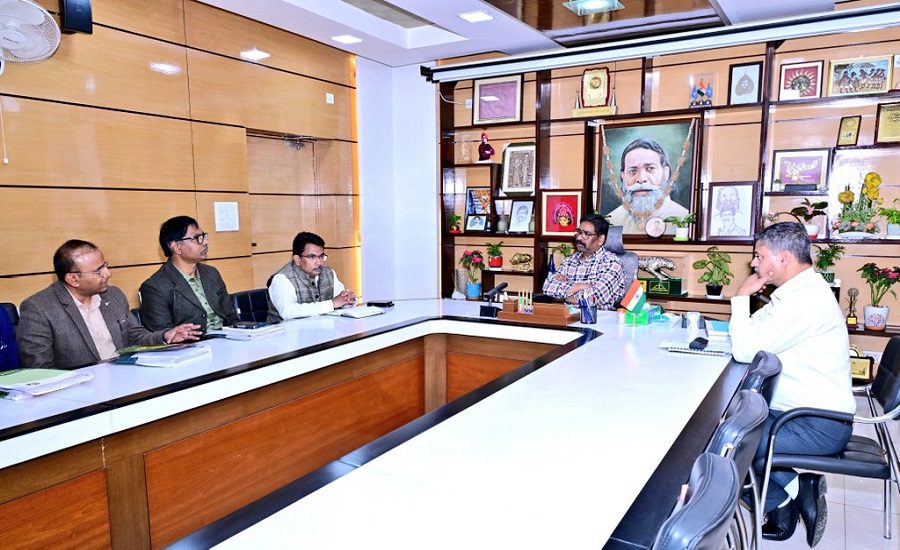
The review meeting was held at Jharkhand Secretariat with senior officials to assess the progress of ongoing water supply and sanitation projects across the state.
Safe Drinking Water for Every Household: Top Priority
The Chief Minister reiterated that ensuring piped clean drinking water to every home is a non-negotiable priority. He instructed officials to:
- Speed up Jal Jeevan Mission projects
- Ensure timely completion of pipeline-based water supply systems
- Avoid any negligence in implementation
He stressed that access to safe drinking water is directly linked to public health and quality of life.
Target: 100% Rural Tap Water Coverage by 2028
Officials informed the Chief Minister that under the Jal Jeevan Mission, the state aims to provide piped drinking water to all rural households by December 2028.
CM Soren directed agencies to:
- Strengthen coordination among implementation bodies
- Ensure timely completion of large-scale water supply schemes
- Prepare a strong implementation framework with backup financial planning
Strong Monitoring and Real-Time Project Tracking
To improve execution efficiency, the Chief Minister ordered a strict monitoring system:
- Daily progress updates via contractor WhatsApp groups
- Real-time tracking of project execution
- Continuous monitoring of all major water supply projects
He also instructed officials to ensure transparency and accountability in all departmental works.
Focus on Maintenance, Repair and Water Crisis Zones
CM Soren directed immediate repair and maintenance of existing water supply systems. He emphasized:
- Priority action in water-scarcity areas
- Identification of vulnerable regions facing drinking water issues
- Rapid deployment of solutions to ensure uninterrupted supply
He also instructed that every Anganwadi center must be provided with clean drinking water facilities.
Water Conservation and Groundwater Recharge Initiatives
The Chief Minister placed strong emphasis on long-term water sustainability measures:
- Promotion of rainwater harvesting systems
- Modernization of soak pits and recharge structures
- Reuse of defunct hand pump borewells as recharge pits
- Awareness campaigns on water conservation
These steps aim to improve groundwater levels and ensure long-term water security.
Training and Empowerment of Jal Sahelis
CM Soren directed that women water volunteers, known as Jal Sahelis, should be:
- Trained in ITI institutions as plumbers
- Equipped for repair and maintenance of hand pumps and solar water systems
- Recognized and rewarded for good performance
He also called for promotional programs to encourage their active participation in rural water management.
Improved Sanitation and Waste Management Push
The review also covered sanitation and waste management schemes, including:
- Swachh Bharat Mission
- Individual household toilets
- ODF Plus villages
- Solid and liquid waste management
- Gobardhan scheme implementation
The Chief Minister emphasized maintaining hygiene standards along with water supply improvements.
Water Quality, Transparency and Public Awareness
CM Soren expressed concern over water quality issues and said that safe drinking water is a fundamental right. He directed:
- Strict monitoring of water quality systems
- Awareness campaigns against plastic pollution
- Rewards for plastic-free villages
- Regular evaluation of scheme performance
He also instructed officials to ensure quick resolution of public grievances.
Officials Present in the Meeting
The high-level review meeting was attended by senior officials including:
- Chief Secretary Avinash Kumar
- Development Commissioner Ajay Kumar Singh
- Drinking Water and Sanitation Secretary Abu Imran
- Additional Secretary Shashi Ranjan
The Jharkhand government, under CM Hemant Soren, is focusing on fast-tracking water supply infrastructure, strengthening groundwater recharge systems, and ensuring universal access to safe drinking water. The review meeting highlighted a strong push toward accountability, digital monitoring, and sustainable water management for long-term public benefit.