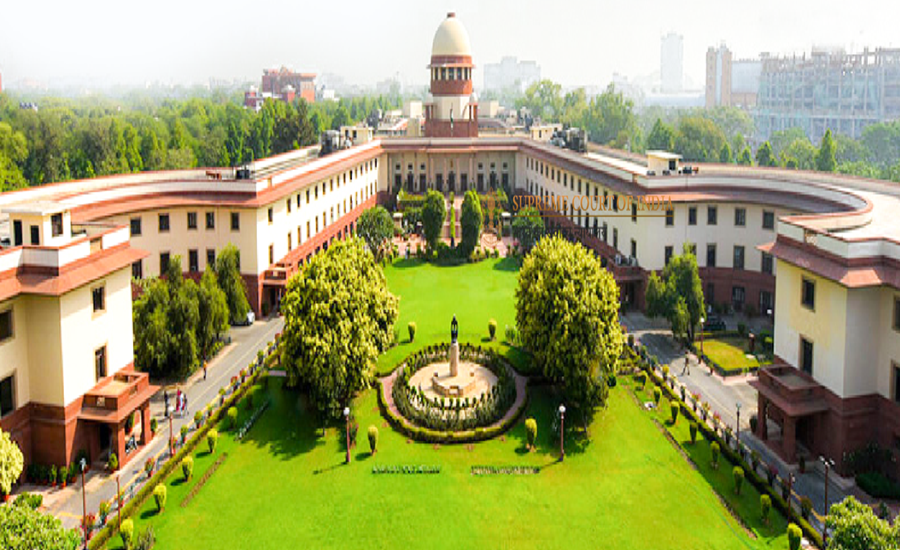
New Delhi: The Supreme Court’s proposal for a common election date for Delhi Bar Associations aims to make bar association elections more organised and transparent. The Court suggested that the Supreme Court Bar Association (SCBA), Delhi High Court Bar Association, and district bar associations in Delhi could hold their elections on the same date every year.
The proposal came during a hearing on electoral reforms in bar associations. The Court also discussed voting eligibility, limits on elected office terms, and ways to ensure that genuine and active members can participate in elections.
Details of Delhi Bar Election Reforms
The Supreme Court suggested that bar associations in Delhi could agree on a common annual election schedule. For example, elections could take place during the first week of November every year.
Read also: Big Warning to Bar Associations: Follow 30% Women Rule or Face Suspension, Says Supreme Court
Chief Justice of India (CJI) Surya Kant observed that a common election calendar could help simplify the electoral process and address concerns about lawyers belonging to multiple bar associations. However, the Court clarified that it would not decide the election date on its own at this stage. It first wanted to hear the views of the concerned bar associations and other stakeholders.
One Bar, One Vote Principle Discussed
The Court discussed the principle of “one bar, one vote” to improve fairness in bar association elections. Under the suggested approach, a lawyer who belongs to both a district bar association and the SCBA could choose to vote in either association’s election, but not in both.
The proposal aims to reduce possible problems arising when lawyers are members of multiple associations. The Court indicated that a common election schedule could make this arrangement easier to implement.
Delhi Bar Election Reforms: Supreme Court Examines Voting Eligibility
The Court also sought details about the number of members and eligible voters in the SCBA.
During the hearing, SCBA Vice-President Rahul Kaushik stated that the association had approximately 28,000 to 30,000 members. Around 3,400 to 3,500 members had participated as eligible voters in the latest election.
The CJI asked whether the existing eligibility conditions prevented a significant number of members from voting.
The SCBA representatives explained that membership and eligibility to vote were different. Some members might not meet the prescribed requirements or might choose to vote in another bar association.
The Court asked the representatives to provide details of total membership, eligible voters, and the effect of the existing voting conditions.
The CJI said the aim was to ensure that voting rights were exercised by genuine members who regularly attended court and participated in association activities.
Supreme Court Suggests Using Proximity Card Records
The Court also discussed whether the Supreme Court Registry could develop software to combine advocates’ proximity card entry records.
Such a system could record the date and time when an advocate enters the Court premises. The information could then help create a consolidated record of court visits over a year. The proposal arose in the context of electoral reforms directed by the Court on May 29, 2026.
Those reforms stated that proximity card entry records could be used as supporting evidence, but not as the sole basis for deciding whether an advocate was eligible to vote.
The suggested system could help authorities assess court attendance more efficiently. However, attendance records would need to be considered alongside the other applicable eligibility requirements.
Delhi Bar Election Reforms: Court Seeks Views On Limits For Elected Office Terms
The Supreme Court also considered whether bar associations should limit the number of times a person can hold an elected position.
The issue arose from an application seeking restrictions on repeated terms in the SCBA. The application referred to Rule 17 of the SCBA Rules and the existing cooling-off period after a person holds a post for two consecutive years.
Senior Advocate Shobha Gupta, appearing for the applicant, submitted that the SCBA had eight elected posts, ranging from President to Executive Member.
She argued that an individual could hold each post four times. When cooling-off periods were included, the arrangement could allow a person to occupy elected positions over a period extending to 47 years.
Gupta also argued that some former office-bearers continued campaigning for other candidates during their cooling-off periods and transferred their votes to them. She said restrictions were needed to encourage lawyers to focus on their legal practice instead of repeatedly holding elected positions.
Chief Justice Raises Concerns About Voters’ Choice
The CJI expressed reservations about introducing strict limits on elected positions. He observed that any restriction would have to be balanced against the electorate’s right to choose its representatives. The Court emphasised that reforms should not prevent voters from selecting the candidates they prefer.
It also noted that serving as a bar association office-bearer involved significant responsibility and professional sacrifice. Members should be able to decide who represents them.
SCBA Vice-President Rahul Kaushik stated that the association’s existing rules already limited a person to a maximum of four terms in a particular post.
The Court said it was not inclined to express a final view at this stage. It asked the SCBA, the Delhi High Court Bar Association, and district bar associations to state whether they supported the proposal, opposed it, or wanted to suggest an alternative.
Election Committee Asked To Submit Status Report
The Supreme Court directed the Election Committee responsible for overseeing the SCBA’s electoral reforms to submit a status report.
The report must be prepared in consultation with the association’s Executive Committee. It should explain the recommendations under consideration and the steps being taken to implement the reforms contemplated in the Court’s May 29 order.
The Court also discussed whether proposed changes that could substantially affect membership should be placed before the SCBA’s general body. The CJI observed that if the reforms were likely to adversely affect a large number of members, the matter might need to be considered by the general body.
Supreme Court Previously Deferred Implementation Of Delhi Bar Election Reforms
On May 29, 2026, the Supreme Court prescribed revised eligibility criteria for voters and candidates in bar association elections. It also introduced safeguards against electoral inducements and measures intended to improve transparency and accountability.
In July 2026, the Court deferred implementation of the reforms until the 2027–28 election cycle. It directed the Election Committee to continue working on the necessary changes and complete the required work by December 31, 2026.
The latest hearing continued the discussion on how these reforms should be implemented and how election rules could be improved without unfairly restricting members’ rights.
Read also: Supreme Court Clarifies Article 12: Bar Associations Not Subject to Writ Jurisdiction
FAQs
The one bar, one vote principle means that a lawyer who belongs to multiple bar associations could choose to vote in one association’s election rather than voting in elections of all the associations.
The Supreme Court suggested that the SCBA, Delhi High Court Bar Association, and district bar associations in Delhi could hold their elections on a common date every year to simplify the electoral process.
No. The Supreme Court has not finalized a common election date. It has sought the views of the concerned bar associations before taking a further decision.