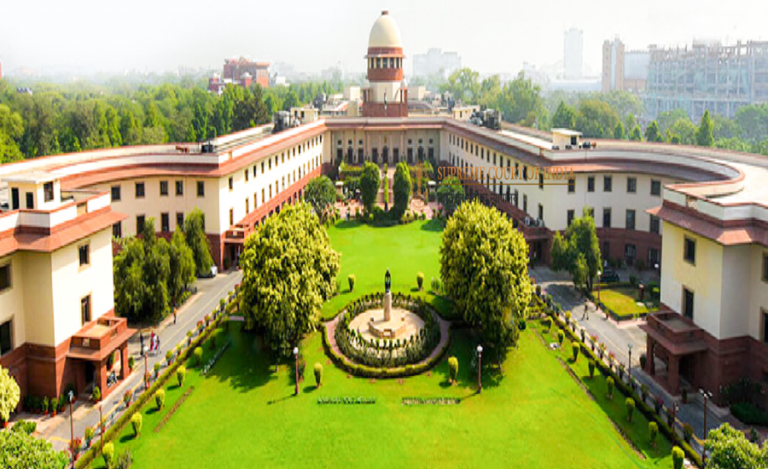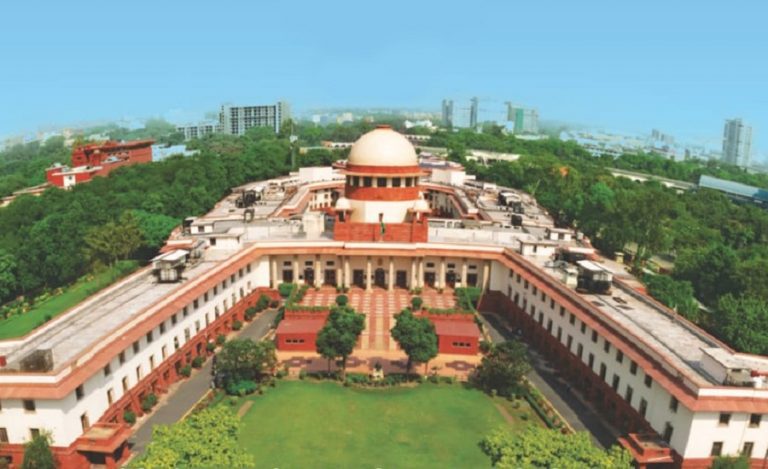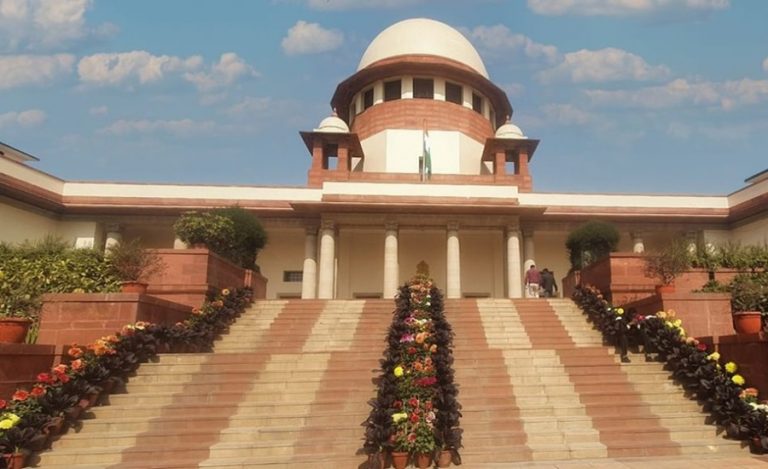
New Delhi: The Supreme Court of India has asked the Ministry of External Affairs (MEA) to consider issuing a public notice inviting compensation claims from families of Indians killed in the Russia-Ukraine war. The move aims to help more families learn about their right to seek compensation from Russian authorities.
During the hearing on October 14, 2026, the Court noted that 51 Indian nationals had reportedly died while serving in the Russian armed forces, but only six families had sought compensation. The Court also asked the government to simplify the claim process and provide better support to affected families.
Supreme Court Seeks Compensation For Families Of Indians Killed In Russia Ukraine War
A bench comprising Chief Justice of India Surya Kant and Justice Joymalya Bagchi heard a petition concerning Indian nationals who allegedly travelled to Russia for jobs but were recruited into the Russian armed forces.
Read also: Why The Supreme Court Called India’s Criminal Justice System A ‘Wounded Republic’
The petition was filed by family members of 26 Indian nationals. It raised concerns about alleged deception and human trafficking linked to the recruitment of Indians to fight in the Russia-Ukraine war.
The Court stressed that affected families must be informed about their right to seek compensation. It asked the MEA to consider issuing a public notice so that families who have not yet contacted the authorities can also receive help.
The Ministry was also asked to submit a fresh status report explaining the compensation amounts decided by Russian authorities and the money actually paid to the families.
Russia Ukraine War: 51 Indians Reportedly Dead And 77 Still Untraced
According to the MEA’s latest status report, approximately 267 Indian nationals had joined the Russian armed forces. The report stated that 139 Indians had been discharged, while 51 had reportedly died. The whereabouts of 77 Indian nationals remained unknown, including seven people whom Russian authorities had confirmed as missing.
The Indian government and the Indian Embassy in Moscow are continuing to contact Russian authorities to find the missing nationals and assist affected families. These figures show the scale of the problem and the need for better information, support and compensation procedures for families affected by the conflict.
Only Six Families Had Sought Compensation
The MEA informed the Court that Russian authorities had processed six compensation claims. Additional Solicitor General Aishwarya Bhati, representing the government, told the bench that one family had received the full compensation amount, while another had received a partial payment.
Four other families had approached Russian authorities directly to seek compensation. Chief Justice Surya Kant noted that compensation claims had been pursued for only six families despite the reported deaths. Justice Bagchi asked the government to provide more details about the amounts determined and the payments actually received.
The Court wants the government to ensure that eligible families know about the process and receive the assistance needed to submit their claims.
Families Face Difficulties In Claiming Compensation
During the hearing, the petitioners’ counsel explained that families seeking compensation were facing practical problems.
According to the submissions, Russian authorities sometimes required family members to travel to Russia, in some cases more than once. They were also reportedly asked to open bank accounts there.
These requirements can create financial and administrative difficulties for families already dealing with the loss of a loved one.
The petitioners also referred to compensation claims of approximately ₹1.5 crore for each deceased Indian national. This figure was presented during the hearing and should not be understood as a confirmed, uniform payment amount for every family.
The petitioners asked the government to explore whether claims could be submitted through the Russian Embassy in India, including through Russian banks operating in Delhi.
Russia Ukraine War: Supreme Court Asks Government To Simplify The Process
Justice Joymalya Bagchi asked the petitioners to prepare a list of practical suggestions for simplifying the compensation process.
The suggestions are to be discussed with Additional Solicitor General Aishwarya Bhati so that the concerned ministries can examine possible solutions.
The government assured the Court that it would continue working with Russian authorities to make the process easier. It also said that diplomatic efforts were being made to address the difficulties faced by affected families. The Court asked the MEA to provide full assistance to families seeking compensation and to submit an updated report on the steps taken.
MEA Asked To Improve Assistance For Russia Ukraine War Affected Families
The Court also asked the MEA to consider creating standard procedures and assistance schemes for Indian nationals who become victims of human trafficking or other conflict-related situations.
The proposed support could help families understand the documents, legal steps and other requirements involved in seeking compensation.
The Ministry has been contacting families individually to collect personal information and documents needed to process claims. However, the Court indicated that a public notice could help reach families who may not yet be in contact with the government. The aim is to make the process more accessible and reduce the risk of eligible families missing out on assistance.
Government Warns Indians Against Risky Recruitment Offers
The MEA’s status report said that some Indian nationals travelled to Russia on work, education or tourist visas before joining the Russian military in the hope of receiving financial benefits or bonuses. The report also noted that some Indians had reportedly rejoined after being repatriated.
On September 30, 2026, the Ministry issued an advisory again warning Indian nationals about the dangers of joining the Russian armed forces. It advised people to accept job offers only from agents registered with the Ministry, after concerns emerged about recruitment through non-public entities, including voluntary groups.
The case highlights the importance of checking overseas employment offers carefully and avoiding recruitment arrangements that could expose people to serious danger.
Supreme Court Directs Legal Aid And DNA Testing Support
In an earlier order dated July 31, 2026, the Supreme Court directed the MEA to appoint a nodal officer to coordinate with the families of Indian nationals who had died or been injured after travelling to Russia.
The Court also directed the Ministry to arrange DNA tests to help identify mortal remains and provide families with the documents and information required to claim compensation.
It further instructed the Legal Services Authorities in Rajasthan, Punjab, Haryana and Himachal Pradesh to provide free legal assistance to affected families. This includes help with compensation claims and DNA testing. The latest directions build on these earlier measures by asking the government to reach more families and improve the process for obtaining compensation.
Read also: India Denies Defence Pact Talks With Israel Amid Growing Regional Security Debate
FAQs
According to the MEA’s status report cited during the October 2026 hearing, 51 Indian nationals had reportedly died, while 77 remained untraced. The report also stated that 139 Indians had been discharged from the Russian armed forces.
The Supreme Court asked the Ministry of External Affairs to consider issuing a public notice because only six families had sought compensation despite 51 reported deaths of Indians serving in the Russian armed forces. The notice could help inform other eligible families about the claims process.
Families can contact the Ministry of External Affairs and the relevant Indian Embassy or authorities for official guidance on compensation claims, required documents and identification procedures. The Supreme Court has asked the government to assist affected families and explore ways to simplify the process. The exact procedure and compensation amount may depend on the individual case.