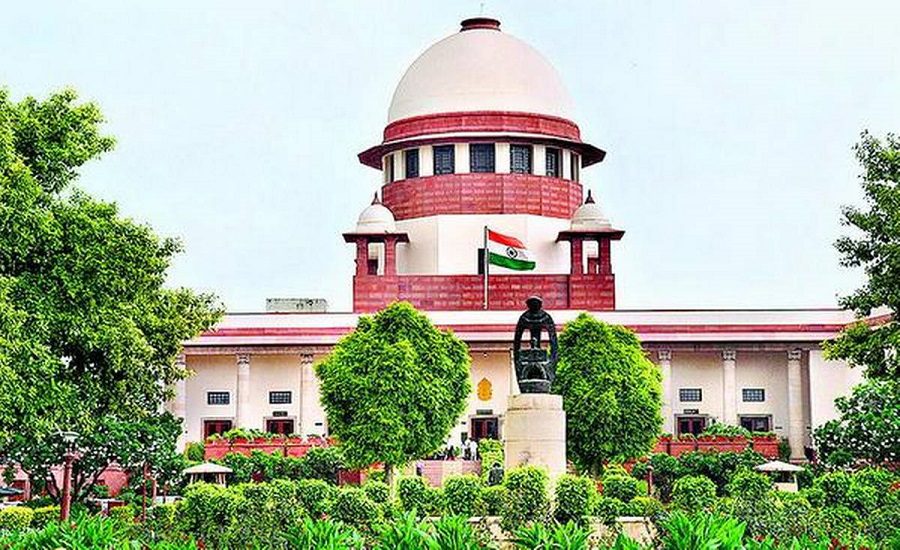
New Delhi: Bar association writ jurisdiction has once again come under judicial scrutiny after the Supreme Court refused to interfere with a Delhi High Court judgment that held a Bar Association is not a “State” or an instrumentality of the State under Article 12 of the Constitution.
The ruling reinforces the legal position that private lawyers’ associations do not perform public functions and therefore cannot generally be subjected to writ proceedings under Article 226.
Details of Bar Association Writ Jurisdiction
A bench comprising Justice P. S. Narasimha and Justice Aravind Kumar dismissed a Special Leave Petition (SLP) filed by advocate Sangita Rai against a Delhi High Court judgment.
Read also: Right to Trauma Care: This Supreme Court Verdict Could Change Emergency Healthcare in India Forever
The Supreme Court agreed with the High Court’s finding that:
- A Bar Association is a private body of advocates.
- It is not a “State” under Article 12 of the Constitution.
- It does not perform public functions.
- Therefore, it is generally not amenable to writ jurisdiction.
Background of the Bar Association Writ Jurisdiction
The dispute originated from a lawyers’ chamber at Patiala House Courts in Delhi.
Advocate Sangita Rai had approached the Delhi High Court seeking:
- Restoration of possession of a chamber.
- Directions against certain advocates accused of criminal trespass.
- Action by the New Delhi Bar Association and the Bar Council of Delhi.
Later, the focus of the case shifted mainly to seeking action against the advocates concerned.
Why Did the Delhi High Court Reject the Petition?
The Delhi High Court held that the New Delhi Bar Association:
- It is registered under the Societies Registration Act, 1860.
- Exists primarily for the welfare of its members.
- Is a private association of lawyers.
- Does not discharge public duties comparable to government authorities.
Because of these factors, the Court ruled that it is neither a State nor an instrumentality of the State under Article 12. Consequently, a writ of mandamus cannot ordinarily be issued against it.
Bar Association Writ Jurisdiction: Supreme Court’s Additional Observations
The Supreme Court not only dismissed the petition but also imposed costs of ₹25,000 on the petitioner.
The Court directed that the amount be paid to the Patiala Court Advocates Association.
During the hearing, the bench expressed concern over the use of writ proceedings for what was essentially a chamber occupation dispute and emphasized that legal remedies must be pursued through the proper forum.
Understanding Article 12 and Writ Jurisdiction
What is Article 12?
Article 12 defines what entities can be considered “State” for the purpose of enforcing Fundamental Rights.
Typically, it includes:
- Central Government
- State Governments
- Parliament
- State Legislatures
- Local authorities
- Government-controlled bodies
Private organizations usually do not fall within this definition unless they perform substantial public functions.
What is a Writ Petition?
A writ petition under Article 226 allows High Courts to issue directions, orders, or writs against authorities that violate legal or constitutional rights.
However, such powers are generally exercised against public authorities or bodies performing public duties.
Why Is This Judgment Important?
Key Legal Takeaways
- Bar Associations are generally private bodies.
- Welfare functions for advocates do not automatically become public functions.
- Courts are unlikely to entertain writ petitions against private Bar Associations unless exceptional circumstances exist.
- Disputes relating to chamber possession, trespass, or membership issues may need to be pursued through appropriate civil, criminal, or statutory remedies.