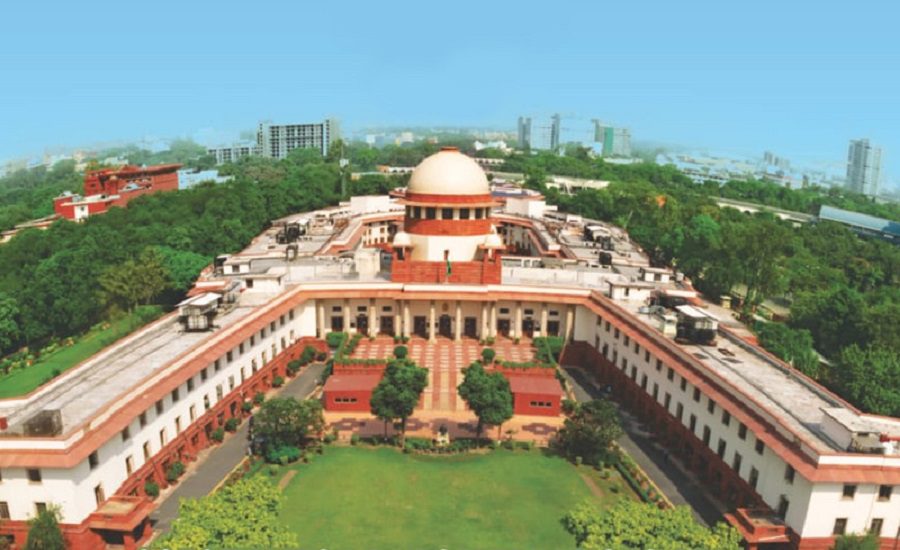
New Delhi: The Supreme Court of India set aside an NCLT judgment that relied on fake, AI-generated legal precedents. Calling such material a serious threat to the justice system, the Court directed the Bar Council of India (BCI) to examine the issue and develop appropriate guidelines for the responsible use of artificial intelligence in legal practice.
Details of Supreme Court Fake Legal Precedents Ruling
A Bench of Justice P.S. Narasimha and Justice Alok Aradhe ruled that courts cannot rely on non-existent or AI-generated fake judgments while deciding cases.
The Court observed that AI can help legal research, but it cannot replace human verification and judicial reasoning. Every legal citation must be carefully checked before being used in court.
Why Was the NCLT Judgment Set Aside
The case involved insolvency proceedings against Essel Infraprojects Ltd. During the hearing, it was found that both the National Company Law Tribunal (NCLT) and the National Company Law Appellate Tribunal (NCLAT) had relied on several judicial precedents that either did not exist or did not support the legal conclusions mentioned in their orders.
An affidavit submitted before the Supreme Court confirmed that these cited judgments could not be found in any recognized legal database. Based on this, the Supreme Court set aside the orders passed by both tribunals.
Supreme Court Fake Legal Precedents Ruling: AI Hallucinations is a Dangerous Chemical Leak
One of the strongest observations in the judgment was the Court’s comparison of AI hallucinations with methyl isocyanide, the highly dangerous gas associated with the Bhopal gas tragedy. The Court said that fake AI-generated legal material spreads quietly but can become extremely harmful before anyone notices. It warned that using fabricated precedents threatens the integrity of the judicial system.
Zero tolerance for fake AI-generated citations
The Supreme Court declared that courts must adopt a zero-tolerance policy toward AI-generated fake precedents. According to the judgment:
- Lawyers who cite AI-generated judgments without verifying them may commit professional misconduct.
- Judges should never rely on fake or hallucinated legal precedents.
- Any judgment based on fabricated AI material cannot be treated as a valid judicial decision and may be set aside.
Supreme Court Fake Legal Precedents Ruling: BCI Asked to Create Expert Committee
Recognizing the growing use of artificial intelligence in law, the Supreme Court directed the Bar Council of India (BCI) to form a committee of experts. The committee will study the challenges created by AI in legal practice and recommend guidelines to ensure AI is used responsibly without compromising justice.
Human Control Must Remain in the Justice System
The Bench clarified that it is not against the use of AI. Instead, it emphasized that AI should only assist judges and lawyers. Final decision-making must always remain under complete human control to protect fairness, accuracy and public trust in the legal system.
What is the Importance of Supreme Court Fake Legal Precedents Ruling
This ruling is one of India’s strongest judicial warnings about the misuse of artificial intelligence in courts. It sends a clear message that AI-generated information must always be verified before being cited and that human oversight will remain essential in judicial proceedings. The decision is expected to influence future policies on the responsible use of AI in the legal sector.
Read also: Turning Point for Indian Lawyers: Supreme Court Questions BCI’s Ban in Bar Council Elections