https://indianmasterminds.com

ADVERTISEMENT
ADVERTISEMENT

Long-Standing Unauthorised Property Demolition Policy Case: Why the Top Court Refused a Uniform National Framework

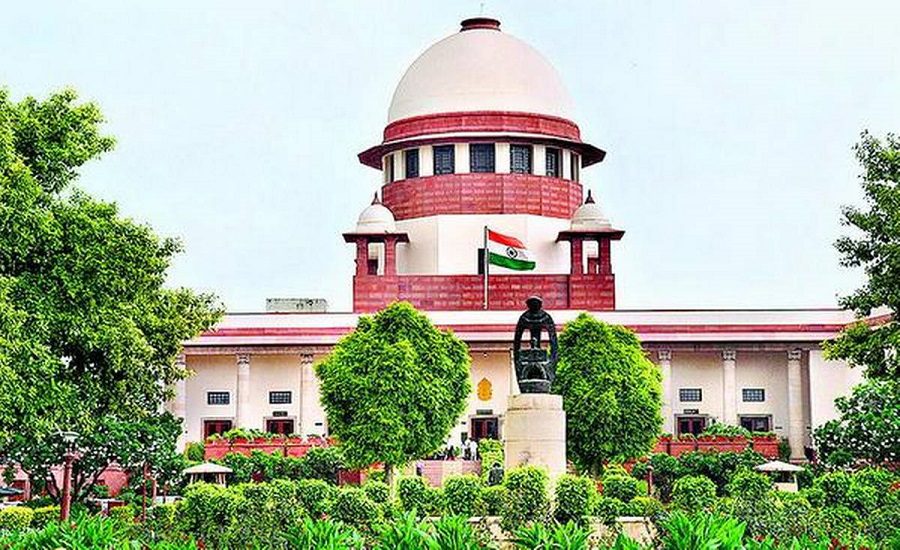
The Supreme Court has declined to frame a nationwide policy for regularisation and demolition of long-standing unauthorised properties, saying such matters fall within the policy domain of States and Union Territories.
Long-Standing Unauthorised Property Demolition Policy Case
Indian Masterminds Stories

New Delhi: The Supreme Court declined to create a uniform national policy for the regularisation and demolition of long-standing unauthorised properties. Instead, the Court said that States and Union Territories should examine the issues raised and consider suitable policy measures based on their local circumstances.

Detailed of Long-Standing Unauthorised Property Demolition Policy Case

The Supreme Court refused to entertain a petition seeking a uniform policy across India for dealing with long-standing unauthorised constructions.

Read also: Why Has the Supreme Court Issued Notice on Netaji Mortal Remains? Explained

A Bench comprising Chief Justice of India (CJI) Surya Kant, Justice Joymalya Bagchi and Justice V Mohana observed that different States face different ground realities. The Court said a single policy framework may not be practical for the entire country.

Long-Standing Unauthorised Property Demolition Policy Case: What Was the Petition About

The petition was filed by the Centre for Law and Good Governance. It sought the formation of a court-appointed committee to create uniform guidelines for the regularisation and demolition of old unauthorised constructions across India.

The petitioner argued that States currently follow different approaches, leading to inconsistency in demolition and settlement policies.

Long-Standing Unauthorised Property Demolition Policy Case: Supreme Court’s Key Observation

The Bench stated that policy decisions related to regularisation and demolition primarily fall within the powers of governments and administrative authorities. The Court observed that circumstances vary from State to State and therefore different policy solutions may be required.

According to the Court, it would not be prudent to impose a single national framework on all States.

States Asked to Consider the Issues Raised

While refusing to frame a uniform policy, the Supreme Court said States and Union Territories may consider the concerns highlighted in the petition. The Court expressed hope that competent authorities would review the issues while revising or formulating their policies.

This observation leaves room for governments to address local challenges through appropriate administrative measures.

Concerns Raised by the Petitioner

The petitioner argued that several States have introduced settlement and regularisation schemes for unauthorised colonies. However, it claimed that in some cases demolitions take place suddenly, sometimes without adequate rehabilitation measures for affected families. The petition stressed the need to balance urban planning laws with the rights of residents.

Right to Shelter Discussed During Hearing

During the hearing, counsel for the petitioner referred to Supreme Court judgments recognising the importance of shelter and human dignity. The petitioner argued that demolitions should not occur without considering whether residents have access to alternative accommodation.

The Court acknowledged the importance of human rights concerns but maintained that policy-making remains primarily the responsibility of governments.

Long-Standing Unauthorised Property Demolition Policy Case: Supreme Court Highlights Existing Safeguards

The Bench noted that the Supreme Court has already issued directions in previous cases regarding illegal and unauthorised demolitions. CJI Surya Kant observed that persons in settled possession cannot be dispossessed without due process of law. The Court also referred to earlier rulings requiring notice before demolition in appropriate cases.

Court Rejects Judicial Policy-Making Role

The judges clarified that a court-appointed committee cannot replace the powers of States or municipal authorities responsible for enforcing laws. The Bench stressed that courts cannot enter the policy-making domain of the executive unless required by law. Justice Joymalya Bagchi also noted that such issues often need to be examined individually rather than through a broad nationwide policy.

Read also: CJI Surya Kant Announces Key Judicial Reform: 7-Judge Benches to Be Formed Soon

Indian Masterminds Stories
Join our WhatsApp Channel
ADVERTISEMENT
ADVERTISEMENT
Related Stories
ADVERTISEMENT
ADVERTISEMENT
NEWS
Long-Standing Unauthorised Property Demolition Policy Case
Long-Standing Unauthorised Property Demolition Policy Case: Why the Top Court Refused a Uniform National Framework
IB officer Ankit Sharma murder case
IB Officer Ankit Sharma Murder Case: Delhi Police Begins Process To Appeal Acquittal Of Six Accused
NLC India
NLC India Honoured with Silver Award at People Matters Infini-T Awards 2026 for Learning & Development 
Quantum Radar Threats
What Is Quantum Radar? Why Does AMCA Need to Look Beyond RF Stealth? Former DRDO Director Explains
Franco-Indian 6th-Gen Fighter Programme
Why Two More Countries Could Join the India-France 6th-Generation Fighter Programme
Indian Army Advanced Night and Thermal Weapon Sights RFI
Explained: Indian Army's New Plan to Upgrade SIG-716, AK-203 and Negev LMG
Chinese encroachment in Arunachal Pradesh
Chinese Encroachment in Arunachal Pradesh: India Reaffirms Control Over State Amid Fresh Chinese Claims
Bharat Forge 1.25 MW Marine Gas Turbine Generator
Atmanirbhar Bharat Boost: Bharat Forge 1.25 MW Marine Gas Turbine Generator Enters Trial Phase
ADVERTISEMENT
ADVERTISEMENT
Videos
Shakeel Ahmad Ganie IRS Interview
‘My Path Has Not Been Straight’: Shakeel Ahmad Ganie’s Journey to the IRS
Sumit Ramteke tn
IPS Sumit Ramteke on the Cases That Changed His Career and Shook Organized Crime | Video Interview
How NAFED is Strengthening Farmers, Markets and Food Security
ADVERTISEMENT
UPSC Stories
Abhay Pratap Singh UPSC CAPF 2025
From 10 SSB Setbacks to UPSC CAPF AIR 191: Abhay Pratap Singh’s Journey in Uniform
After 10 SSB setbacks, postal department job and two CAPF attempts, Abhay Pratap Singh cleared UPSC CAPF...
From Engineering Desks to the Uniform: The Inspiring Journeys of UPSC CAPF 2025’s Top 5 Toppers
Sheershoo Deb, Aryan Sheoran, Akanksha Vishwakarma, Rohan and Harsh Shankarlal Solanki prove that there...
How Family Sacrifices Helped Pradip Bhandare Achieve His IFS Dream
After seven Civil Services Mains, three Indian Forest Service Mains, five UPSC interviews and years of...
CSR NEWS
CSR TIMES Awards
NLC India Bags Gold at CSR TIMES Awards 2026 for Over 150 Rural Infrastructure Projects 
NLCIL recognised in the Rural & Infrastructure Development category after implementing over 150 projects...
Project Bright Horizon
HPCL, Assam Rifles and Antogattva Foundation Sign MoU to Launch Project Bright Horizon in Northeast
Project Bright Horizon aims to directly impact 1,500 people and benefit 2,500 more through better learning,...
CMPDI CSR
CMPDI Partners with Frontline Global Services to Train 60 Jharkhand Youth Under CSR Initiative
 CMPDI will invest ₹73.62 lakh to provide residential Phlebotomy Technician training, helping unemployed...
ADVERTISEMENT
ADVERTISEMENT
ADVERTISEMENT
Latest
Long-Standing Unauthorised Property Demolition Policy Case
Long-Standing Unauthorised Property Demolition Policy Case: Why the Top Court Refused a Uniform National Framework
IB officer Ankit Sharma murder case
IB Officer Ankit Sharma Murder Case: Delhi Police Begins Process To Appeal Acquittal Of Six Accused
ADVERTISEMENT
ADVERTISEMENT
ADVERTISEMENT
ADVERTISEMENT
ADVERTISEMENT
ADVERTISEMENT
ADVERTISEMENT
Videos
Shakeel Ahmad Ganie IRS Interview
Sumit Ramteke tn
How NAFED is Strengthening Farmers, Markets and Food Security
ADVERTISEMENT
ADVERTISEMENT