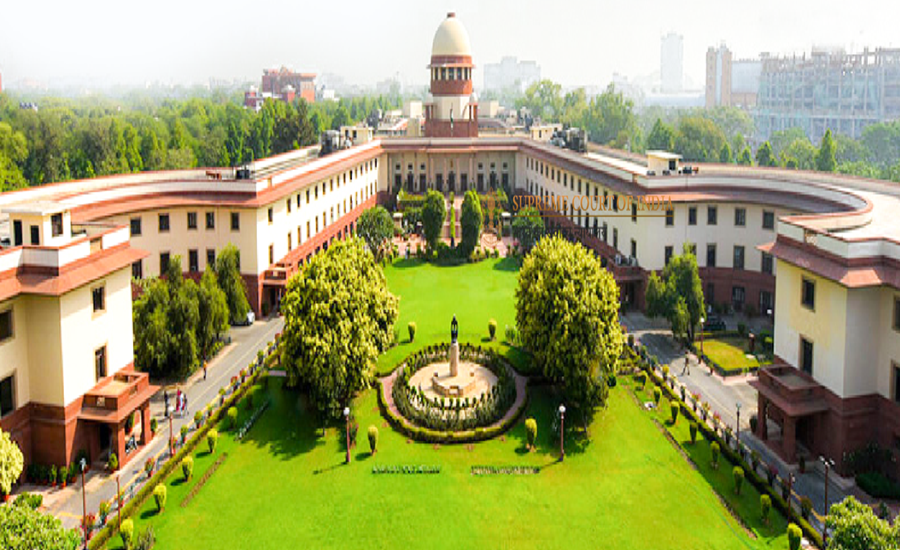
New Delhi: The Supreme Court dismissed the Ashok Chakra plea seeking directions to install the Ashok Chakra (National Emblem) on the main dome of the Supreme Court building. However, Chief Justice of India Surya Kant said that decisions about what should be displayed on the Supreme Court building are internal administrative matters and will be handled by the court itself.
Supreme Court Refuses to Entertain the Ashok Chakra Plea
A Bench led by Chief Justice of India Surya Kant declined to hear the petition filed by Badaravada Venugopal, also known as Baba Khatarnak.
Read also: Big Change in India’s Justice System: NIC Unveils Automated Prisoner Release Software
During the hearing, the CJI remarked that the Supreme Court itself would decide what should be placed on its premises. He also advised the petitioner to focus on larger public issues instead of matters relating to the court’s internal administration.
What Was the Petition About
The petitioner requested the Supreme Court to direct the installation of the Ashok Chakra (National Emblem) on the main dome of the apex court.
According to the petition, displaying the National Emblem would strengthen what the petitioner described as the constitutional identity of the country’s highest court.
Ashok Chakra Plea: Court Says the Matter Is Administrative
The Bench made it clear that such decisions fall under the Supreme Court’s administrative powers. The judges observed that questions regarding the design, appearance, or display of symbols on the Supreme Court building do not require judicial intervention. Instead, they are to be handled internally by the court’s administration.
Background of the Case
The matter had first reached the Supreme Court through a writ petition filed under Article 32 of the Constitution. On March 23, 2026, the court disposed of that petition and directed the Secretary General of the Supreme Court to examine the issue on the administrative side rather than through judicial proceedings.
What Happened After the March Order
Following the March order, the petitioner sought an update on the implementation of the administrative directions. The application was examined by the Registrar of the Supreme Court under the Supreme Court Rules, 2013. The Registrar rejected the request on July 3, 2026. The petitioner then challenged the Registrar’s decision before the Bench.
Ashok Chakra Plea: Appeal Also Rejected
The Supreme Court refused to interfere with the Registrar’s order. The Bench held that there was no reason to reconsider the administrative process already put in place and dismissed the appeal.
Why This Decision Matters
The ruling highlights an important constitutional principle. The Supreme Court has reaffirmed that matters relating to the appearance, symbols, and internal administration of the apex court are for the institution itself to decide. Courts generally avoid using judicial proceedings to settle issues that fall within their own administrative authority.
Read also: CJI Surya Kant Explains How the Collegium Selects Supreme Court and High Court Judges