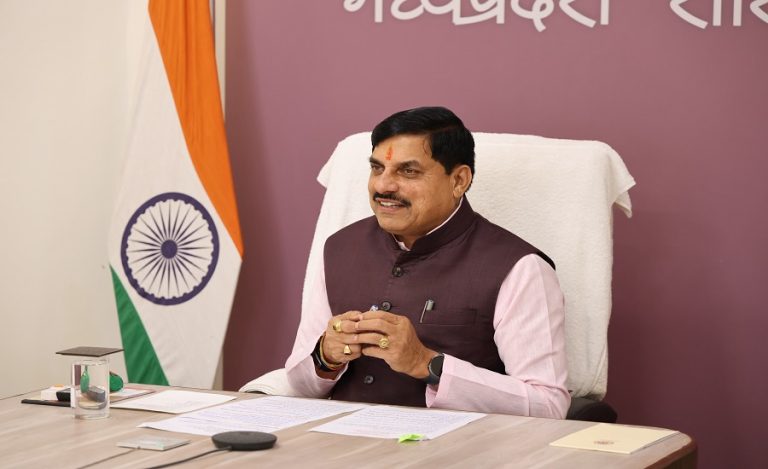
Bhopal: Chief Minister Dr. Mohan Yadav said Madhya Pradesh has emerged as a global role model in wildlife conservation and biodiversity management, with the state becoming a leading example of scientific conservation, ecological restoration, and sustainable environmental development.
Addressing the state-level International Biodiversity Day 2026 program and media workshop on cheetah conservation at the Indian Institute of Forest Management in Bhopal, the Chief Minister said the diversity of flora and wildlife is the state’s greatest natural wealth and preserving it is the collective responsibility of society.
Madhya Pradesh Becomes India’s “Cheetah State”
The Chief Minister said Madhya Pradesh today proudly holds titles such as “Tiger State,” “Leopard State,” “Cheetah State,” “Vulture State,” “Gharial State,” and “Wolf State.”
Highlighting the success of Project Cheetah, Dr. Yadav said cheetahs, which had become extinct in India decades ago, have successfully adapted to the forests of Kuno National Park and Gandhi Sagar Sanctuary.
He revealed that Madhya Pradesh is now home to 53 cheetahs, including cubs born in India, making the state one of the world’s most successful wildlife reintroduction models.
“The cheetah project has become a remarkable global example of innovative wildlife restoration,” the Chief Minister said while thanking the Central Government for giving Madhya Pradesh the opportunity to become India’s “Cheetah State.”

Biodiversity and Wildlife Achievements Expand Across the State
Dr. Mohan Yadav said Madhya Pradesh is rapidly strengthening its biodiversity ecosystem through major conservation efforts.
Key achievements highlighted during the event included:
- Reintroduction of wild buffalo after nearly 100 years
- Release of 33 rare turtles and 53 gharials into the Kuno River
- Rehabilitation of endangered vultures in the Halali Dam region
- Presence of over 5,000 plant species
- More than 500 bird species and 180 fish species
- Increasing elephant population in Madhya Pradesh forests
The Chief Minister also noted that Madhya Pradesh is internationally recognized as “Mowgli Land” and the “Land of White Tigers.”
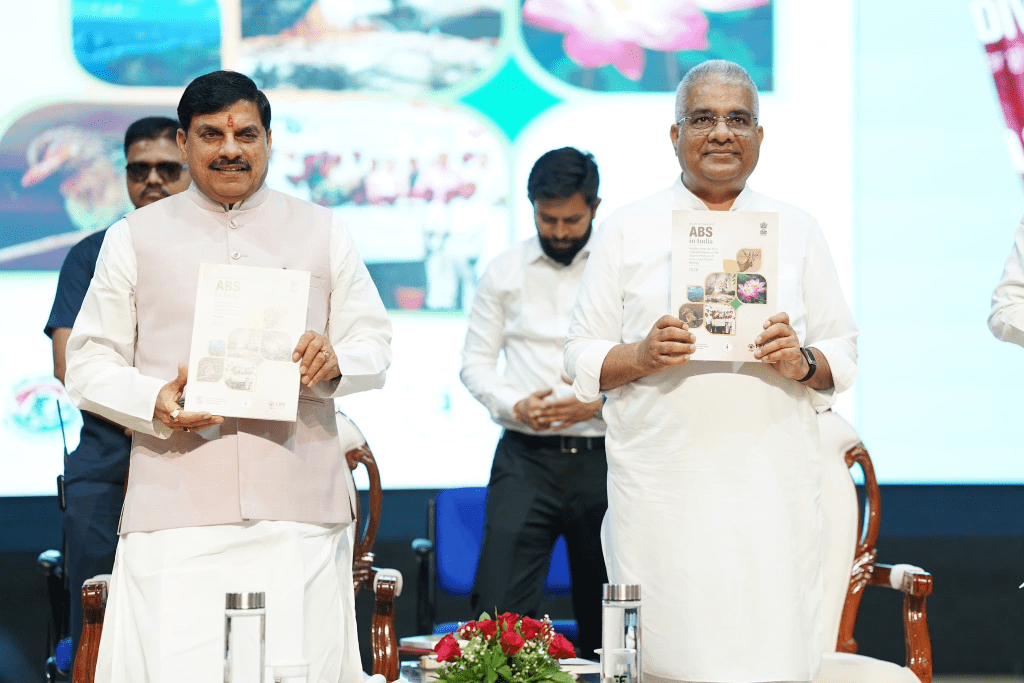
ABS Portal, Biodiversity Report and Data Driven Lab Launched
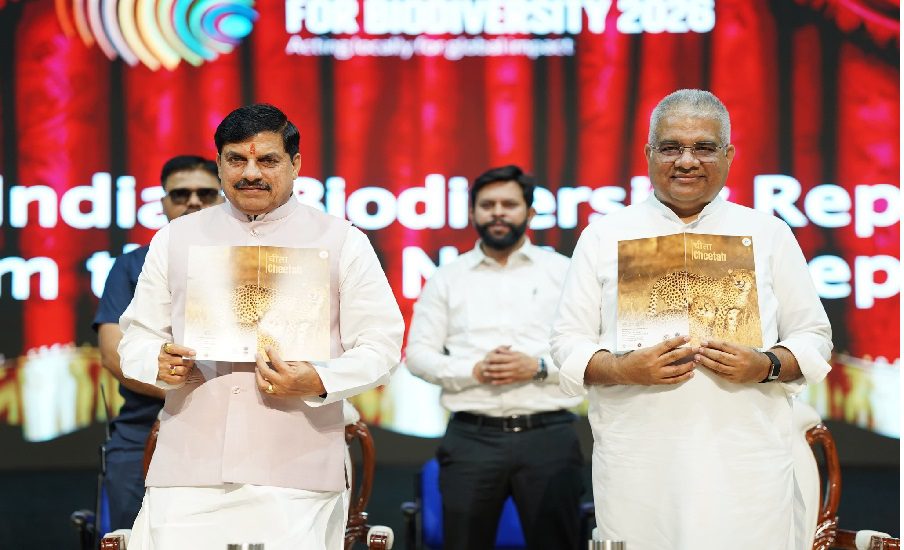
During the International Biodiversity Day celebrations, Chief Minister Dr. Mohan Yadav and Union Environment, Forest and Climate Change Minister Bhupender Yadav jointly launched several important biodiversity initiatives.
These included:
- ABS End-to-End Web Portal
- India’s Biodiversity Report 2026
- Cheetah conservation-themed brochure
- Promotional biodiversity literature
- Postal “My Stamp” commemorative ₹5 stamp
- Newly established Data Driven Laboratory at IIFM
Officials said the ABS portal will help strengthen biodiversity protection, environmental awareness, and wildlife management systems through technology-driven solutions.
The event also featured exhibitions, biodiversity films, and presentations on conservation projects across India
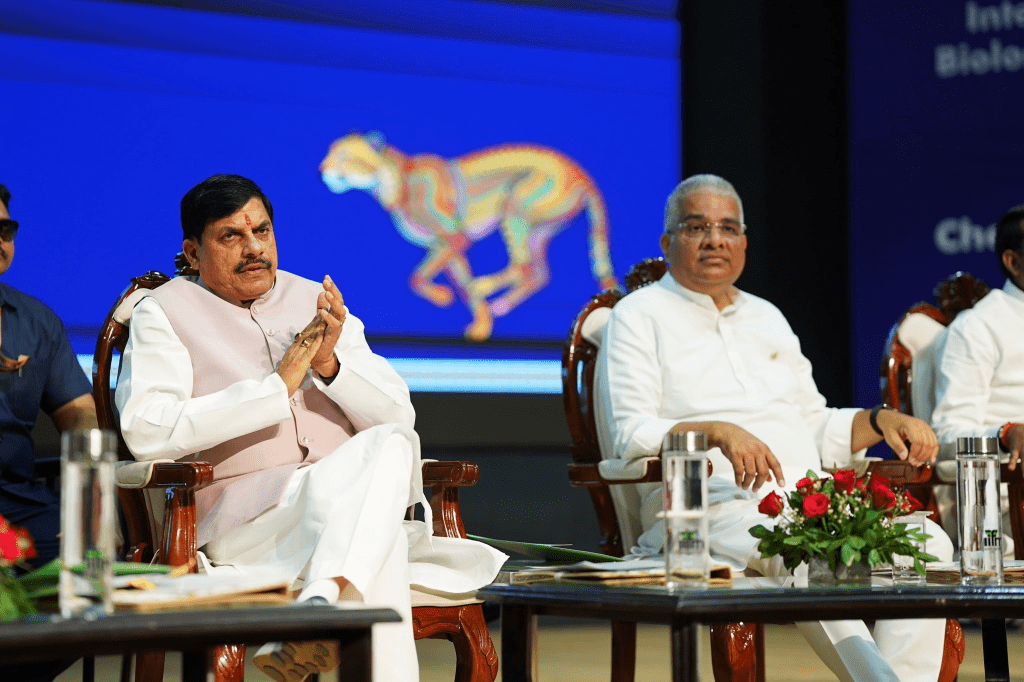
Wildlife Rescue Centers to Come Up Near Forests and National Parks
The Chief Minister announced that wildlife rescue centers are being established near forests and national parks to ensure faster medical treatment and emergency rescue support for injured animals.
He also said Madhya Pradesh is preparing for future conservation projects involving reptiles, including king cobras, along with plans related to rhino conservation.
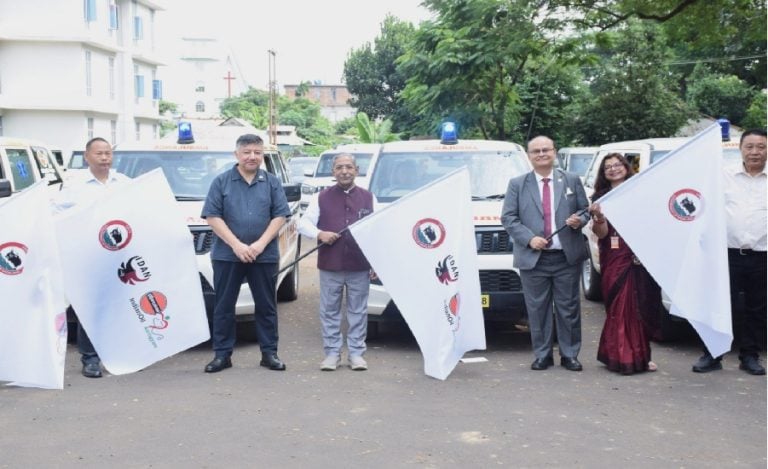
New rescue vehicles and motorcycles for forest field staff were also flagged off during the event.
Massive Water Conservation Campaign Underway in Madhya Pradesh
Highlighting environmental sustainability efforts, Dr. Yadav said Madhya Pradesh is leading the country in protecting water resources, forests, and soil fertility.
Under the state’s “Jal Ganga Sanvardhan Abhiyan,” a three-month water conservation campaign is currently underway from Gudi Padwa to Ganga Dussehra.
According to the government:
- 56,000 water sources have been restored or constructed
- 827 stepwells have been renovated
- More than 1,200 ponds developed
- Cleaning work carried out in 212 rivers
- Over 18 lakh citizens participated in the campaign
- More than 2 lakh “Jaldoots” appointed
- Around 1,000 Amrit Sarovars are being developed
The Chief Minister said these initiatives are playing a major role in preserving ecological balance and improving groundwater conservation.
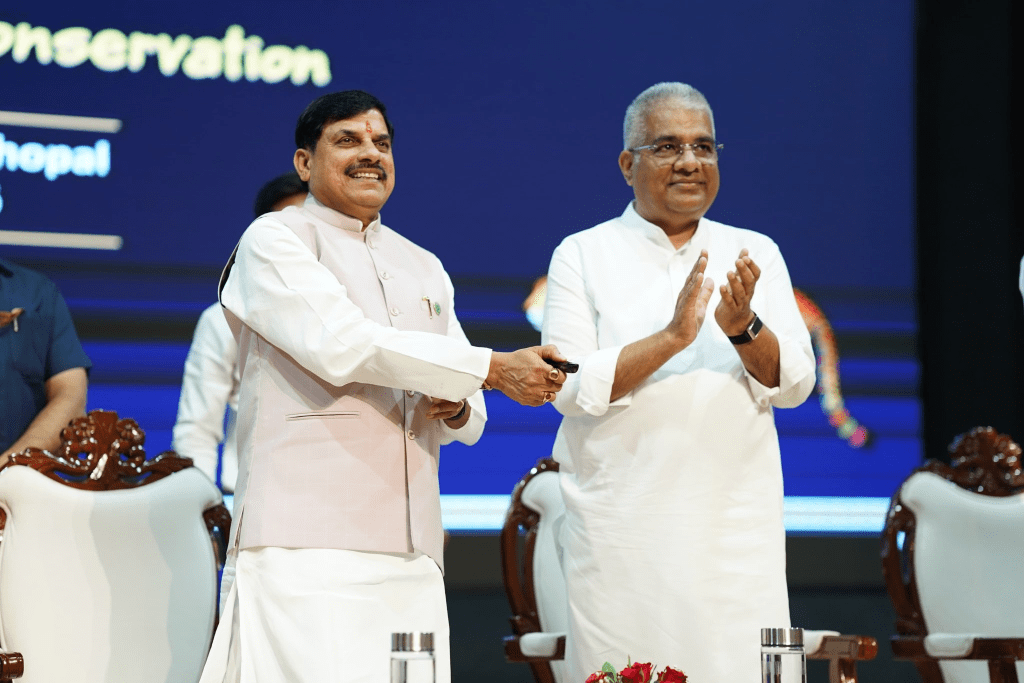
Biodiversity Is the Soul of Indian Civilization: Bhupender Yadav
Union Minister Bhupender Yadav said biodiversity is deeply connected with India’s cultural heritage and environmental future.
He stated that India’s ecosystems provide food, medicine, water security, and climate stability, while biodiversity conservation is essential to tackling climate change and environmental degradation.
The Union Minister highlighted several national achievements:
- India has achieved nearly 90% of its carbon emission reduction targets
- Forest cover now extends across approximately 23% of India’s land area
- Ramsar sites increased from 24 in 2014 to 99 currently
- India aims to fully achieve climate goals by 2030
He praised Madhya Pradesh for its leadership in cheetah conservation and ecological restoration and emphasized that environmental protection must become part of everyday culture, not just government policy.
International Big Cat Alliance Highlights India’s Global Leadership
Dr. S.P. Yadav said the International Big Cat Alliance was launched under the vision of Prime Minister Narendra Modi to strengthen global cooperation for protecting big cats.
According to officials:
- The alliance works across 95 countries
- 25 nations have already joined the initiative
- India hosts 5 of the world’s 7 major big cat species
- India has the world’s largest tiger and leopard populations
- Asiatic lions are found only in India
Officials said Kuno National Park’s cheetah conservation model is now being discussed globally as a landmark success in wildlife restoration.
Focus on Sustainable Development and Community Participation
Union Minister Bhupender Yadav stressed that development and environmental protection must progress together.
He encouraged citizens to adopt sustainable practices such as:
- Planting trees
- Reducing plastic use
- Conserving water
- Protecting local biodiversity
- Promoting natural farming
He also emphasized the importance of involving local communities, biodiversity committees, tribal groups, and women’s self-help groups in conservation efforts to improve livelihoods while protecting nature.
International Biodiversity Day Event Witnesses Wide Participation
The event witnessed participation from senior forest officials, biodiversity experts, scientists, Indian Forest Service officers, students, environmentalists, and wildlife conservationists.
Chief Minister Dr. Mohan Yadav also announced an incentive of ₹10,000 each for tribal artists who performed traditional welcome dances during the program.
The event concluded with a strong message that biodiversity conservation must become a public movement combining scientific innovation, environmental awareness, and community participation.