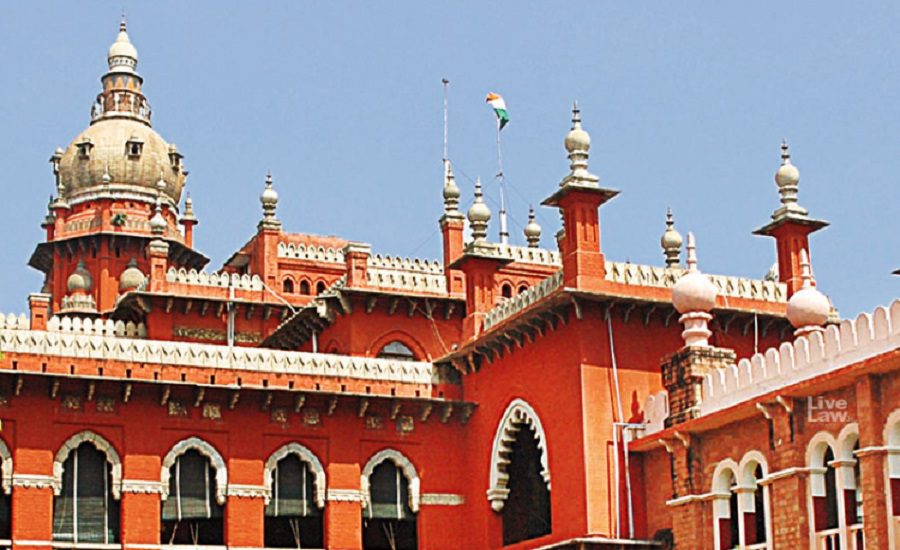
Madurai: In a significant order aimed at strengthening Tamil Nadu‘s anti-corruption framework, the Madurai Bench of the Madras High Court has directed the Chief Secretary to constitute a high-level committee within four weeks to undertake a comprehensive review of the functioning of the Directorate of Vigilance and Anti-Corruption (DVAC).
Justice B. Pugalendhi, while expressing concern over recurring institutional deficiencies within the state’s premier anti-corruption agency, observed that corruption cannot be effectively tackled unless the institution responsible for combating it is strengthened through better leadership, adequate manpower, administrative support and functional autonomy.
Committee to Be Headed by Chief Secretary
The High Court directed that the committee should be headed by the Chief Secretary and undertake a detailed review of the functioning of the DVAC.
The review will focus on several critical areas, including:
- Leadership and institutional governance
- Strengthening institutional capacity
- Investigation and preventive vigilance
- Administrative reforms
- Technology integration and public interface
The committee has been directed to submit its report to the Tamil Nadu government within four months from the date of its constitution.
Government Given Timeline to Act
After receiving the committee’s recommendations, the state government has been directed to examine the report and take appropriate decisions on institutional reforms within three months.
The High Court has scheduled the matter for compliance reporting in the second week of April 2027.
Court Calls for Stronger Institutions to Fight Corruption
Making strong observations on the issue of corruption, Justice Pugalendhi said the government has repeatedly expressed its commitment to ensuring transparent and accountable governance.
“We must have the courage to accept the deep-rooted corruption in the system that needs to be addressed imminently,” the court observed.
The judge noted that recent policy initiatives indicate the government’s commitment to tackling corruption. However, he stressed that such commitments would be meaningful only if they translated into fair, transparent and accountable governance at every level of public administration.
“The ordinary citizen judges the success of governmental policy not by official declarations, but by the fairness, transparency and integrity experienced in everyday interactions with public authorities,” the court observed, adding that this is precisely where the DVAC plays a crucial role.
Laws Alone Cannot Eliminate Corruption
The High Court observed that merely enacting anti-corruption laws or conducting occasional enforcement drives would not eradicate corruption.
According to the court, an anti-corruption agency can perform effectively only when it is provided with:
- Strong leadership
- Adequate manpower
- Efficient administrative support
- Functional autonomy
Justice Pugalendhi further remarked that sustained political commitment must be matched by sustained institutional strengthening.
Investment, Not Expenditure
The court acknowledged that implementing the suggested reforms may require additional financial resources.
However, it emphasised that such spending should not be viewed as a burden on the state exchequer but rather as an investment in strengthening the institutional framework required to combat corruption effectively.
The court expressed hope that the Tamil Nadu government would seriously consider the committee’s recommendations and continue efforts to improve vigilance administration across the state.
Case Originated From Bribery Complaint
The order was passed while disposing of a petition filed by R. Rajesh Kanna, who alleged that officials of the Directorate of Vigilance and Anti-Corruption failed to act on his complaint against Suguna, an Inspector of Police in the CB-CID.
The petitioner alleged that the officer had demanded a bribe in 2025 to avoid naming him as an accused in a case relating to the illegal transportation of Public Distribution System (PDS) rice in Dindigul district.
While disposing of the petition, the High Court chose to address broader systemic issues within the DVAC, resulting in the direction for a comprehensive institutional review.
The ruling is expected to have significant implications for the functioning of Tamil Nadu’s anti-corruption machinery and could pave the way for wide-ranging administrative and structural reforms within the Directorate of Vigilance and Anti-Corruption.