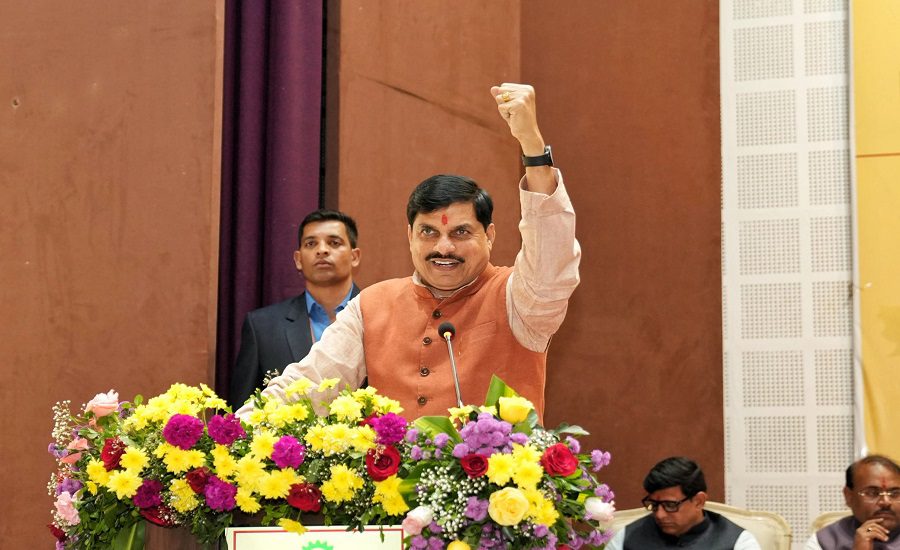
Bhopal: Chief Minister Dr. Mohan Yadav has announced that Madhya Pradesh is rapidly emerging as a key aviation and logistics hub of India, aligned with Prime Minister Narendra Modi’s UDAN (Ude Desh ka Aam Nagrik) vision.
The state government has set ambitious targets for 2030, including:
- Increasing passenger capacity from 5.5 million to 10 million annually
- Expanding cargo handling capacity to 20,000 metric tonnes
Major Investment in Airport Infrastructure and Air Connectivity
The state is strengthening its aviation infrastructure through large-scale development projects, including an international airport and airport city in the Indore–Dewas–Ujjain region.
Key initiatives include:
- Development under PPP (Public-Private Partnership) model
- Implementation of Greenfield Airport Policy
- Increased private sector participation in aviation projects
- Boosting investment, trade, and employment opportunities
These efforts aim to bring world-class aviation facilities to Madhya Pradesh and accelerate industrial growth.
Expansion of Air Services to Religious and Tourist Destinations
Madhya Pradesh, known for its rich cultural and spiritual heritage, is enhancing air connectivity to major pilgrimage and tourist destinations such as:
- Ujjain (Mahakaleshwar Jyotirlinga)
- Omkareshwar
- Khajuraho
- Orchha and Chitrakoot
The PM Shri Tourism Air Service and religious helicopter services are connecting key cities including Bhopal, Indore, Jabalpur, Rewa, Ujjain, Gwalior, Singrauli, and Khajuraho.
Recently launched helicopter services to Orchha and Chitrakoot have further improved access for pilgrims.
Air Connectivity to Reach Tehsil Level Across State
The government plans to decentralize aviation infrastructure by extending connectivity to the grassroots level.
Key proposals include:
- One commercial airport every 150 km
- Airstrips within 75 km radius
- Helipads within 45 km radius
- Development of helipads in every tehsil and block
This will strengthen emergency services and boost economic activity in remote regions.
Rapid Growth in Regional Airports and Small City Connectivity
Madhya Pradesh has made significant progress in expanding regional air connectivity:
- Datia Airport operational as the 8th airport in the state
- New airports under development in Shivpuri and Ujjain
- Rewa Airport becoming a key growth engine for the Vindhya region
The Rewa airport is improving connectivity for industrial hubs and tourist attractions like Mukundpur Tiger Safari.
Focus on Passenger Safety and Global Standards
The state government is prioritizing safety and service quality at airports.
Highlights include:
- Indore Airport ranked 6th among 16 Asian airports in service quality survey
- Bhopal airport now operating 24×7
- Continuous upgrades to ensure global aviation standards
Civil Aviation Policy 2025 to Boost Jobs and Investment
The Madhya Pradesh Civil Aviation Policy 2025 aims to strengthen aviation infrastructure and attract private investment.
Key features include:
- Development of 11 airstrips for flight training and commercial use
- Promotion of Flying Training Organisations (FTOs)
- Expansion of aviation education and pilot training
- Creation of direct and indirect employment opportunities
Districts included in the development plan are Sagar, Seoni, Ratlam, Ujjain, Chhindwara, Shivpuri, and others.
Logistics and Aviation Growth to Transform State Economy
CM Mohan Yadav emphasized that Madhya Pradesh’s central location makes it ideal for becoming a national logistics and aviation hub.
Aligned with PM Modi’s Gati Shakti mission, the aviation expansion is expected to:
- Strengthen trade and tourism
- Support farmers and businesses
- Create new employment opportunities
- Boost regional economic development
Vision of a Developed Madhya Pradesh
The Chief Minister said the aviation expansion is not just infrastructure development but a step toward transforming the state economy.
With improved air connectivity, logistics networks, and tourism access, Madhya Pradesh is moving steadily toward becoming a developed and globally connected state by 2030.