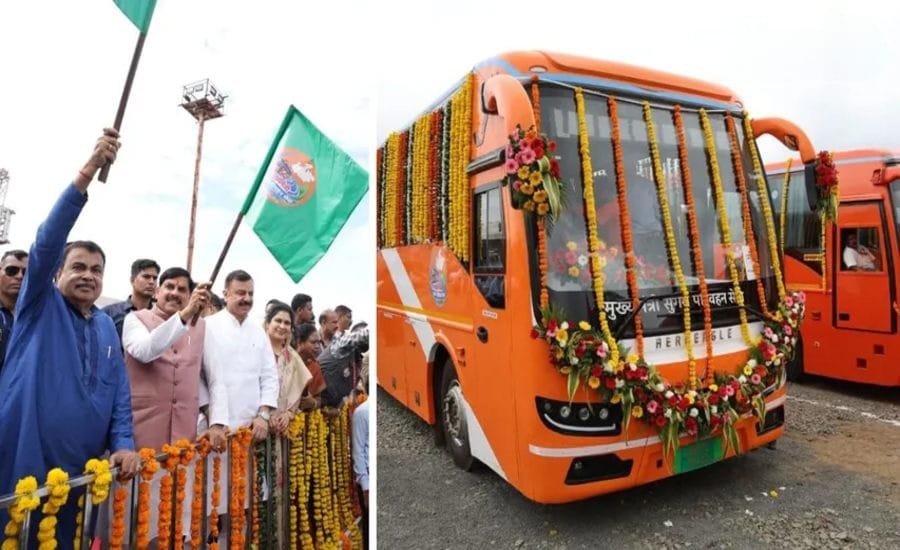
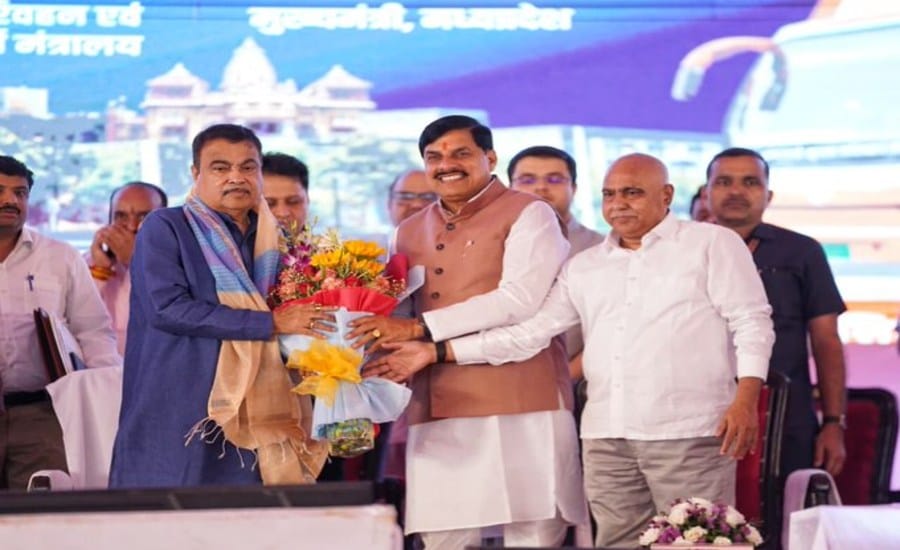
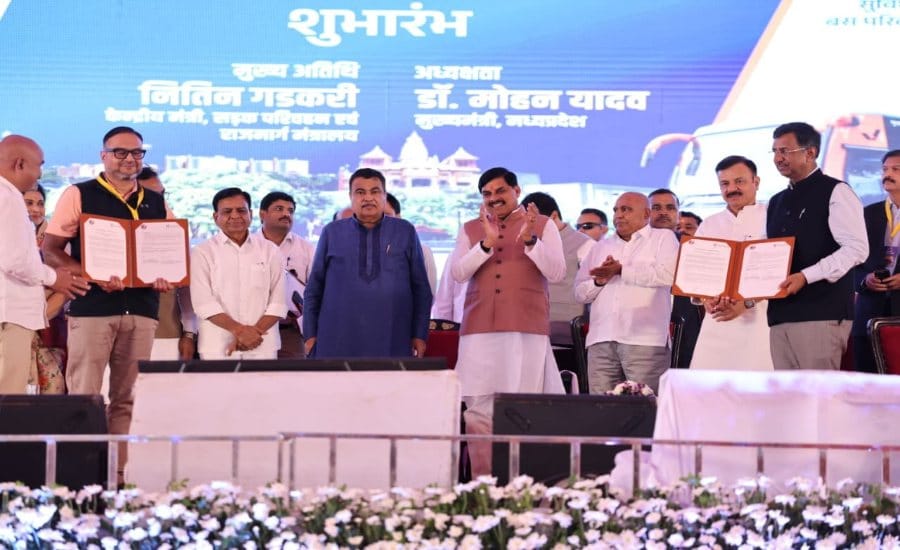
Bhopal: Madhya Pradesh has restarted its public bus transport system after a gap of nearly 21 years, with Chief Minister Dr Mohan Yadav and Union Minister for Road Transport and Highways Nitin Gadkari launching the ‘Mukhyamantri Sugam Parivahan Seva’ in Bhopal on September 25.
The service was launched at a state-level event at the BHEL Dussehra Maidan, where 351 intercity and intracity buses were flagged off for seven cities. The initiative aims to strengthen public transport, improve connectivity between cities and expand bus services to rural areas.
The launch took place on the birth anniversary of Pandit Deendayal Upadhyaya.
351 Buses Rolled Out Across Seven Cities
The first phase covers Bhopal, Indore, Jabalpur, Rewa, Dewas, Katni and Bhind.
Of the 351 buses, 120 are intercity buses and 231 are intracity buses. Indore has received the largest share with 145 buses, including 50 intercity and 95 intracity buses.
Bhopal will have 106 buses, comprising 23 intercity and 83 intracity buses, while Jabalpur will receive 67 buses, including 14 intercity and 53 intracity buses.
Rewa will get 18 intercity buses, Dewas 10, Katni three and Bhind two.
The initial network is expected to improve connectivity within major cities as well as between different urban centres.
Read Also: Smart Buses, Safer Travel: MP’s Sugam Parivahan Seva Begins September 25
15,000 Buses Targeted by 2031
The 351 buses launched in the first phase are part of a much larger expansion plan.
The state has set a target of operating around 1,500 buses during the first year and plans to add around 2,500 to 3,000 buses annually as the network expands.
The long-term target is to have 15,000 or more public buses operating across Madhya Pradesh by 2031.
The government has also set a target of connecting 75 per cent of the state’s gram panchayats through public bus services. The broader objective is to improve access to transport for people living in smaller towns and rural areas.
Service to Follow PPP Model
Unlike the earlier state transport corporation model, the new system is being developed through a Public-Private Partnership (PPP) framework.
Under the model, the government will oversee the broader transport framework, while private operators will participate in bus operations and related services.
The state has established the Madhya Pradesh Yatri Parivahan and Infrastructure Limited (MPYPIL) for the new transport system. Seven regional companies have also been created for different parts of the state.
The regional structure covers areas including Bhopal, Indore, Jabalpur, Gwalior, Ujjain, Sagar and Rewa.
The model is also designed to provide private operators with opportunities for non-fare revenue, including advertising and cargo-related services, along with access to modern transport infrastructure.
Real-Time Monitoring Through ITMS
Technology is a key component of the new public transport system.
A central command and control mechanism will enable real-time monitoring of buses. The Intelligent Transport Management System (ITMS) will be used to track aspects such as bus location, movement and service operations.
The buses are also equipped with GPS-based Vehicle Location Tracking Devices (VLTDs), allowing their movement to be monitored digitally.
This system is intended to improve operational monitoring and help authorities keep track of bus services across the network.
CCTV Cameras and Panic Buttons for Passenger Safety
Passenger safety has also been incorporated into the new service.
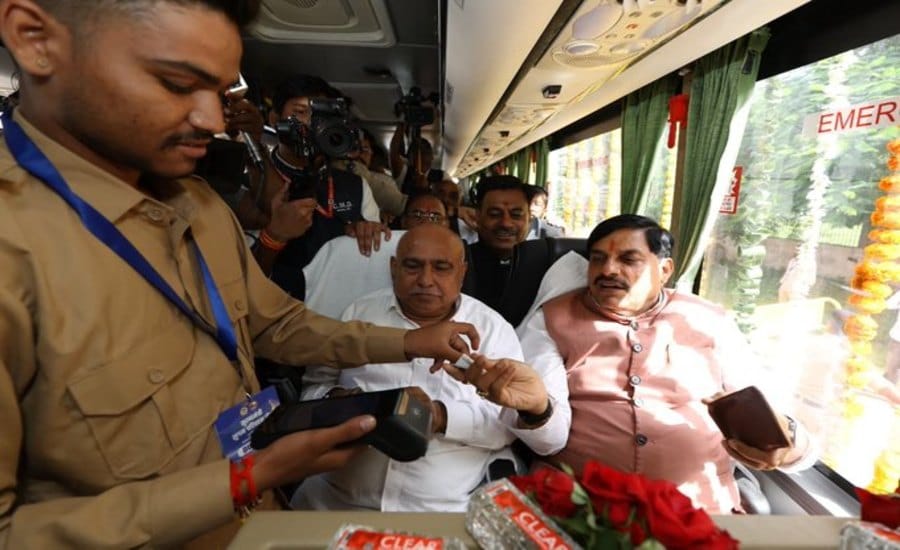
The buses are equipped with CCTV cameras, emergency panic buttons and GPS tracking systems. These features are aimed at strengthening safety, particularly for women and other passengers, while enabling authorities to respond more effectively to emergencies.
The digital system also supports online ticketing and grievance-related services as part of the broader effort to make public transport more technology-driven.
Driver Training and Transport Infrastructure
The state is also focusing on driver training as the bus network expands.
Training facilities are being developed to provide drivers with technical and road-safety training, including training related to modern buses and alternative-fuel vehicles.
The broader transport plan also includes improving bus stands, terminals and depots. Under the state’s Mobility Vision 2030, transport infrastructure is expected to be upgraded alongside the expansion of the bus fleet.
Why the Revival Matters
Madhya Pradesh’s earlier state transport corporation was shut down in 2005. Since then, public bus transportation across the state has largely relied on private operators.
The revival of a state-backed public transport framework after two decades marks a new approach to managing bus connectivity in Madhya Pradesh.
The immediate rollout of 351 buses is only the first stage. The larger challenge will be expanding the network to smaller towns and villages while maintaining reliable services, passenger safety and effective monitoring.
If the planned expansion progresses as scheduled, the Sugam Parivahan Seva could significantly increase the availability of organised public transport across Madhya Pradesh by 2031.
Read Also: MP Transfers ₹212.57 Crore to 35.42 Lakh Social Security Pension Beneficiaries