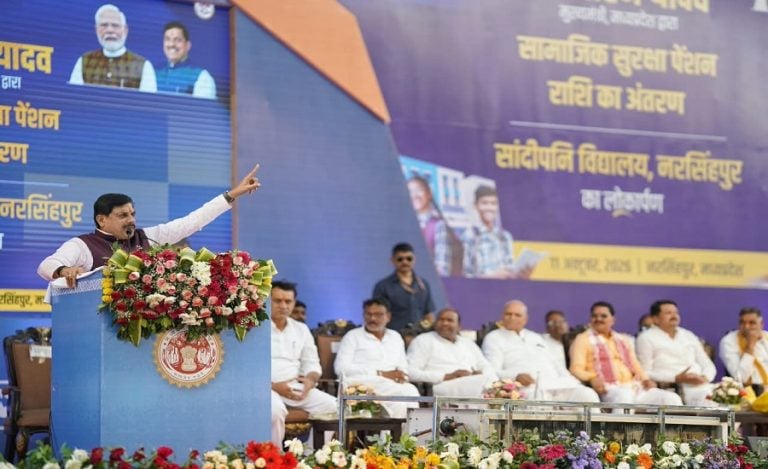
Bhopal: Madhya Pradesh Chief Minister Dr. Mohan Yadav has announced a comprehensive development and conservation roadmap for the Narmada River, including the launch of the ‘Naman Mission’, monthly review meetings, and large-scale riverfront protection initiatives aimed at keeping the river clean, uninterrupted, and encroachment-free.
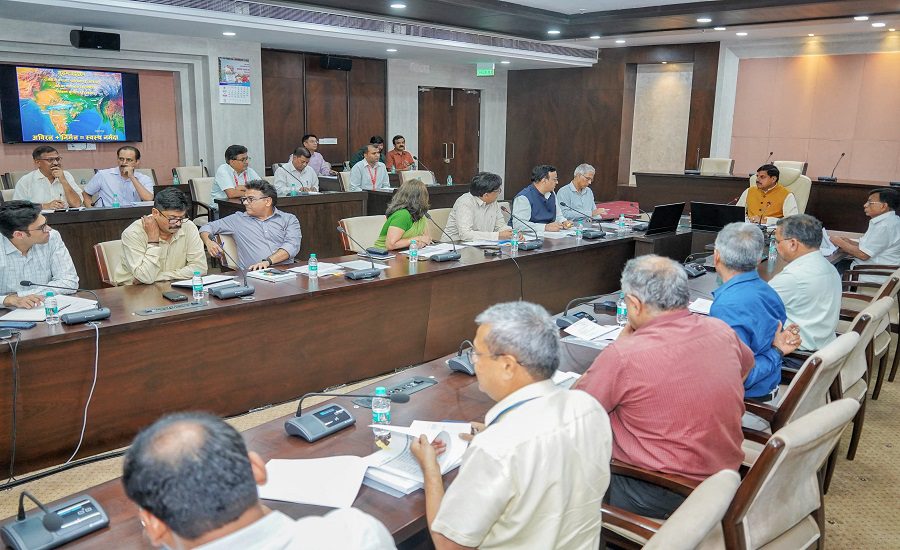
The announcement was made during a high-level meeting of Narmada Samagra held at the state secretariat.
Narmada Jayanthi Programs to Be Held in 18 Districts
The Chief Minister directed that Narmada Jayanthi celebrations will be organized across 18 districts along the river belt. He emphasized the need to involve society, especially youth, in river conservation efforts.
Planned activities include:
- Grand Narmada Aarti
- Cultural performances (dance and music)
- Exhibitions and awareness programs
- Competitions on river conservation
The CM stressed that river protection must become a people’s movement.
Read also: CM Mohan Yadav Says Madhya Pradesh is India’s Leading Spiritual Heritage State at Barwani Event
Monthly Narmada Samagra Review Meetings Announced
CM Yadav announced that Narmada Samagra meetings will now be held every month to ensure continuous monitoring and decision-making for river development projects.
He also instructed officials to:
- Keep the Narmada Parikrama route encroachment-free
- Install clear signage along the pilgrimage path
- Improve facilities for pilgrims and travelers
- Ensure cleanliness at all sacred riverbank locations
Launch of ‘Naman Mission’ for River Conservation
A major highlight of the meeting was the introduction of the ‘Naman Mission’, aimed at ensuring clean and uninterrupted flow of the Narmada River.
Key features include:
- CM to chair the General Assembly of the mission
- Panchayat Minister as Vice Chairperson
- Chief Secretary as Mission Secretary
- Dedicated annual state grant of ₹100 crore
A detailed 2026 implementation roadmap has already been prepared.
The mission will integrate multiple departments including water resources, urban development, forest, tourism, agriculture, environment, and tribal welfare.
Focus on Encroachment-Free Parikrama Route and Pilgrim Facilities
The Chief Minister emphasized that the Narmada Parikrama Path must be made fully encroachment-free.
Instructions include:
- Removal of encroachments along the route
- Installation of directional and information signage
- Establishment of food centers near temples
- Launch of Deendayal Rasoi facilities for pilgrims
- Preparation of a list of ashrams along the route
He also called for coordinated efforts across departments for better management of pilgrimage infrastructure.
Biodiversity Institute to Be Set Up in Amarkantak
A major environmental initiative announced during the meeting includes the establishment of a Biodiversity Management Institute in Amarkantak, the origin point of the Narmada River.
Additional plans include:
- Plantation of 2.70 lakh saplings across 415 hectares
- Strengthening ecological conservation in the Narmada basin
- Scientific research on biodiversity protection
Narmada Kosh Portal and Urban River Management Plan
The Urban Development Department announced the creation of a ‘Narmada Kosh Portal’ to digitally monitor conservation efforts and funding.
Key urban initiatives include:
- Development of 35 sewage treatment plants (STPs) in 21 cities
- Completion target set for December 2027
- Appointment of municipal CMOs as nodal officers
- Special Area Development Authority (SADA) for Omkareshwar
The government is also focusing on keeping river ghats clean and pollution-free in urban areas.
Tourism and Rural Development Initiatives Along Narmada
The Tourism Department shared updates on development activities, including:
- 18 homestays developed in Maheshwar
- 79 homestays in 13 tribal villages under the Janjatiya Gram Utkarsh Abhiyan
These initiatives aim to promote eco-tourism, cultural heritage, and rural employment in the Narmada region.
Agricultural and Economic Development Along River Belt
The Chief Minister directed the Agriculture Department to encourage farmers in the Narmada valley to adopt cash crop cultivation, improving income opportunities and rural prosperity.
Officials said the river basin development plan will support:
- Agricultural modernization
- Employment generation
- Balanced regional development
High-Level Administrative Participation
The meeting was attended by senior officials including:
- Chief Secretary Anurag Jain
- Additional Chief Secretaries from multiple departments
- Principal Secretaries of water resources, environment, tourism, and urban development
- Experts from various fields
All departments presented updates on ongoing Narmada basin development projects.
The Madhya Pradesh government’s Naman Mission and Narmada Samagra roadmap marks a major push toward river conservation, sustainable development, and cultural revival. With monthly monitoring, large-scale ecological initiatives, and infrastructure development, the state aims to transform the Narmada basin into a model of environmental protection and integrated growth.