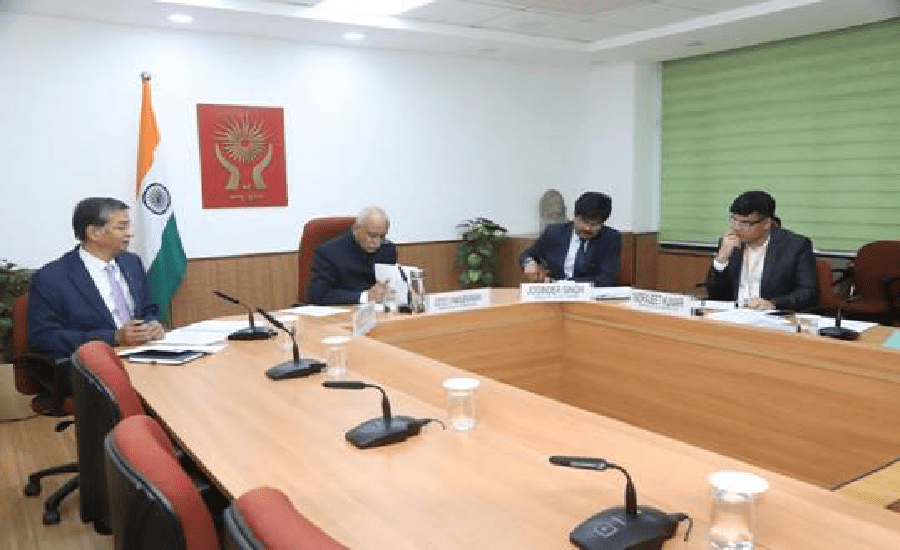
Uttar Pradesh: The National Human Rights Commission (NHRC), India conducted an online hearing on 216 cases related to alleged bonded labour in brick kilns across several districts of Uttar Pradesh. The session brought together senior state officials and NHRC leadership to assess compliance with labour laws and ongoing rehabilitation efforts.
NHRC Flags Concerns Over Official Inaction
The hearing was chaired by NHRC Chairperson Justice V. Ramasubramanian, who expressed concern over repeated lapses in enforcement by authorities. He noted that timely and proper action by officials could have prevented the need for such a large-scale review.
Justice Ramasubramanian pointed out that allegations such as failure to produce records and non-compliance with minimum wage standards indicate serious administrative shortcomings. According to him, such negligence denies affected workers their legal rights to rescue, release, and rehabilitation under the Bonded Labour System (Abolition) Act, 1976.
NHRC Highlights Gaps in Bonded Labour Law Implementation
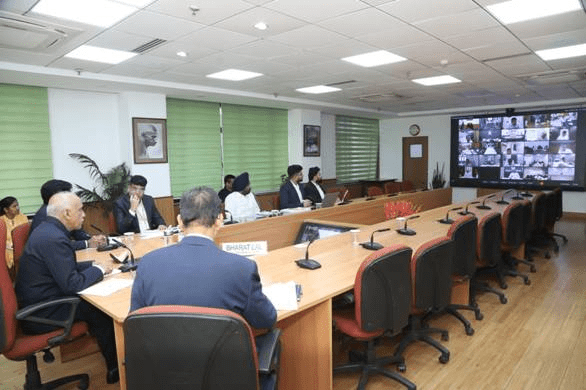
NHRC Secretary General Bharat Lal emphasized major gaps in the implementation of the Bonded Labour System (Abolition) Act, 1976, particularly in ensuring rehabilitation of affected workers.
He stressed that delays or inaction by authorities leave labourers trapped in poverty and vulnerable to continued exploitation. He urged district-level officials to ensure strict enforcement of the law and guarantee a dignified life for workers engaged in vulnerable conditions.
State Officials Assure Action and Compliance
During the proceedings, the Commission reviewed Action Taken Reports (ATRs) submitted by District Magistrates regarding the pending complaints. State officials, including the Labour Commissioner, assured the Commission that all 216 cases would be examined in detail.
Authorities also committed to submitting comprehensive reports to the NHRC within three weeks. They further assured full compliance with Supreme Court directives and applicable legal provisions to ensure immediate corrective action in bonded labour cases.
Focus on Rehabilitation and Legal Enforcement
The NHRC reiterated the importance of effective implementation of rehabilitation schemes and strict enforcement of labour laws. The Commission emphasized that coordinated action between district administrations and state authorities is essential to eliminate bonded labour practices, especially in high-risk sectors like brick kilns.