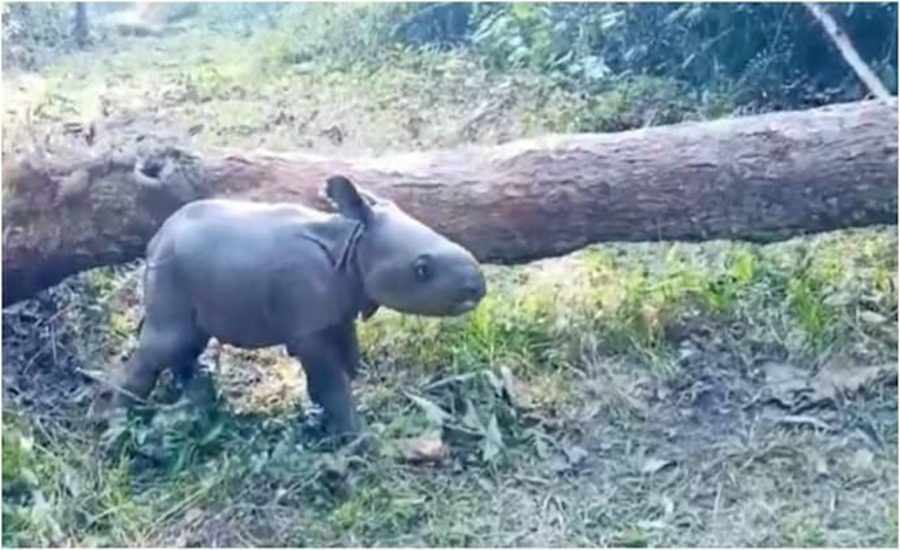
New Delhi: Wildlife continues to fascinate people across the world, offering new and rare glimpses into nature every day. In the latest such moment, a video of a one-day-old rhinoceros calf has taken social media by storm, drawing attention not only for its rarity but also for the insights it provides into wildlife conservation efforts in India.
The video was shared by Indian Forest Service (IFS) officer Parveen Kaswan, a 2016-batch officer of the West Bengal cadre, on the social media platform X.
If you have never seen how a one day old rhino baby looks like.
— Parveen Kaswan, IFS (@ParveenKaswan) April 15, 2026
In our national park every rhino is recorded and monitored. pic.twitter.com/U26W5J8OVC
Rare Glimpse of a Newborn in the Wild
The viral clip shows a one-day-old rhino calf, offering a rare look at one of the most protected species in its earliest stage of life. Such sightings are extremely uncommon, as newborn animals in the wild are typically kept hidden and protected by their mothers.
Sharing the video, Kaswan wrote: “If you have never seen how a one-day-old rhino baby looks like. In our national park, every rhino is recorded and monitored.”
The post quickly gained traction online, garnering nearly 17,000 views and drawing reactions from wildlife enthusiasts and conservation supporters alike.
Read also: Forest Dept Proposes CNG Buses in Sariska Tiger Reserve to Protect 52 Tigers and 300 Leopards
Internet Reacts: ‘Heartwarming and Rare’
Social media users widely appreciated the video, calling it a “rare” and “heartwarming” sight. Many praised forest officials for their dedication to wildlife protection and for providing such unique insights into conservation work.
Several users also highlighted the importance of systematic monitoring of endangered species, noting that such efforts are crucial for ensuring their survival.
Safety Concerns Raised by Viewers
While the video delighted many, it also raised concerns among viewers about the safety of approaching newborn wild animals.
One user questioned whether it was safe to be so close to a rhino calf, especially given the protective instincts of its mother.
Responding to the concern, Kaswan clarified that such encounters are handled with extreme caution.
“It’s not safe at all. They will obviously attack. The video is taken from an elephant, by zooming. During patrolling,” he explained.
His response underscored that the footage was captured from a safe distance, using a trained elephant during routine forest patrols.
Understanding Rhino Behaviour and Conservation Efforts
Rhinos, often perceived as gentle giants, can become highly aggressive when they feel threatened—particularly when protecting their young. Wildlife experts emphasize that maintaining a safe distance is essential in such situations.
The video also sheds light on the structured monitoring systems in India’s national parks, where individual rhinos are tracked and recorded. This helps authorities ensure their safety, monitor population growth, and prevent poaching.
A Window into India’s Wildlife Protection Work
The viral video serves as a reminder of the incredible biodiversity found in India’s forests and the continuous efforts of forest officials to protect it.
Moments like these not only capture public imagination but also reinforce the importance of conservation, responsible wildlife viewing, and the need to respect natural habitats.