New Delhi: India’s Defence Research and Development Organisation (DRDO) is gearing up to elevate the country’s strategic strike capabilities with Project Dhvani, an indigenous Hypersonic Glide Vehicle (HGV) designed to redefine long-range deterrence and missile technology.
This cutting-edge weapon system, once operational, will place India alongside a select group of nations — including the United States, Russia, and China — that have mastered hypersonic weapons.
What Is Project Dhvani?
Project Dhvani refers to India’s homegrown Hypersonic Glide Vehicle (HGV) — a next-generation missile concept that uses a ballistic booster for launch and then glides at extreme speeds toward its target. Unlike conventional cruise missiles or ballistic missiles that follow predictable paths, hypersonic glide vehicles travel at speeds above Mach 5 and perform in-flight maneuvers, making them difficult to intercept.
The Dhvani HGV will be launched atop an Agni-series ballistic missile booster, enabling it to reach high altitudes before separating and gliding at hypersonic velocity toward strategic targets.
What is the Importance of Project Dhvani
Here are the key importance of Project Dhvani;
Hypersonic Speed and Maneuverability
Hypersonic systems like Dhvani are defined by their ability to travel faster than five times the speed of sound (Mach 5+), significantly reducing reaction times for enemy defenses.
Estimates place Dhvani’s cruising speed between Mach 5 to Mach 8 — translating to speeds in excess of 6,174 km/h and potentially beyond 7,400 km/h.
The vehicle’s ability to change trajectory mid-flight, unlike predictable ballistic arcs, gives it an edge against even the most advanced air defence systems.
Enhancing India’s Defence Posture
As regional geostrategic dynamics evolve, Project Dhvani represents a technological leap for India’s defence industry.
The deployment of hypersonic glide vehicles will enhance deterrence credibility by ensuring the ability to penetrate advanced missile defence systems — a game-changer in modern warfare.
By successfully mastering systems like Dhvani, India could not only strengthen its strategic deterrent against neighbours but also contribute to stability by complicating adversarial calculations.
Design and Features of Project Dhvani
Here are the major design and features of Project Dhvani;
Blended Wing-Body and Heat Shielding
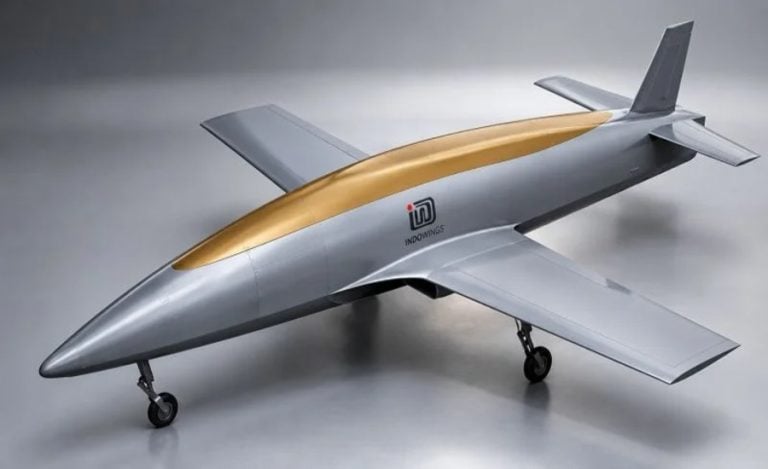
The Dhvani HGV is designed with a blended wing-body configuration, approximately 9 metres long and 2.5 metres wide, optimized for low drag and high-speed glide performance.
To withstand the extreme thermal loads experienced at hypersonic speeds — temperatures between 2,000°C and 3,000°C — Dhvani incorporates Ultra-High-Temperature Ceramic Composites (UHTCC) in its heat protection system.
Stealth and Evasion Features
Low radar cross-section (RCS) geometry further enhances Dhvani’s survivability by reducing detectability, making it harder for radar and missile defences to track and intercept.
Precise guidance systems integrating inertial navigation and satellite corrections are expected to support high-accuracy hits even against mobile targets.
What is the Range of Project Dhvani
Dhvani’s operational range is projected between 6,000 and 10,000 km, situating it closer to intercontinental-class strike capability than typical regional ballistic missiles.
This extended range offers the Indian Strategic Forces a broader deterrence posture with flexibility for both nuclear and conventional payloads.
Speculation around multiple independently targetable reentry vehicles (MIRVs) suggests potential payload versatility, though official confirmation awaits further development and testing results.
What is the Timeline of Project Dhvani
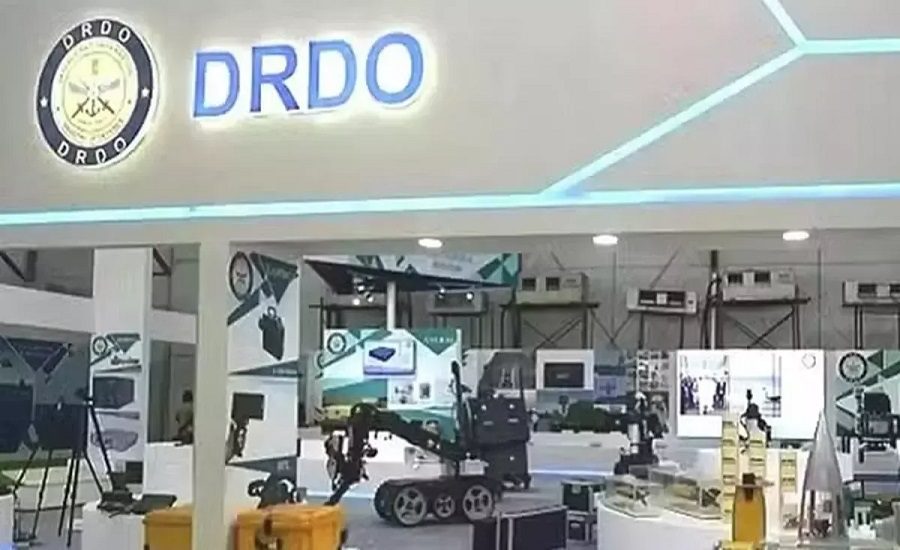
DRDO has showcased full-scale models of Project Dhvani at defence exhibitions, indicating substantial progress in design and development. Pre-flight campaigns have included wind tunnel testing and thermal protection verifications at facilities like the National Trisonic Aerodynamic Facility.
Initial maiden flight tests were targeted for late 2025, with sources now indicating first full-scale testing may occur in early 2026.
Following a series of developmental flights through 2027 and 2028, DRDO plans to push toward induction by 2029-30 into India’s Strategic Forces Command.