Conservation is often imagined as the protection of forests from a distance. But for endangered species struggling to survive, conservation is ultimately won on the ground—on riverbanks where gharials nest, in villages where humans and leopards come into conflict, in wetlands where migratory birds arrive, and in forests where frontline staff confront poachers and encroachers.
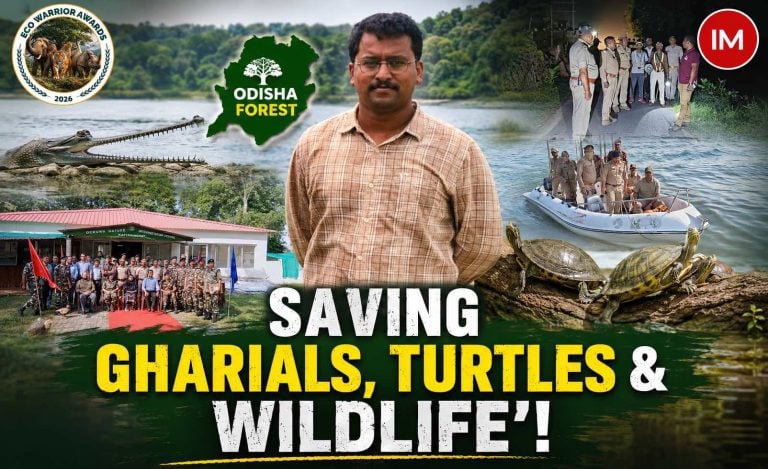
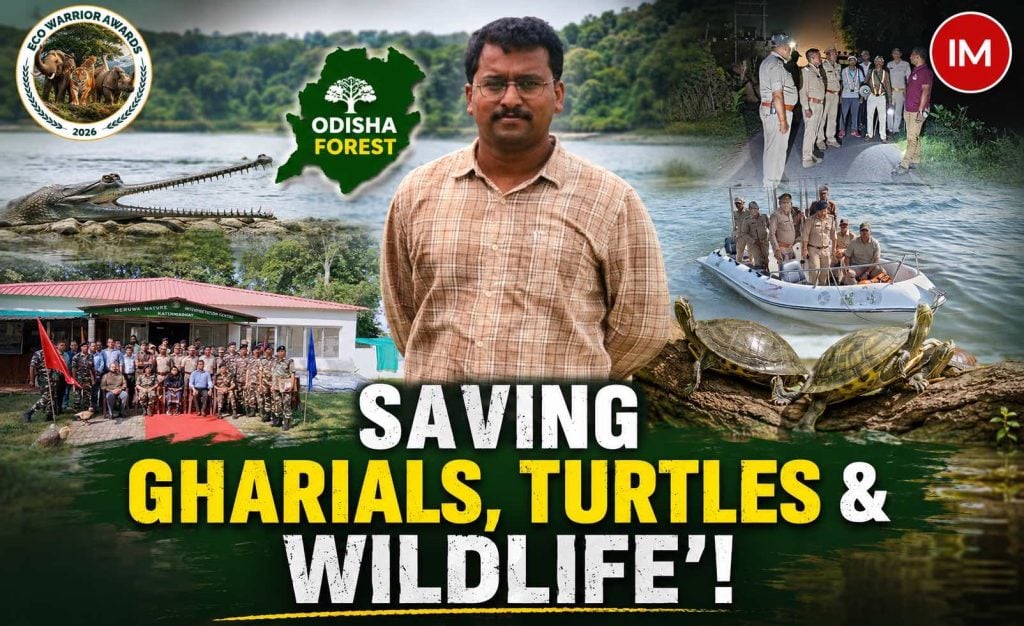
It is in these challenging landscapes that Shiva Shankar, Indian Forest Service (IFS) officer of 2021 Batch from UP cadre, has sought to build a conservation model that goes beyond routine protection. Combining field action, scientific planning, community participation, habitat management and strong enforcement, he has worked across some of Uttar Pradesh’s most important wildlife landscapes.
From strengthening Project Gharial at Katarniaghat Wildlife Sanctuary and tackling human-wildlife conflict to developing institutional mechanisms for turtle conservation in Varanasi and strengthening wetland management at Surha Tal, his work reflects a larger philosophy: endangered species need not just protection, but an institutional ecosystem capable of protecting them year after year.
Indian Masterminds interacted with Mr Shankar, Divisional Forest Officer (DFO), Kashi Wildlife Division, Ramnagar, Varanasi, to understand his conservation initiatives, their implementation on the ground, and the impact they have created.
How It Started: Learning Conservation on the Ground
Shiva Shankar’s conservation journey took shape during his first posting at Katarniaghat Wildlife Sanctuary in Bahraich, where he served from January 2024 to June 2025.
The landscape presented a complex set of challenges. Katarniaghat is a rich Terai ecosystem of forests, grasslands, wetlands and river channels, supporting species ranging from gharials, crocodiles and Gangetic dolphins to tigers, leopards, elephants, rhinos and diverse birdlife.
But the same landscape also witnessed frequent human-wildlife conflict and wildlife-related offences.
Reflecting on those early experiences, Mr Shankar said, “Most of the human-wildlife conflicts take place there. So, due to frequent human-wildlife conflicts, there was a lot of need for patrolling.”
The response was intensive field presence. Patrolling was strengthened during both day and night, while the forest staff worked to respond quickly to conflict situations.
The results were significant. More than 20 conflict leopards were rescued during his tenure, while the department also recorded an exceptional operation in which eight leopards were rescued within 20 days.
According to Shankar, the sustained field response helped bring the conflict situation under control for several months.
Project Gharial: Putting a Riverine Species in Focus
One of the defining initiatives of his Katarniaghat tenure was the strengthening of Project Gharial, focused on one of India’s most threatened reptiles.
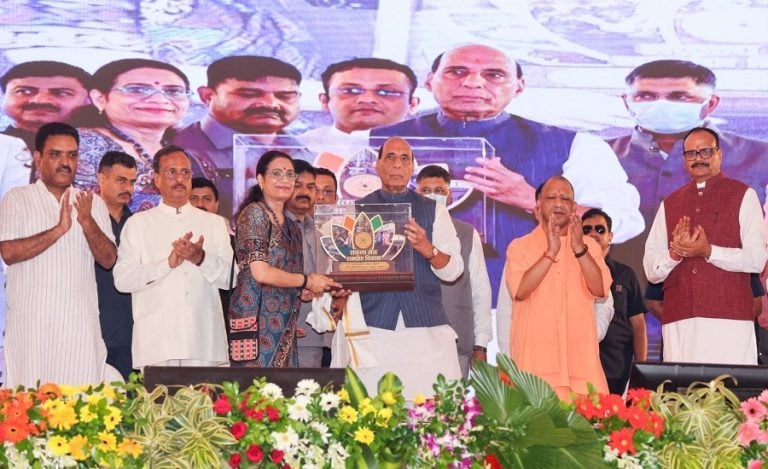
During his tenure, the Species-Specific Recovery Project “Project Gharial” was inaugurated from Katarniaghat Wildlife Sanctuary by Union Minister for Environment, Forest and Climate Change Bhupender Yadav.
For Shankar, the project was not merely about increasing gharial numbers. It was about protecting the river ecosystem on which the species depends.
Gharials require relatively undisturbed river stretches, suitable nesting and basking banks, clean water and protection from human disturbance and fishing-related threats. Their conservation, therefore, is inseparable from the health of the Girwa river system.
His approach placed habitat protection, monitoring, nesting-site security, anti-poaching vigilance and frontline staff capacity building within a broader riverine conservation framework.
The same philosophy extended to other aquatic species, including crocodiles and Gangetic dolphins.
Enforcement as a Conservation Tool
Conservation, however, cannot succeed without effective enforcement.
During his posting, Shankar dealt with cases involving poaching, illicit felling, illegal activities and encroachment. More than 40 wildlife offenders, including Indian and Nepalese nationals, were sent to prison. More than 10 vehicles involved in illegal activities were confiscated, while penalties and fines collected ran into several lakhs of rupees.
This intelligence-led approach helped strengthen deterrence and contributed to a decline in forest and wildlife-related offences.
For Shankar, enforcement was not an isolated function of the department but an essential part of conservation.
The message was clear: protected areas must be protected in practice, not merely on paper.
Reducing Human-Wildlife Conflict Through Practical Solutions
Katarniaghat also demonstrated another important aspect of Shankar’s approach—addressing human-wildlife conflict through prevention rather than relying only on rescue operations.
More than 90 kilometres of chain-link fencing were installed in vulnerable stretches. The intervention was complemented by increased surveillance and regular night patrolling.
An innovative CSR partnership with Philips India further strengthened village-level protection. More than 5,000 LED and solar lights were installed across more than 220 forest-adjoining villages.
The idea was simple but effective: reducing darkness around settlements could reduce opportunities for wildlife encounters and improve the sense of security among communities living close to forest boundaries.
Shankar also personally participated in night patrols, reinforcing the importance of field leadership.
Supporting Communities Living Beside the Forest
Conservation cannot succeed when communities living alongside wildlife feel abandoned.
In Katarniaghat, several villages faced difficult conditions during the monsoon, particularly because of their proximity to forests and rivers. During the rainy season of 2024, with support from WWF, ration was provided free of cost to around 500 families.
Explaining the thinking behind the initiative, Shankar said that because the villages were surrounded by forest, “when it rains, they don’t depend on anyone else.”
Such interventions were intended not simply as welfare measures, but as a way of building trust between communities and the Forest Department.
The approach extended to relocation and settlement issues as well. Efforts were initiated to facilitate the process concerning Bhartapur village, while encroachments from sensitive areas were addressed.
The removal of Lakkad Shah Majar and Murtiha Chavni settlement from the core area was aimed at restoring the sanctuary’s most sensitive spaces so that the core habitat could remain primarily for wildlife.
From Katarniaghat to Kashi: Building an Institutional Future for Turtles
When Shankar moved to Kashi Wildlife Division, Ramnagar, Varanasi, in July 2025, the conservation challenges changed—but his basic philosophy remained the same.
Here, the Ganga became the centre of his conservation focus.
Recognising the importance of the river as a habitat for aquatic biodiversity, he worked towards strengthening the Sarnath Turtle Rescue and Rehabilitation Centre as a dedicated conservation hub.
The centre has the potential to support turtle rescue, rehabilitation, veterinary care, quarantine, head-starting, awareness programmes and eventual release of turtles into suitable river habitats.
But Shankar sought to go one step further: creating an institutional mechanism that would allow turtle conservation to continue with greater financial independence.
A Conservation Fund Built to Last
During his tenure, a Conservation Management and Development Society was established to strengthen long-term conservation financing.
Under the initiative, around ₹9 crore was invested as a corpus for turtle conservation. Rather than spending the principal amount, the intention is to utilise the interest generated from the corpus each year for conservation and protection activities.
Explaining the rationale, Shankar said the objective was to ensure that “without being dependent on any state team, we will have our own fund” for turtle management and conservation.
This model could provide a steady stream of resources for protecting turtles along the Ganga, supplementing regular government budgets.
It represents an important shift from project-based conservation to institution-based conservation—where a mechanism created today can continue supporting wildlife protection in the future.
Protecting Wetlands and Birds
Shankar’s conservation work has also extended beyond mammals and reptiles to wetlands and bird habitats.
At Jai Prakash Narayan (Surha Tal) Bird Sanctuary in Ballia, efforts have focused on strengthening the basic systems required for effective wetland governance—beat maps, bird-count registers, tourist entry records, land-settlement follow-up, interpretation facilities and planning for future infrastructure.
The significance of Surha Tal received national recognition when Prime Minister Narendra Modi declared it India’s 100th Ramsar Site and Uttar Pradesh’s 13th Ramsar Site on June 5, 2026.
The Ramsar recognition gives the wetland greater international visibility while opening further possibilities for conservation, research, awareness and responsible eco-tourism.
For a wetland, however, notification is only the beginning. Its long-term survival depends on regular monitoring, effective management and participation from local communities.
Conservation With Communities, Not Against Them
Across his different postings, Shankar has consistently emphasised community participation.
Joint Forest Management Committees, Eco-Development Committees, eco-guides, women’s groups, self-help groups and local youth are being viewed as potential conservation partners.
This is particularly important in landscapes where communities depend on forests, wetlands, rivers and tourism for their livelihoods.
When communities participate in protection, they can become an additional source of local intelligence, assist in preventing fires and illegal activities, support tourism and develop a greater sense of ownership towards wildlife habitats.
The philosophy is straightforward: wildlife protection becomes stronger when the people living beside wildlife become partners in its survival.
Building Conservation Systems, Not Just Projects
Shankar’s work across Katarniaghat, Kashi, Chandraprabha and other landscapes also highlights the importance of institutional capacity.
Documentation, field inspections, staff training, legal awareness, wildlife crime response, scientific monitoring, inter-departmental coordination and community engagement form part of his broader administrative approach.
His work in Chandraprabha Wildlife Sanctuary, for instance, has involved planning around habitat improvement, water security, fire protection, anti-poaching measures, eco-tourism, visitor management and community participation.
The common thread is that conservation is treated as a system rather than a collection of isolated projects.
A Young Officer With a Larger Conservation Vision
Shiva Shankar’s work represents a generation of forest administration that is increasingly combining traditional protection methods with scientific planning, technology, institutional financing and community engagement.
His contribution is particularly significant because it brings attention to species and ecosystems that do not always receive the same public visibility as tiger conservation.
Gharials, turtles, dolphins, wetlands and riverine habitats are equally critical indicators of ecological health. Protecting them requires clean rivers, secure nesting sites, functioning wetlands, effective enforcement and communities willing to participate in conservation.
Ultimately, the impact of Shankar’s work is reflected not only in the number of animals rescued, offenders prosecuted or kilometres of fencing installed. It lies in the conservation architecture being created around them—rescue and rehabilitation infrastructure, dedicated funds, monitoring systems, trained frontline staff, community networks, safer habitats and stronger enforcement.
His journey demonstrates a simple but powerful lesson: conservation becomes durable when commitment in the field is matched by institutions built to sustain it.