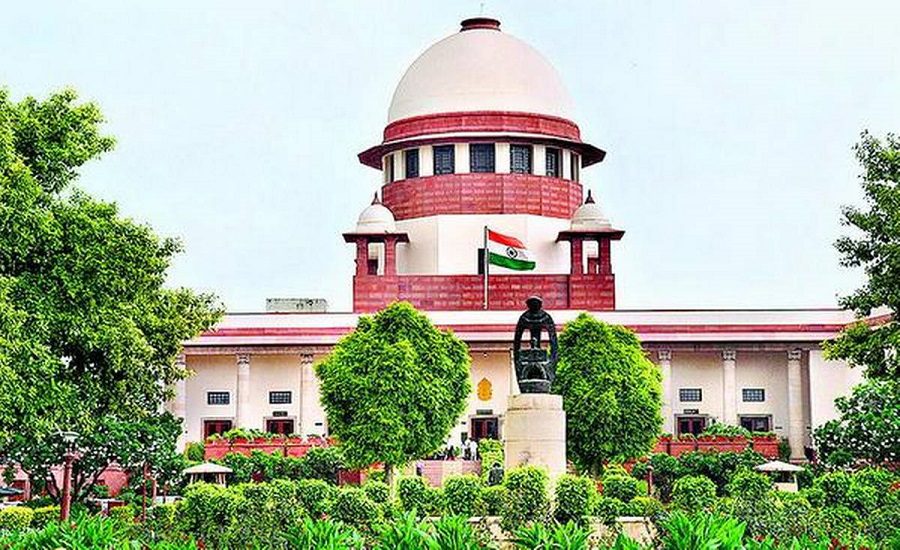
New Delhi: The Supreme Court stray dog management order has triggered a major nationwide legal push. The Supreme Court of India has directed all High Courts to register suo motu petitions and monitor whether states, municipal bodies, and local authorities are following earlier court directions related to stray dog control and public safety.
The Court also warned that officials who fail to comply may face contempt proceedings.
Details of Supreme Court Stray Dog Management Order
A bench of Justice Vikram Nath, Justice Sandeep Mehta and Justice N. V. Anjaria issued the directions while hearing matters linked to increasing stray dog attacks and public safety concerns across India.
Read also: Big Setback for Govt Employees: Supreme Court Rules No Right to Promotion From Old Vacancies
The Court said:
- High Courts must monitor compliance regularly.
- Municipal authorities must remove stray dogs from sensitive public places.
- Officials ignoring court orders can face contempt action.
- Local authorities must improve sterilisation and vaccination systems.
The order is part of the ongoing case:
- In Re: “City Hounded By Strays, Kids Pay Price”
- Case No: SMW(C) No. 5/2025.
Which Places Must Be Kept Free From Stray Dogs?
According to the Supreme Court’s earlier November 2025 directions, stray dogs must be removed from:
- Schools and colleges
- Hospitals
- Bus stands
- Railway stations
- Playgrounds
- Public institutions
- Other crowded public areas
The Court clarified that dogs picked up from these places should not be released back into the same locations after sterilisation or vaccination.
Supreme Court Stray Dog Management Order: Why Did The Court Pass These Directions?
The Supreme Court noted that dog bite incidents are increasing in many parts of India. The bench observed that authorities have failed to properly implement the Animal Birth Control (ABC) Rules and public safety measures.
Recent reports highlighted alarming data:
- Nagpur recorded over 4,200 dog bite cases in just four months of 2026.
- Several cities have reported rising attacks on children and elderly citizens.
The Court stressed that the right to life under Article 21 includes the right to live without fear of dangerous stray dog attacks.
High Courts Given Power To Take Action
The Supreme Court empowered High Courts to:
- Start monitoring proceedings on their own.
- Call reports from municipal bodies and states.
- Pass local directions depending on regional needs.
- Begin contempt proceedings against officers who ignore orders.
This means state governments and civic authorities could now face stricter judicial scrutiny.
Supreme Court Stray Dog Management Order: Court Pushes States To Improve Infrastructure
The bench also directed states and union territories to:
- Strengthen sterilisation programmes.
- Ensure anti-rabies vaccination availability.
- Build Animal Birth Control centres in every district.
- Improve dog shelters and monitoring systems.
The Court said proper implementation is necessary to balance public safety and animal welfare.
Animal Welfare Debate Continues
Animal welfare groups had requested the Court to reconsider parts of the order. However, the Supreme Court refused to dilute its earlier directions.
The Court observed that authorities cannot remain “blind to harsh realities” linked to increasing dog attacks and public safety risks.
Read also: Justice Vikram Nath Calls on Delhi High Court to Restart Live-Streaming for Greater Transparency