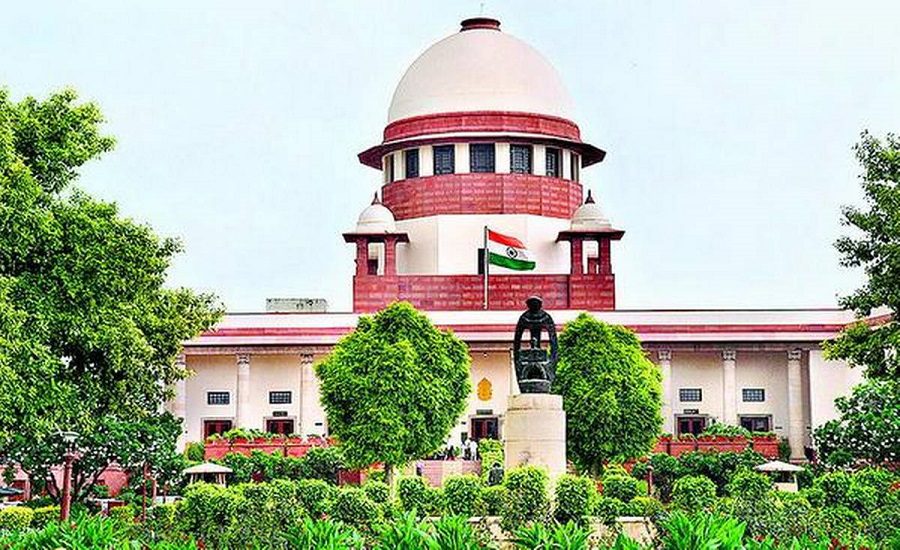
New Delhi: The Supreme Court promotion rules judgment has clarified that government employees cannot demand promotion under old service rules only because vacancies existed before new rules were introduced.
The Court said the government has the power to change promotion rules, selection methods, and eligibility conditions, as long as the changes are not arbitrary.
According to the judgment, employees only have the right to be considered for promotion under applicable rules. They do not get an automatic or vested right to promotion merely due to earlier vacancies.
Details of Supreme Court Promotion Rules Judgment
A Bench led by Justice Dipankar Datta and Justice Augustine George Masih ruled that:
- Government employees cannot insist that old promotion rules must apply simply because vacancies arose earlier.
- The State can legally change promotion procedures and service rules.
- Promotion policies can be revised before the actual selection process starts.
- Such rule changes are valid if they are reasonable and non-arbitrary.
Read also: Supreme Court Mandates Panic Buttons & GPS in All Public Transport Vehicles
The Court rejected the argument that vacancies must always be filled according to the rules existing on the date the vacancy arose.
Background Of The Supreme Court Promotion Rules Judgment
The dispute came from employees in the State Transport Department of Odisha.
Key points of the case:
- The employees sought promotion to the post of Assistant Regional Transport Officer (Senior Assistant).
- They argued that vacancies had arisen during the period when old service rules were applicable.
- Under the old rules, employees with five years of service were eligible for promotion.
- Later, the State Government changed the recruitment structure and made the selection process different.
The employees claimed they should still get promotion benefits under the earlier rules. However, the government argued that no vested right had been created merely because vacancies existed before the new rules came into force.
Supreme Court’s Key Observation
The Court clearly stated that:
- A government employee has a right to be considered for promotion.
- But there is no fundamental or vested right to promotion itself.
- Promotion becomes effective from the date it is granted, not from the date a vacancy arises.
The judgment also referred to earlier Supreme Court rulings that held retrospective promotions cannot be automatically claimed unless rules specifically allow them.
Why This Judgment Is Important
This ruling is significant for lakhs of government employees across India because it:
- Gives governments flexibility to reform recruitment and promotion systems.
- Clarifies that old vacancies do not automatically preserve old promotion rules.
- Reduces legal disputes related to retrospective promotions.
- Reinforces that fairness and equality under Article 14 and Article 16 remain important in promotion matters.
Impact Supreme Court Promotion Rules Judgment
The judgment may affect:
- Pending promotion disputes in government departments.
- Cases involving retrospective seniority claims.
- Employees waiting for promotion under previous recruitment rules.
- Future service law litigation in India.
Legal experts believe the decision strengthens the government’s authority to modernize service structures while maintaining constitutional fairness.