New Delhi: The Supreme Court has disposed of a petition filed by IPS officer Urvashi Sengar (IPS:2023:MP) challenging the 1993 Office Memorandum of the Ministry of Home Affairs (MHA), which bars women IPS probationers from resuming training for one year after childbirth. The Court directed the Central Administrative Tribunal (CAT) to decide the challenge independently and on its own merits, without being influenced by observations made earlier by the Delhi High Court.
The order was passed on Friday by a Bench comprising Justices Manoj Misra and Shree Chandrashekhar, bringing the matter back before the Tribunal where Sengar’s original challenge is already pending.
Court Declines Midway Entry into Phase-II Training
During the hearing, the Centre informed the Supreme Court that the Phase-II training at the Sardar Vallabhbhai Patel National Police Academy (SVPNPA), Hyderabad, had commenced on June 22 and that nearly three weeks of the nine-week programme had already been completed.
The Centre submitted that the training programme mandates 95% attendance and that the initial weeks included critical components such as physical training, field visits and cadre-specific instructional modules.
Taking note of these submissions, the Bench observed that nearly one-third of the programme had already concluded and held that permitting Sengar to join midway would not provide her with adequate or meaningful training.
When counsel appearing for Sengar suggested that she be allowed to attend the remaining part of the course, the Bench reportedly described the proposal as “absurd.”
However, the Court also observed that her seniority should not suffer because of the delay, indicating that the issue of career progression should be addressed separately from the training schedule.
Challenge to 1993 MHA Policy to Be Decided by CAT
During the proceedings, the Centre informed the Bench that Sengar’s substantive challenge to the 1993 MHA Office Memorandum was already pending before the Central Administrative Tribunal.
Read Also: Can Pregnant IPS Officers Be Denied Training? Supreme Court Questions Centre Over 1993 MHA Policy
Accepting the submission, the Supreme Court disposed of the petition and directed the Tribunal to adjudicate the matter independently, without being influenced by any observations made by the Delhi High Court while hearing the Centre’s challenge to the interim relief granted to Sengar.
The Court did not express any final opinion on the validity of the policy, leaving the constitutional questions open for determination by the Tribunal.
Background of the Case
Urvashi Sengar, a 2023-batch IPS officer of the Madhya Pradesh cadre, had sought permission to participate in the Phase-II training after giving birth in September 2025.
She maintained that she was medically fit to resume training and requested permission to join the course. However, the National Police Academy declined her request, citing the 1993 Office Memorandum issued by the Ministry of Home Affairs, which requires women IPS probationers to resume training only after one year following childbirth.
Aggrieved by the decision, Sengar approached the Central Administrative Tribunal, which passed an interim order allowing her to undergo the training.
The interim relief, however, was subsequently stayed by the Delhi High Court after the Centre challenged the Tribunal’s order.
Supreme Court Had Earlier Raised Constitutional Questions
At an earlier hearing, the Supreme Court had made significant observations regarding the 1993 policy, questioning its constitutional validity.
The Bench had observed that a welfare measure intended to protect women should not become a barrier preventing officers who are medically fit from pursuing their professional responsibilities and career progression.
Those observations had sparked wider discussions on maternity-related service rules in the uniformed services and whether existing policies adequately reflect contemporary constitutional principles relating to equality, non-discrimination and women’s participation in public service.
With Friday’s order, the Supreme Court has left the matter to be decided by the Central Administrative Tribunal, which will now examine the legality and constitutional validity of the 1993 MHA policy on its own merits.
About IPS Urvashi Sengar
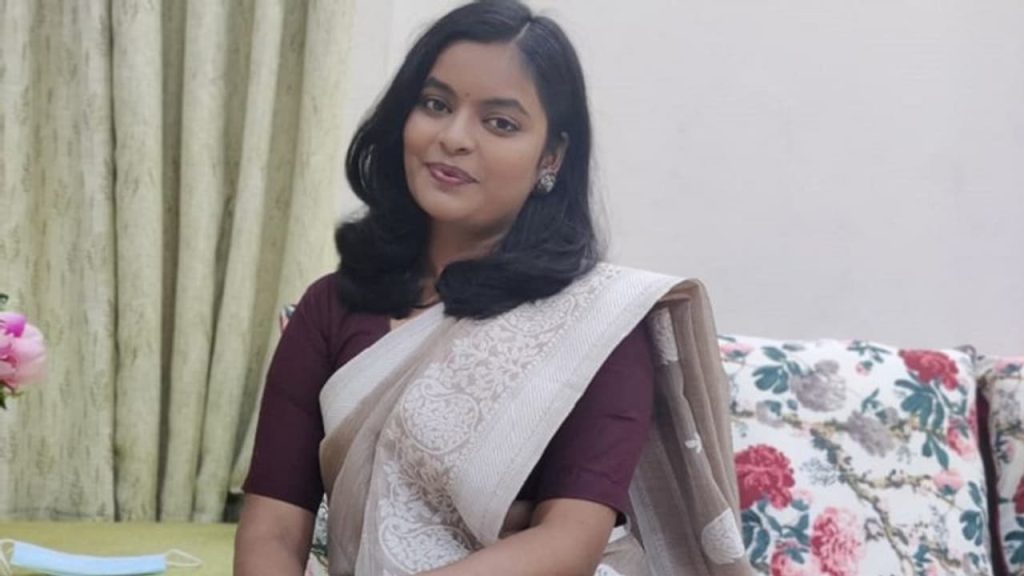
Ms Sengar is an Indian Police Service (IPS) officer of the 2023 batch from the Madhya Pradesh cadre, widely recognized for her inspiring background and her landmark legal fight for gender equality in civil services training. Born on June 30, 1995, in Gwalior, Madhya Pradesh, she is the daughter of an electrician who famously sold a plot of land to finance her competitive exam coaching. Educated in Hindi medium up to class 12, she completed her Bachelor of Science (B.Sc.) and Master’s degrees from KRG Girls College in Gwalior.
After clearing the UP-PSC exam to initially secure a position as a Naib Tehsildar, she decided not to join in order to pursue her dream of cracking the Union Public Service Commission (UPSC) Civil Services Examination. On her third attempt, she secured an All India Rank (AIR) of 532, leading to her selection as a direct recruit into the IPS. She formally joined the service on November 13, 2023, and was later assigned as an Assistant Superintendent of Police (Probationary) in Morena, Madhya Pradesh.
Sengar stepped into the national spotlight in July 2026 by challenging a 1993 Ministry of Home Affairs (MHA) policy before the Supreme Court of India. The strict, decades-old rule mandates that if a female IPS probationer becomes pregnant, her training is instantly halted, enforcing a mandatory one-year hiatus post-childbirth before she can resume.
Having given birth to her child on September 20, 2025, Sengar obtained a medical fitness certification nine months later and requested to join her Phase-II classroom-based training starting June 22, 2026. After the Sardar Vallabhbhai Patel National Police Academy (SVPNPA) denied her entry based on the policy, she legally contested its constitutional validity. Her petition argued that the blanket ban disregards modern medical advancements, ignores individual fitness assessments, and fails to differentiate between rigorous physical drilling and academic training phases. Her high-profile case has initiated critical judicial reviews and sparked nationwide dialogue regarding systemic reforms for substantive gender equality within India’s uniformed services.
Read Also: Delhi HC Rejects Interim Plea Against Judges’ Committee on District Courts’ Jurisdiction