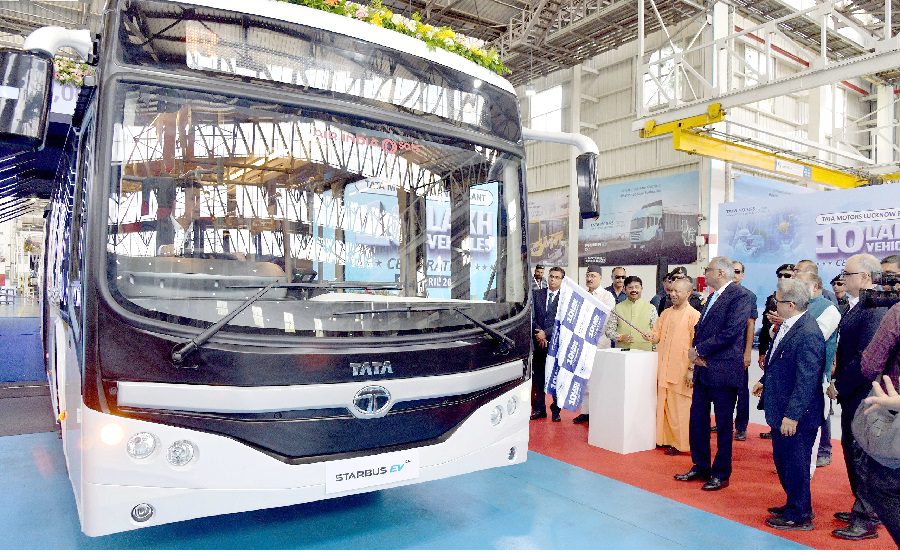
Lucknow: The Tata Motors manufacturing facility in Lucknow has achieved a major milestone with the rollout of its 10 lakhth vehicle. The landmark commercial vehicle, an electric bus, was ceremonially flagged off today in the presence of Uttar Pradesh Chief Minister Yogi Adityanath.
The event highlighted the plant’s long-standing contribution to India’s automotive sector and its growing role in strengthening Uttar Pradesh’s industrial ecosystem.
Tata Leadership and State Government Mark the Occasion
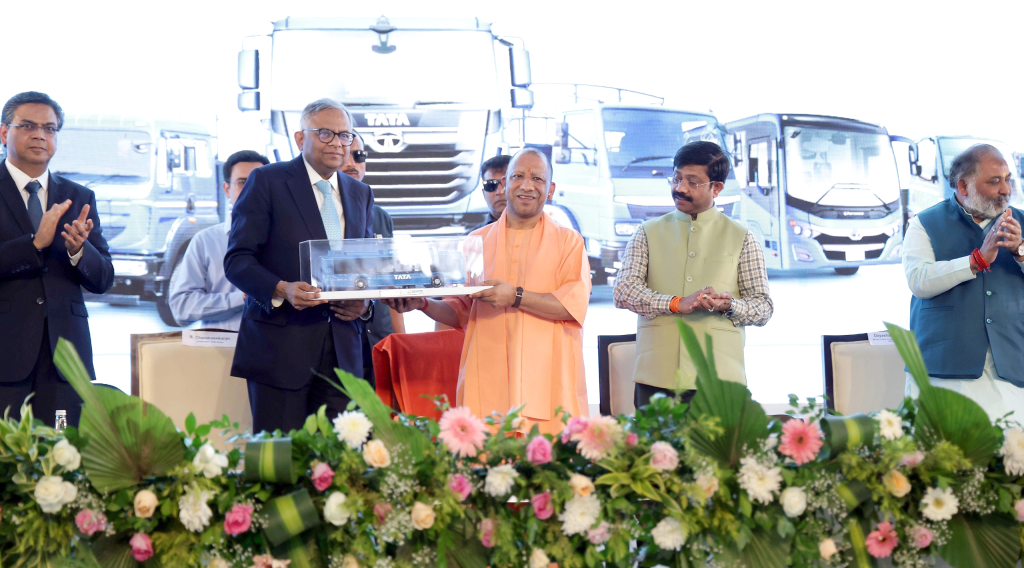
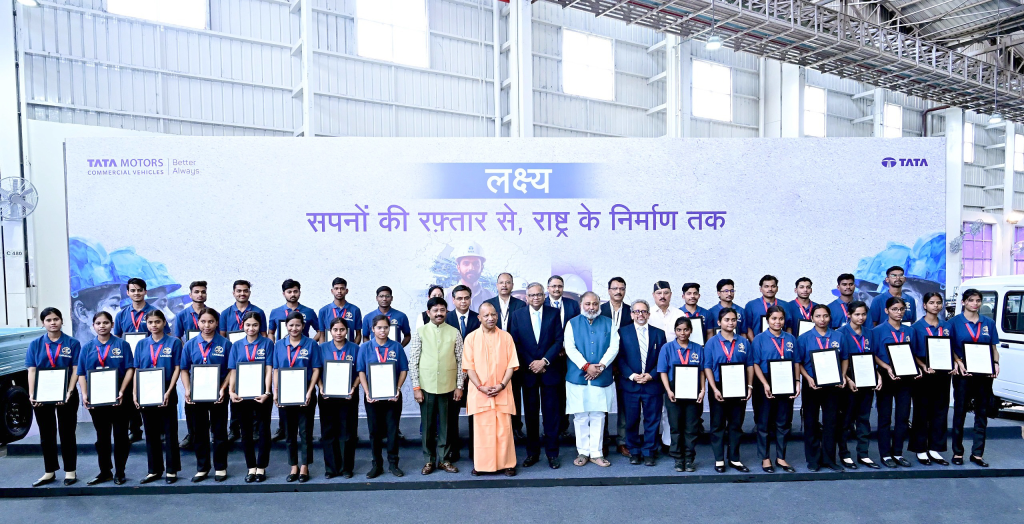
The ceremony was attended by Tata Sons Chairman N. Chandrasekaran, who joined Chief Minister Yogi Adityanath in celebrating the achievement.
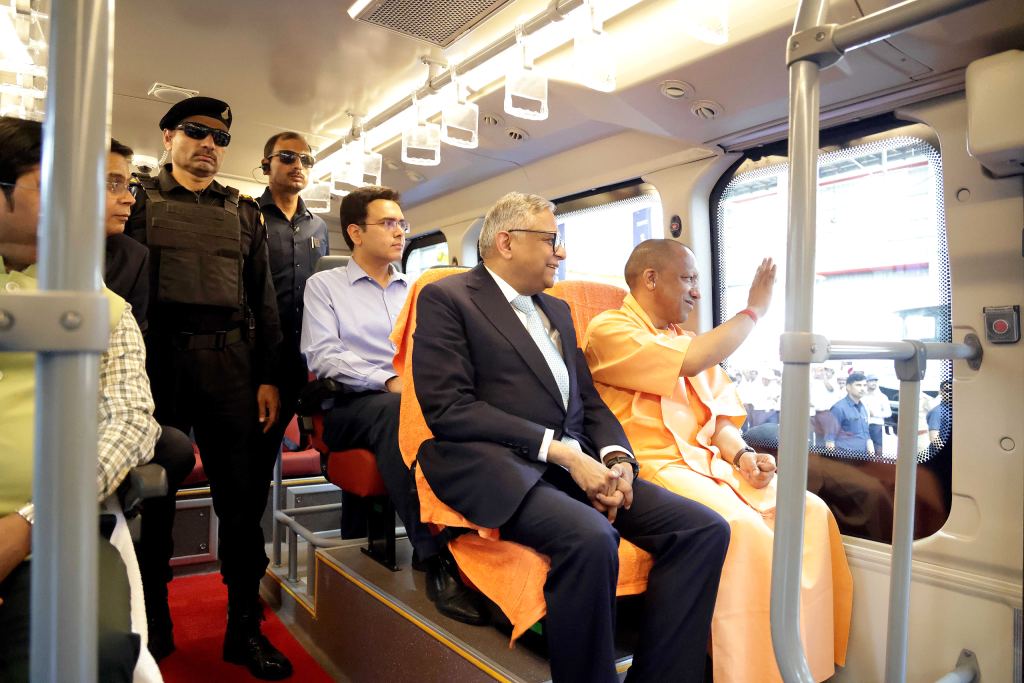
During the event, the Chief Minister also took a ride in the newly launched electric bus and appreciated its advanced features. Tata leadership showcased the vehicle’s capabilities and emphasized the company’s focus on sustainable mobility solutions.
34-Year Journey of the Lucknow Plant
Established in 1992, the Tata Motors plant located in Chinhat on Deva Road, Lucknow, has completed over three decades of operations. Over this period, it has:
- Produced 10 lakh commercial vehicles
- Provided employment to around 8,000 people
- Built a strong automotive supply chain ecosystem
- Developed capabilities in light and heavy commercial vehicles, including buses
The facility also exports vehicles to nearly 15 countries, reinforcing its global manufacturing footprint.
Uttar Pradesh as an Emerging Global Manufacturing Hub
Addressing the gathering, Chief Minister Yogi Adityanath stated that the milestone represents more than just industrial success—it reflects Uttar Pradesh’s transformation into a global manufacturing hub.
He emphasized that the state, with a population of around 25 crore and a 56% youth workforce, is rapidly developing a market-ready and industry-ready talent base through skill development and innovation initiatives.
The Chief Minister also highlighted improvements in infrastructure, connectivity, and law and order as key drivers of industrial growth in the state.
Tata Motors’ Vision for Future Growth
Tata Sons Chairman N. Chandrasekaran noted that the Lucknow facility has built a strong ecosystem of suppliers, partners, and communities. He announced ambitious expansion plans, stating that the company aims to produce up to 20 lakh vehicles in the next five years.
He also reaffirmed Tata’s commitment to sustainable and high-quality manufacturing, aligning with India’s broader industrial growth vision.
Sustainable Manufacturing and Zero-Waste Achievement
According to senior leadership from Tata Motors, the Lucknow plant has achieved a “zero-waste” status in its operations. The facility focuses on efficient resource utilization and environmentally responsible manufacturing practices.
This aligns with the company’s broader commitment to sustainability in automotive production.
Symbol of Trust and Industrial Partnership
Leaders at the event reiterated that the Tata brand continues to symbolize trust and reliability in India and global markets. From transportation to industrial goods, Tata Group’s contribution has been central to India’s economic development.
The Lucknow plant, in particular, has become a strong example of successful collaboration between industry and the state government, driving investment, employment, and export growth.
The rollout of the 10 lakhth vehicle from the Tata Motors Lucknow plant marks a significant milestone in India’s automotive and manufacturing journey. It reflects not only industrial progress but also Uttar Pradesh’s rising stature as a key destination for global manufacturing investment.