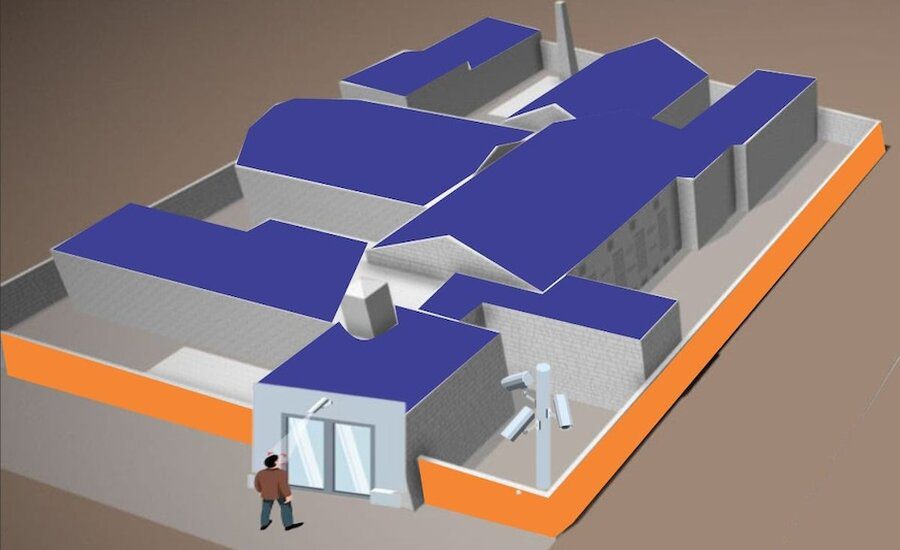
Lucknow: The Uttar Pradesh government has taken a significant step toward strengthening its framework for handling illegal immigrants and Rohingya refugees residing in the state. A comprehensive model of a large-scale detention center—designed to house up to 15,000 individuals—has been finalized for Western UP.
This center promises state-of-the-art security systems, modern surveillance, and advanced biometric verification technologies aimed at ensuring complete monitoring and controlled access.
Officials confirmed that this is the first detailed detention center model made public in the state, indicating the government’s increasing focus on organized, secure, and legally compliant detention infrastructure.
Background: Rising Need for Structured Detention Center in Uttar Pradesh
Over the past decade, Uttar Pradesh—particularly its western regions—has witnessed concerns related to illegal infiltration, undocumented residents, and Rohingya refugee settlements. With the central government emphasizing the identification and management of illegal foreign nationals, UP has been creating mechanisms to streamline detention, verification, and deportation procedures.
The Ministry of Home Affairs has directed states to maintain dedicated detention centers to temporarily house individuals awaiting verification or deportation. The new model aligns with these broader national objectives.
A First-of-Its-Kind Model Released by the State Government
The proposed detention center’s structural blueprint showcases:
- Large-scale, segmented buildings
- High-security entry and exit points
- Controlled living sections for detainees
- Dedicated administrative and monitoring wings
Officials confirmed that the model has been shared with divisional commissioners and the Home Department for review, feedback, and finalization of implementation protocols.
Detention Center in Uttar Pradesh: Capacity to Hold 15,000 Individuals
According to the detailed design, the detention center will be capable of accommodating 15,000 detainees at a time. This makes it one of the largest such facilities planned in India.
The center is conceptualized to:
- Handle high-density populations without compromising safety
- Maintain separate sections for different categories of detainees
- Ensure proper sanitation, movement control, and security protocols
Once operational, the center is expected to streamline documentation and verification processes, reducing the administrative burden on district-level agencies.
Advanced Multi-Layered Security Architecture
Security is at the heart of the proposed detention center. The model features a three-tier security arrangement, integrating both physical and digital surveillance systems.
1. Perimeter Security and Physical Checkpoints
- Multiple walls and barricades
- Guarded towers
- Restricted gates with constant monitoring
2. Biometric Verification Systems
The detention center will use biometric systems, including:
- Fingerprint scanning
- Iris recognition
- Digital registration for entry and exit
These technologies aim to eliminate impersonation, strengthen identification records, and maintain precise digital logs.
3. Comprehensive CCTV Surveillance
High-resolution CCTV cameras will cover:
- Corridors
- Dormitories
- Common areas
- Entry-exit points
- Administrative blocks
- Live feeds will be integrated with central monitoring cells for real-time oversight.
- Facial Recognition-Based Access Control
The model proposes the use of facial recognition cameras capable of detecting unauthorized entry attempts.
Security personnel can instantly verify whether an individual has official permission to enter or move across designated zones.
Green-listed individuals (officers and authorized personnel) will receive seamless digital clearance, reducing dependence on manual checks.
Central Monitoring and Command Center
To ensure full coordination, the detention center will include a Central Command Room (CCR), equipped with:
- Real-time video analytics
- Biometric data dashboards
- Facial recognition alerts
- Incident reporting systems
- Communication links with district and state control rooms
- This command center will supervise operations 24×7.
Deployment of Special Security Forces
The center will have:
- A dedicated team of 50 trained security personnel, deployed strategically
- Round-the-clock patrolling units
- Emergency response systems
- Strict movement protocols inside the premises
These measures aim to maintain order and prevent security breaches.
Administrative Preparedness and Next Steps
Government officials have already circulated the center’s blueprint to various departments for evaluation. The Divisional Commissioner is expected to conduct a detailed site assessment before construction begins.
Once the review is complete, the state government will finalize timelines, budget allocations, and the tendering process for construction.
Significance for Uttar Pradesh and National Security
The establishment of such a detention center is a milestone in India’s broader immigration and national security strategy. It will:
- Provide a centralized facility for foreign nationals awaiting legal proceedings
- Reduce the load on district jails, which are not meant for immigration-related detentions
- Strengthen documentation, verification, and deportation mechanisms
- Align state preparedness with central government directives
Experts see this as a major administrative reform that could improve transparency and efficiency in handling undocumented foreign nationals.