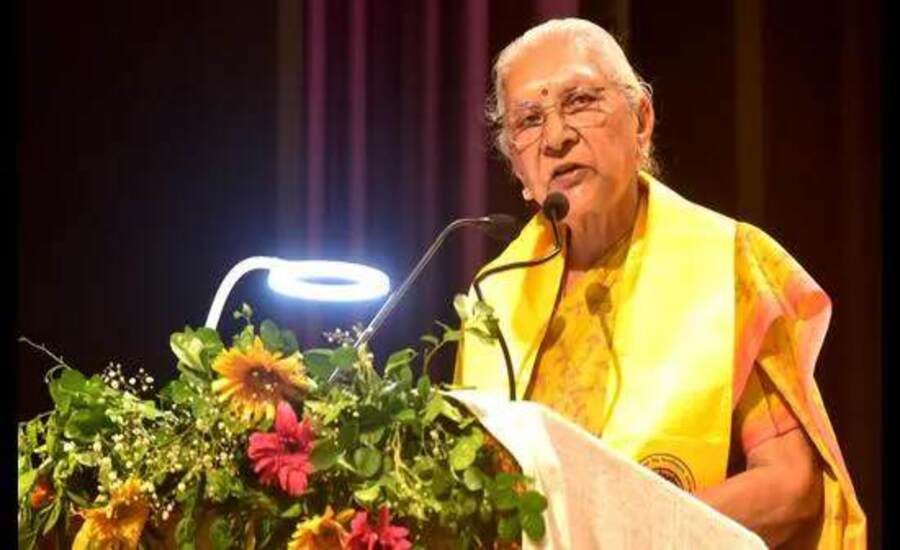
Lucknow: Uttar Pradesh Governor Anandiben Patel has sparked a fresh debate within the state’s bureaucracy after publicly expressing dissatisfaction with the functioning of senior IAS officers, particularly those at the Additional Chief Secretary (ACS) level. Speaking at a convocation ceremony, the Governor questioned the delay in framing operational guidelines for the state’s ambitious Rani Lakshmibai Scooty Scheme, remarking that while announcing schemes and allocating budgets is the government’s responsibility, it is the bureaucracy’s duty to draft rules ensuring their effective implementation.
In unusually candid remarks, Anandiben Patel said she was “tired of bureaucracy” and criticised officials for failing to prepare the necessary framework for a flagship welfare initiative despite sufficient time being available.
Governor Questions Bureaucratic Functioning
Addressing the gathering, the Governor drew a clear distinction between the role of the elected government and that of the administrative machinery.
According to her, the Chief Minister fulfilled his responsibility by announcing the scheme and allocating the required budget, but senior officials failed to formulate rules that would ensure the benefits reached the intended beneficiaries.
She questioned why the guidelines remained pending for nearly a year after the scheme’s announcement and asked what senior officials had been doing during that period.
The Governor said she had repeatedly spoken to senior ACS-level officers regarding the issue but found little progress in translating the government’s announcement into an implementable programme.
Read also: ‘Become an Expert Mother Before an IAS Officer’: UP Governor Anandiben Patel’s Remarks Spark Debate
Rani Lakshmibai Scooty Scheme at the Centre of the Controversy
The Governor’s criticism centred on the Rani Lakshmibai Scooty Scheme, under which the Uttar Pradesh government has proposed distributing scooters to deserving girl students pursuing higher education.
The scheme aims to support:
- Girl students who have completed Class 12 and are pursuing higher education.
- Orphan girls eligible under the scheme.
- Students who travel long distances for education and face transportation challenges.
The state government has reportedly earmarked around ₹400 crore for the initiative.
The objective behind the scheme is to improve access to higher education, especially for girls from economically weaker backgrounds and rural areas who often travel several kilometres every day to attend colleges.
Governor Questions the 90% Eligibility Criterion
A major concern raised by Anandiben Patel was the eligibility criterion reportedly linked to securing 90% marks.
She argued that such a benchmark would disproportionately favour students studying in urban areas with access to better schools, coaching facilities and educational resources.
According to the Governor, students from remote villages who travel long distances and study under difficult circumstances are far less likely to achieve such high scores despite facing greater hardships.
She questioned whether the scheme would ultimately benefit those who genuinely require assistance or merely those already enjoying educational advantages.
The Governor stressed that welfare schemes should be designed around the needs of the intended beneficiaries rather than purely academic performance.
“Who Really Needs the Scooty?”
During her speech, Anandiben Patel repeatedly asked who actually needs government support.
She observed that students studying in cities, attending private institutions and receiving coaching are more likely to secure high marks and qualify under the existing criterion.
In contrast, girls from villages often walk several kilometres every day to attend school or college and lack access to quality educational infrastructure.
According to the Governor, these are the students for whom such a scheme was originally envisioned.
She urged officials to prepare beneficiary lists based on genuine need and accessibility rather than relying solely on examination scores.
“CM Gives the Budget; Officials Must Make the Rules”
The Governor underscored that policymaking and implementation require both political commitment and administrative efficiency.
She remarked that:
- The Chief Minister’s responsibility is to announce welfare programmes and provide financial allocations.
- It is the responsibility of IAS officers and senior bureaucrats to frame transparent and practical rules.
- Delays in rule-making defeat the very objective of welfare schemes.
Her remarks reflected concerns that administrative delays can weaken the impact of government initiatives despite adequate budgetary support.
Questions Raised Over Administrative Delay
According to the Governor, the rules governing the scheme were prepared only after considerable delay.
She said she regularly follows government developments and even reviewed newspaper reports regarding the scheme before questioning senior officials about the status of the guidelines.
The Governor indicated that she had personally sought explanations from senior officers regarding the nature of the rules and whether they truly reflected the scheme’s intended purpose.
Focus on Rural Girls and Inclusive Welfare
A recurring theme throughout Anandiben Patel’s address was the need to ensure that government schemes reach those facing genuine hardship.
She pointed out that many girls in villages travel four to ten kilometres or even more every day simply to continue their education after Class 10.
According to her, these students deserve priority over those already enjoying better educational facilities and economic support.
She suggested that beneficiary selection should take into account factors such as:
- Distance travelled for education.
- Economic background.
- Availability of transport.
- Rural location.
- Actual need for assistance.
Such an approach, she argued, would better fulfil the objectives of the scheme.
Remarks Draw Attention Within Bureaucracy
The Governor’s direct criticism of senior IAS officers has generated considerable discussion within administrative circles.
Her comments questioning the efficiency of ACS-level officials and the pace of policy implementation are being viewed as a significant intervention, particularly because they relate to the functioning of the state’s top bureaucracy.
Given Anandiben Patel’s long administrative and political experience—including serving as the Chief Minister of Gujarat—her observations are likely to attract attention within both government and bureaucratic circles.
Comments on Women’s Role
Apart from discussing governance and welfare schemes, Anandiben Patel also spoke about women’s empowerment during the convocation ceremony. She said women should strive to become “expert mothers” while also pursuing their professional ambitions, emphasising the importance of balancing family responsibilities with career aspirations.
Political and Administrative Significance
The Governor’s remarks come at a time when governments across the country are increasingly focusing on effective delivery of welfare schemes. Her criticism highlights a broader governance challenge—ensuring that policy announcements are supported by timely rule-making and implementation so that benefits reach the intended beneficiaries rather than being limited by procedural shortcomings.
While it remains to be seen whether the observations lead to any administrative changes or revisions in the scheme’s eligibility criteria, the Governor’s public intervention has undoubtedly brought the functioning of Uttar Pradesh’s bureaucracy under renewed scrutiny.
Read also: Haryana Deploys 6 IAS, HCS Officers for PM Modi’s Jind Visit; Yash Jaluka Among Key Officials