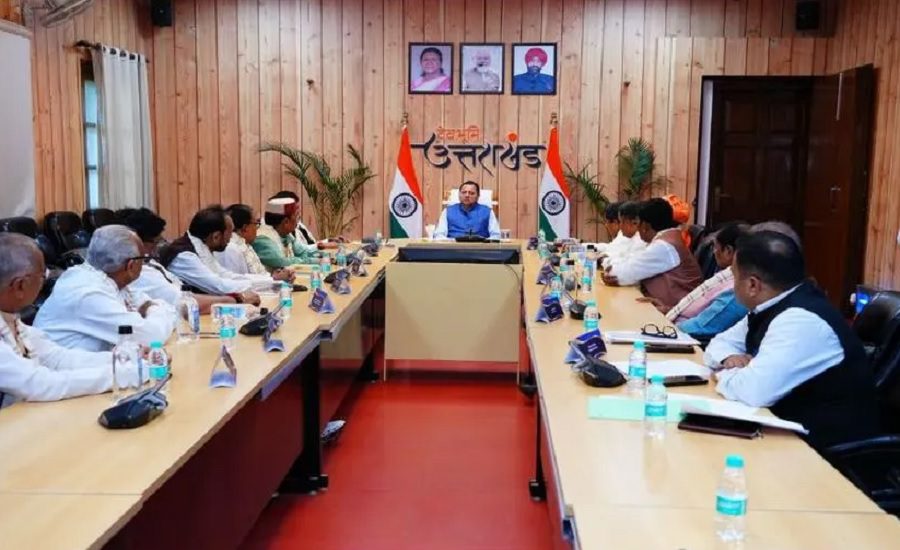
Dehradun: Uttarakhand is poised to become the sixth state in India to be officially declared fully literate after the state cabinet approved a proposal confirming that the state’s literacy rate has crossed the 98% mark. The proposal will now be sent to the Central Government for final certification under the ULLAS (Understanding Lifelong Learning for All in Society) programme.
The achievement marks a significant milestone in Uttarakhand’s educational journey and places it among a select group of states that have attained near-universal literacy. Once certified by the Centre, Uttarakhand will join Mizoram, Goa, Tripura, Himachal Pradesh and Sikkim in the category of fully literate states. Ladakh remains the first and only Union Territory to have received full literacy certification under the scheme.
Cabinet Gives Approval for Full Literacy Proposal
The Uttarakhand Cabinet on Thursday approved the proposal declaring the state fully literate after it successfully met the benchmarks prescribed under the Centre’s ULLAS programme.
The cabinet’s approval clears the way for the state government to forward the proposal to the Centre for final validation and certification. Officials said the state has achieved an adult literacy rate exceeding 98%, comfortably surpassing the minimum threshold required under the national programme.
The move is being viewed as a landmark achievement for a state that has made substantial investments in expanding educational access since its formation in 2000.
Read also: Uttarakhand CM Pushkar Singh Dhami Approves ₹105 Crore Development Projects Ahead of Kumbh Mela 2027
What Qualifies a State as Fully Literate?
Under the ULLAS programme, a state is considered fully literate when its adult literacy rate among residents aged 15 years and above reaches at least 95%.
In addition to achieving the literacy benchmark, the state must also demonstrate that it has made sustained efforts to educate previously non-literate individuals and ensure broader access to learning opportunities.
The ULLAS initiative aligns with the objectives of the National Education Policy (NEP) and focuses on lifelong learning, foundational literacy, critical life skills and continuing education.
Uttarakhand to Join Elite Group of Fully Literate States
Once certified by the Centre, Uttarakhand will become the sixth state in India to attain fully literate status under the ULLAS framework.
The states that have already achieved this distinction are:
- Mizoram
- Goa
- Tripura
- Himachal Pradesh
- Sikkim
Additionally, Ladakh holds the distinction of being the first Union Territory to be officially certified as fully literate under the programme.
The inclusion of Uttarakhand in this list reflects the state’s consistent efforts to improve educational outcomes, particularly in geographically challenging regions.
CM Pushkar Singh Dhami Calls It a Matter of Pride
Chief Minister Pushkar Singh Dhami hailed the achievement as a proud moment for the state and credited the success to the collective efforts of educators, students, government officials and civil society organisations.
“Declaring Uttarakhand as a fully literate state in line with the National Education Policy is a matter of pride for all residents. This achievement is the result of collective efforts of the state’s teachers, students, voluntary organisations, administrative officers and public representatives,” the Chief Minister said.
Emphasising the transformative role of education, Dhami stated that the state government considers education the most powerful instrument of development and remains committed to providing quality education to every citizen.
He further described the literacy milestone as an important step toward realizing the vision of a developed Uttarakhand and contributing to the broader goal of a developed India.
Remarkable Growth Since State Formation
The literacy achievement represents a remarkable transformation for Uttarakhand since its formation as a separate state in 2000.
According to Census data:
- Literacy rate in 2001: 71.6%
- Literacy rate in 2011: 78.8%
- Current literacy rate: More than 98%
The 2011 literacy rate of 78.8% was already above the national average of 74%, indicating the state’s steady progress in education over the years.
The latest figures highlight a dramatic improvement of more than 26 percentage points over the past two decades.
Focus on Women, Remote Areas and Marginalised Communities
Officials attribute the success not only to government initiatives but also to the active participation of corporate organisations, social groups, voluntary agencies and local communities.
The education department adopted a targeted strategy aimed at reaching sections of society that traditionally faced barriers to education.
Special attention was given to:
- Women and girls
- Residents of remote and far-flung hill regions
- Scheduled Caste communities
- Scheduled Tribe communities
- Previously non-literate adults
Through literacy drives, awareness campaigns and community-based educational programmes, the state was able to significantly expand access to learning opportunities across difficult terrains and underserved populations.
Strong Educational Infrastructure Supports Growth
Uttarakhand’s expanding educational infrastructure has played a crucial role in improving literacy outcomes.
The state currently has:
- More than 16,400 government schools
- 11 state universities
- One central university — Hemwati Nandan Bahuguna Garhwal University
The growth of educational institutions, coupled with government welfare schemes and improved accessibility, has helped strengthen the state’s education ecosystem.
A Major Step Towards Human Development
Education experts view the achievement as more than a statistical milestone. Higher literacy levels contribute directly to improved health outcomes, greater workforce participation, financial inclusion, gender empowerment and stronger democratic participation.
For a predominantly mountainous state like Uttarakhand, where many communities live in geographically isolated areas, achieving a literacy rate exceeding 98% represents a significant accomplishment in human development and social inclusion.
What Happens Next?
Following the cabinet’s approval, the Uttarakhand government will forward the proposal to the Central Government for final verification under the ULLAS programme.
Once approved and officially certified, Uttarakhand will formally join the ranks of India’s fully literate states, marking a historic chapter in the state’s educational journey and reinforcing its commitment to inclusive and lifelong learning.