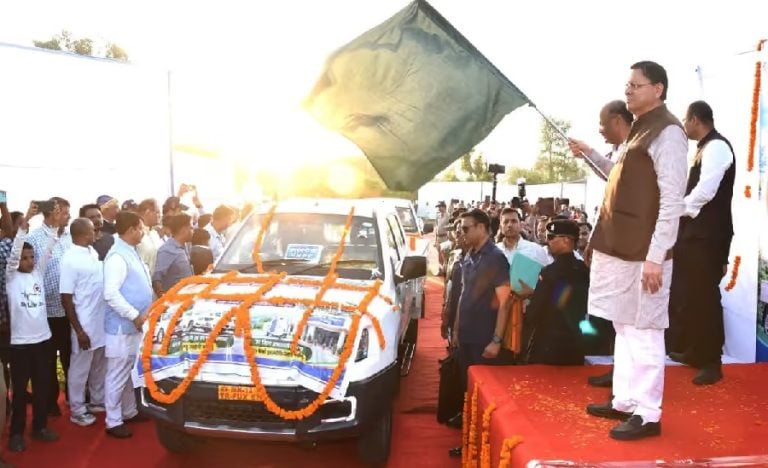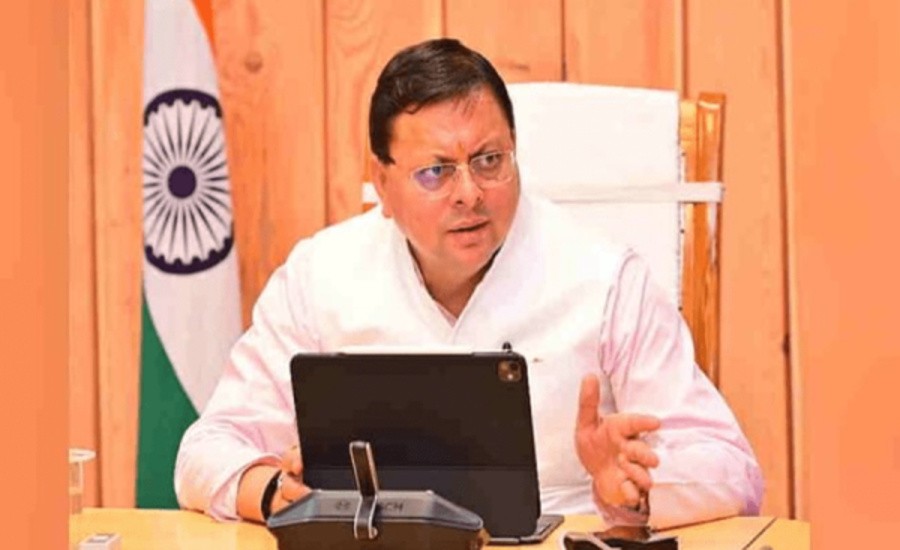
Dehradun: Uttarakhand Chief Minister Pushkar Singh Dhami has released the Uttarakhand Science, Technology and Innovation Policy-2026 along with technical reports on the state’s Gross Environment Product (GEP) for 2023-24 and 2024-25.
The releases took place during a meeting with Principal Scientific Adviser to the Prime Minister Prof Ajay Sood and experts from scientific and technical institutions. Discussions focused on the use of environmental data, assessment of natural resources and the role of science and technology in addressing challenges specific to Uttarakhand.
Dhami Calls for Carbon Credits, Accessible Water Harvesting
During the meeting, Dhami directed officials to incorporate carbon credits into the state’s Science, Technology and Innovation Policy-2026.
Read Also: Uttarakhand Youth to Visit Haryana to Learn About Culture, Development and Local Practices
He also called for water-harvesting solutions that can be adopted more easily by households and communities, with an emphasis on making such systems accessible beyond large institutional projects.
GEP Reports Assess Natural and Environmental Resource
The GEP reports examine the environmental resources and services considered in Uttarakhand’s GEP framework, including forests, water, biodiversity, soil conservation and carbon absorption.
The meeting discussed the scientific basis of the assessments, environmental data collection and analysis, and the possible use of GEP information in government planning.
Uttarakhand has been developing GEP as an environmental indicator alongside conventional economic measures. Research on the state’s framework has examined indicators related to forests, water, soil and air and distinguished its approach from the broader Gross Ecosystem Product concept used in some international environmental accounting frameworks.
STI Policy Targets Himalayan Science and Technology Needs
The Science, Technology and Innovation Policy-2026 identifies areas for research and technological intervention including glaciology, disaster management, energy, water resources, agriculture, healthcare, education, migration, skill development, entrepreneurship and intellectual property.
The policy also focuses on strengthening research and development institutions, innovation centres and priority research areas, alongside greater attention to science communication and public participation.
The policy had been formally released by Uttarakhand’s Department of Information Technology, Good Governance and Science & Technology in June, while the latest meeting provided a platform to discuss its implementation priorities.
Scientists and Institutions Discuss Local Research Priorities
The meeting brought together experts including ANRF CEO Prof Shiv Kumar, senior scientist Dr Parminder Main, HESCO founder Dr Anil Prakash Joshi, IIT Roorkee Director Prof K.K. Pant and UCOST Director General Prof Durgesh Pant.
Dhami said scientific and technological capabilities should be aligned with Uttarakhand’s geographical conditions and local requirements, including environmental conservation, resource management and challenges faced by the state’s mountainous and plains regions.
The discussions also covered how scientific studies and technical findings could be incorporated into government policymaking.
Read Also: CM Dhami Meets Uttarakhand Diaspora in Delhi, Says Suggestions Will Inform State Policies