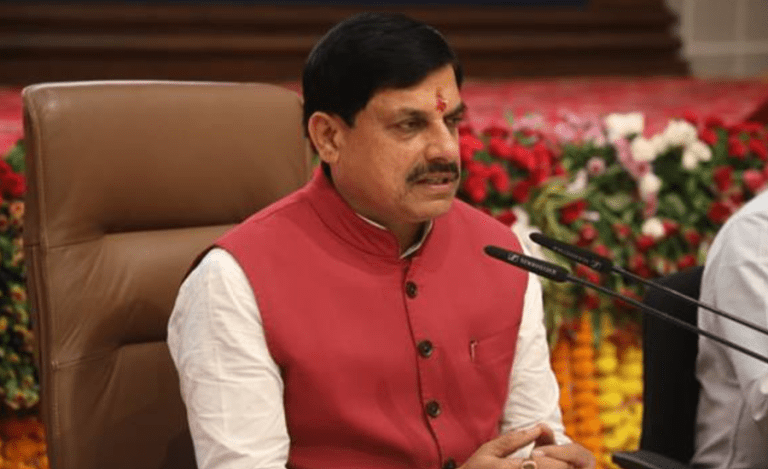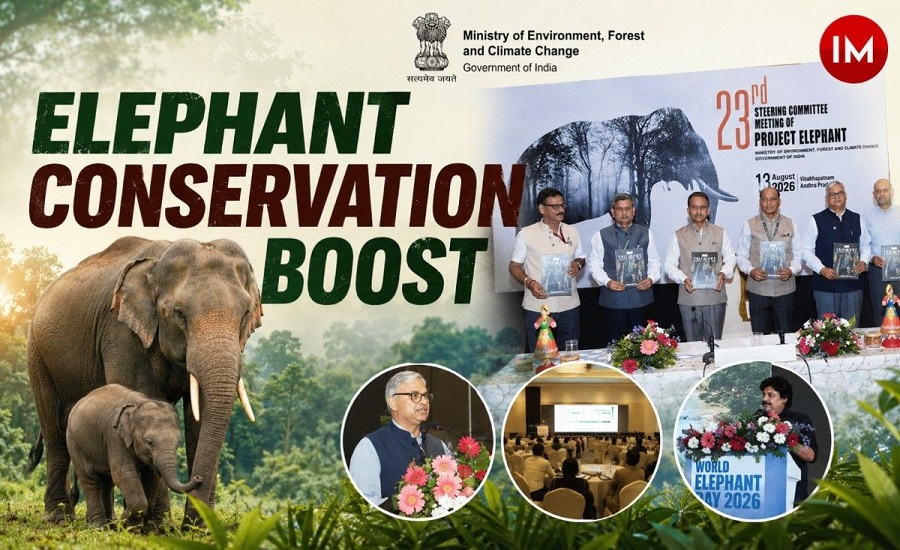
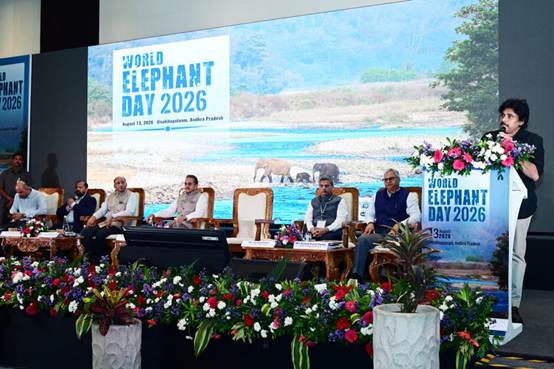
Union Minister of State for Environment, Forest and Climate Change Kirti Vardhan Singh presided over the celebrations, while Andhra Pradesh Deputy Chief Minister K. Pawan Kalyan attended as the Guest of Honour.
The event brought together senior officials from the Ministry of Environment, Forest and Climate Change (MoEFCC), Andhra Pradesh Forest Department, State Forest Departments, Indian Railways, scientific institutions and other stakeholders involved in elephant conservation.
The programme focused heavily on the growing challenge of Human-Elephant Conflict (HEC) and the need for coordinated, science-based and landscape-level solutions to protect both elephants and communities.
Addressing the gathering, Kirti Vardhan Singh said India’s commitment to elephant conservation was not merely a policy choice but a reflection of the country’s civilizational values and ecological responsibility.
He highlighted the use of emerging technologies, including artificial intelligence, remote sensing and geospatial mapping, along with traditional knowledge, to strengthen elephant habitat protection and reduce conflict.
According to the Minister, India currently has 33 Elephant Reserves and 150 scientifically identified elephant corridors and is home to nearly 60 per cent of the world’s wild Asian elephant population.
He stressed that Human-Elephant Conflict is a complex issue that cannot be addressed through a single intervention and requires coordinated participation from multiple stakeholders.
‘Conflict to Coexistence’ Is Andhra Pradesh’s Approach
Delivering the keynote address, Andhra Pradesh Deputy Chief Minister K. Pawan Kalyan said the State Government’s approach towards Human-Elephant Conflict was based on the motto ‘Conflict to Coexistence’.
He described HEC management as a shared responsibility that extends beyond administrative boundaries and requires cooperation between neighbouring States and different agencies.
Pawan Kalyan also highlighted Andhra Pradesh’s H.A.N.U.M.A.N. (Healing And Nurturing Units for Monitoring, Aid and Nursing of Wildlife) initiative.
The initiative involves the use of modern technology, community engagement and capacity building of frontline forest personnel to improve wildlife protection and management in the State.
₹500-Crore Action Plan for Southern India
One of the major highlights of the World Elephant Day celebrations was the release of the Regional Action Plan for Comprehensive Understanding and Management of Human-Elephant Conflict in Southern India.
The plan covers four major elephant-range States — Karnataka, Kerala, Andhra Pradesh and Tamil Nadu — and has been prepared under Project Elephant in consultation with State governments, scientific institutions and subject experts.
The Government of India has committed ₹500 crore to support the plan.
The action plan adopts a landscape-level approach and focuses on strengthening elephant habitats and reducing conflict through a combination of conservation, infrastructure and community-based measures.
Its major areas of focus include:
- Habitat connectivity and elephant corridor conservation
- Early-warning systems and conflict mitigation infrastructure
- Habitat restoration
- Community participation
- Research and monitoring
- Rapid-response mechanisms
- Capacity building
- Stronger coordination between neighbouring States
The initiative is aimed at developing a more comprehensive approach to HEC rather than treating individual conflict incidents in isolation.
National Workshop Examines Varying HEC Scenarios
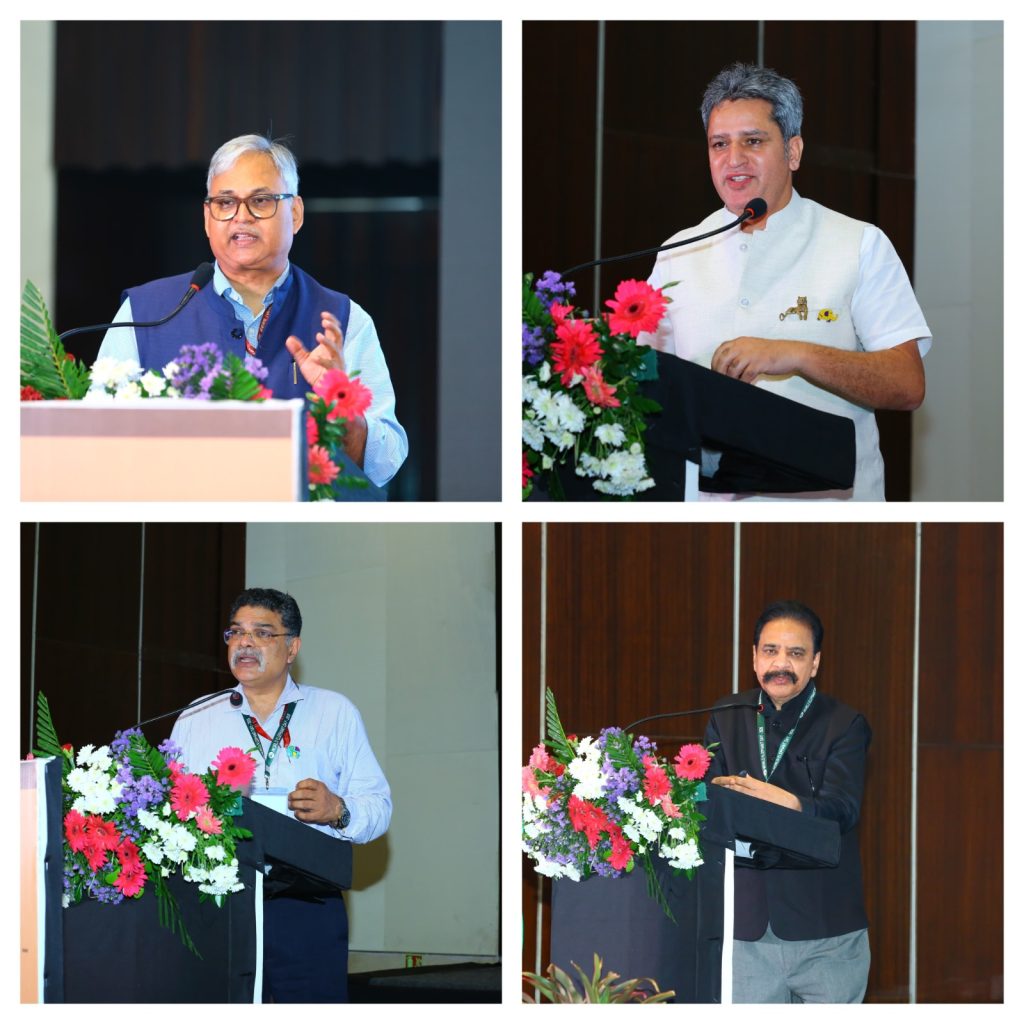
A national workshop titled ‘Human-Elephant Conflict: Varying Scenarios Across India’ was also organised as part of the celebrations.
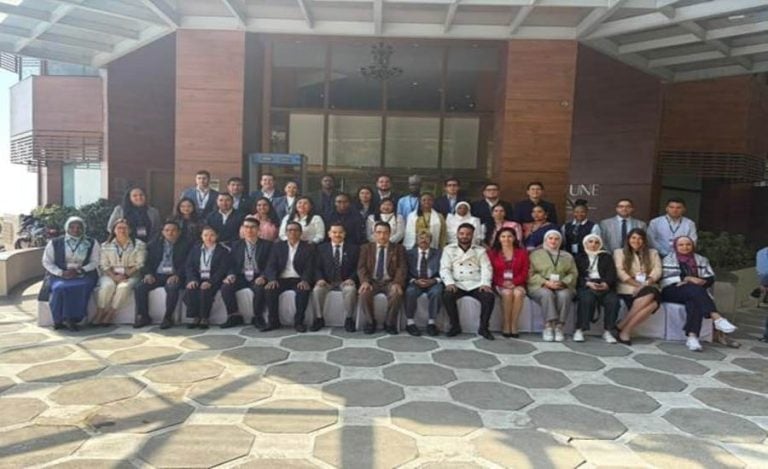
The workshop brought together Chief Wildlife Wardens and other regulatory authorities from elephant-range States, field agencies, scientific institutions, researchers and other stakeholders.
Participants examined regional variations in Human-Elephant Conflict using scientific evidence, long-term datasets and field experiences.
Discussions covered a wide range of issues, including veterinary interventions, prevention of electrocution, railway-related elephant mortality, habitat and corridor management and integrated landscape-level approaches.
The workshop also stressed the need for stronger collaboration between the MoEFCC, State Forest Departments, research institutions, Indian Railways and other agencies to develop coordinated and science-based strategies.
The discussions focused on context-specific solutions, innovative technologies, community participation and sharing of successful practices among elephant-range States.
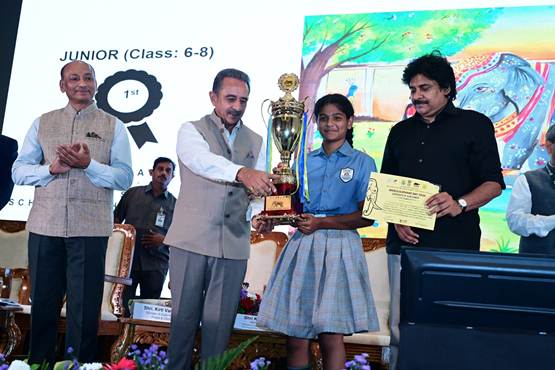
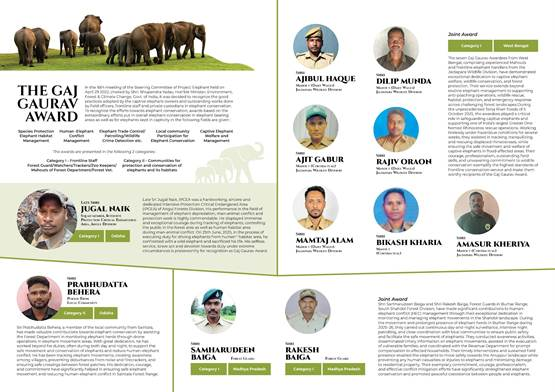
Gaj Gaurav Awards 2026 Conferred
As part of the national celebrations, Gaj Gaurav Awards 2026 were presented to individuals for their exemplary contributions to elephant conservation and management.
The awards recognised efforts aimed at strengthening elephant protection and improving conservation and management practices.
The ceremony highlighted the importance of recognising individuals and field-level contributions that support India’s long-term elephant conservation objectives.
‘30 Giant Steps’ Highlights Project Elephant’s Achievements
Another major release was ‘30 Giant Steps’, which highlights 30 major milestones, achievements and conservation initiatives undertaken under Project Elephant between 2020 and 2026.
Project Elephant was launched in 1992 as a Centrally Sponsored Scheme and has now completed more than three decades of work focused on protecting elephants, their habitats and corridors.
The programme also addresses Human-Elephant Conflict and the welfare of captive elephants.
The latest publication documents key conservation interventions and achievements under the project while highlighting the continuing evolution of India’s elephant conservation strategy.
Project Elephant Steering Committee Reviews Conservation Priorities
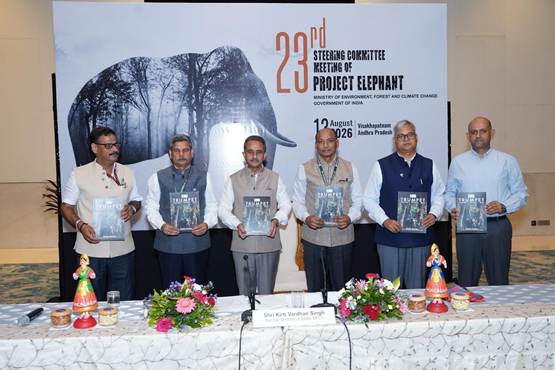
The celebrations also coincided with the 23rd Steering Committee Meeting of Project Elephant, chaired by Kirti Vardhan Singh.
The meeting reviewed current issues relating to elephant conservation and management and witnessed the release of several initiatives and publications.
These included The Trumpet, Volume VI Issue 01; the Model Elephant Conservation Plan for the Nilgiri Elephant Reserve; ‘Captive Elephant Husbandry: Science, Welfare and Practice’; and Phase II of the Human-Elephant Conflict study covering Kerala, Karnataka, Tamil Nadu, Odisha and West Bengal.
The initiatives are intended to strengthen evidence-based elephant conservation, improve captive elephant welfare and develop landscape-level approaches to managing HEC.
New Publications Highlight Elephant Conservation Research
The event also saw the release of a special issue of the Journal of Wildlife Science commemorating three decades of elephant conservation in India.
The special issue brings together scientific knowledge and research generated over the past 30 years to support future elephant management and conservation efforts under Project Elephant.
A monograph titled ‘Asian Elephants in Central India Before 1947’ was also released. It provides a historical account of elephant distribution, population status and the human-elephant interface in Central India.
20 Lakh Students Join Nationwide Awareness Campaign
The World Elephant Day celebrations were accompanied by a nationwide awareness campaign organised by Project Elephant in coordination with the National Museum of Natural History.
The campaign reached more than 20 lakh students across 21,450 schools.
A range of activities were organised to educate children about the ecological and cultural importance of elephants and the need to protect their habitats.
These included painting and mask-making competitions, rallies, nukkad nataks, awareness programmes and pledge-taking ceremonies.
Students also took a pledge to protect and conserve elephants, with the campaign positioning them as young ambassadors for wildlife and environmental conservation.
Technology and Community Participation at the Centre of Strategy
India’s latest elephant conservation strategy places increasing emphasis on combining technology with local knowledge and community participation.
The use of AI, remote sensing and geospatial mapping is expected to improve monitoring of elephant movement, habitats and corridors, while early-warning systems can help communities respond to the movement of elephants in conflict-prone areas.
At the same time, officials emphasised that technology alone cannot resolve HEC. Ground-level validation of scientific data, participation of local communities and cooperation between States and different government agencies remain critical.
The workshop discussions also highlighted the need to prevent elephant deaths caused by electrocution and railway-related incidents, while improving habitat connectivity and protecting traditional elephant corridors.
India Home to Nearly 60% of Wild Asian Elephants
India continues to occupy a central position in global Asian elephant conservation, with nearly 60 per cent of the world’s wild Asian elephant population found in the country.
The presence of 33 Elephant Reserves and 150 scientifically identified elephant corridors underlines the scale of India’s conservation landscape.
However, the increasing interface between human settlements and elephant habitats has made Human-Elephant Conflict one of the key challenges for elephant conservation.
The government is therefore increasingly focusing on landscape-level management rather than isolated interventions, with emphasis on habitat restoration, corridor protection, early warning systems, rapid response and community participation.
Focus Shifts From Conflict to Coexistence
The World Elephant Day 2026 celebrations in Visakhapatnam brought together conservation, technology, scientific research and community participation under a common objective — ensuring that elephant conservation also addresses the concerns of communities living alongside elephant habitats.
From the ₹500-crore southern India action plan and the national HEC workshop to the release of new research publications and the recognition of conservation champions through the Gaj Gaurav Awards, the initiatives underline India’s effort to build a more coordinated elephant conservation framework.
The emphasis on ‘Conflict to Coexistence’, as highlighted by Andhra Pradesh, reflects the broader challenge facing elephant-range States: protecting India’s elephant populations while ensuring the safety and livelihoods of communities sharing the landscape with them.
The Visakhapatnam celebrations ultimately reaffirmed India’s commitment to securing the future of its national heritage animal through science, technology, habitat and corridor conservation, community participation and coordinated action.
Read also: World Lion Day: Asiatic Lion Population Jumps From 523 to 891 as Range Expands to 35,000 Sq Km