In the often complex and demanding world of public administration, where policies, procedures, and pressure intersect daily, it is rare to find an officer who leads with both efficiency and empathy in equal measure.
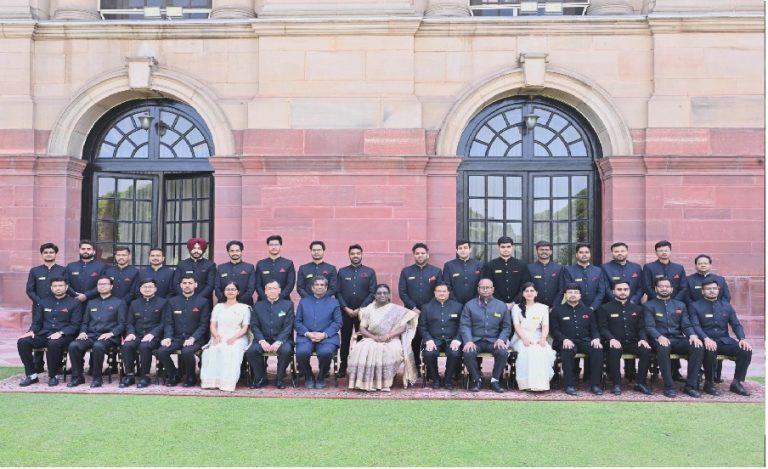
IAS officer Saurabh Katiyar, a 2016-batch officer (Maharashtra Cadre) currently serving as the Collector of Mumbai Suburban District, stands out as one such administrator—grounded, compassionate, and quietly transformative.
Hailing from Jharkhand and armed with B.Tech and M.Tech degrees from IIT Kanpur, Mr Katiyar’s journey into the civil services was driven not just by ambition but by a deeper purpose—to create meaningful impact where it is needed the most.
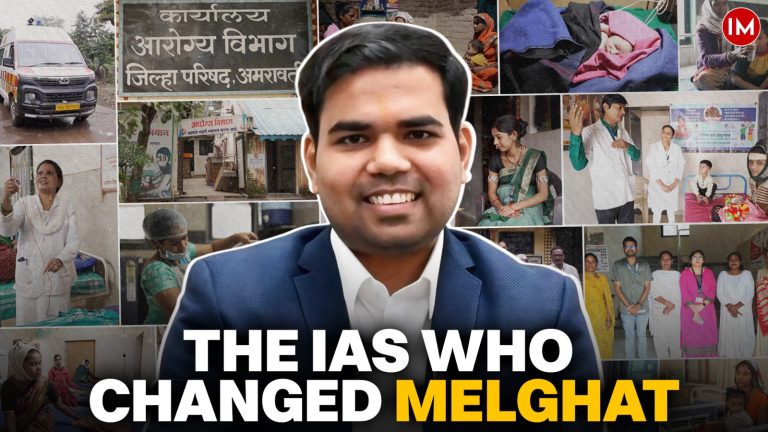
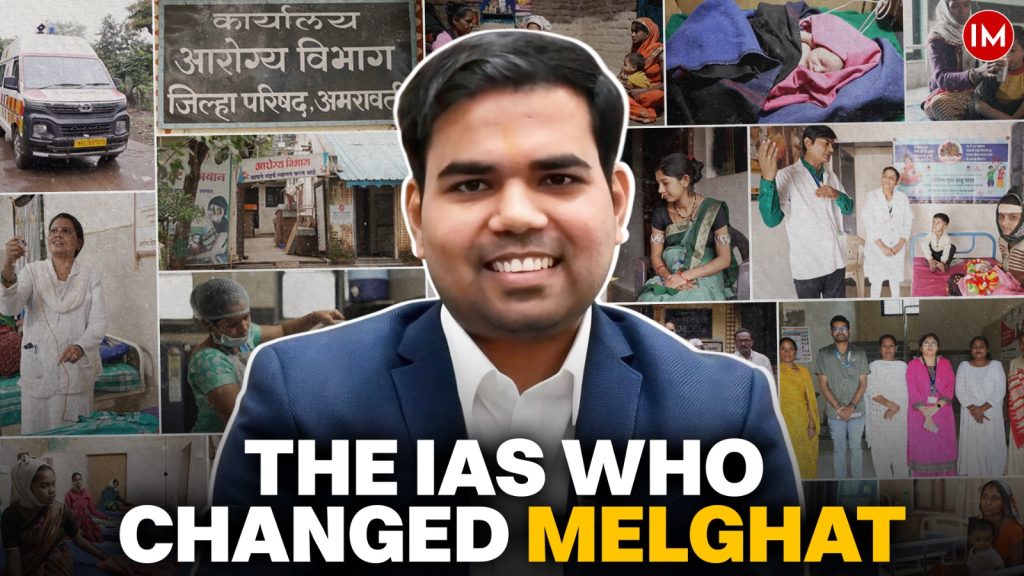
Over the years, his work, particularly in tribal regions like Melghat in Maharashtra’s Amravati district, has demonstrated how sensitive governance can bring measurable change to people’s lives.
WATCH THE FULL VIDEO INTERVIEW HERE:
A MISSION ROOTED IN SCIENCE AND SENSITIVITY
One of Mr Katiyar’s most impactful initiatives came during his tenure as Collector of Amravati, where he focused on improving maternal and child health in Melghat—a tribal region long grappling with high levels of malnutrition and mortality.
Recognising the urgency of the issue, he strengthened and advanced an ongoing initiative known as Mission 28. The idea behind it was both simple and deeply scientific. Medical research highlights that the 28 days before and after childbirth—the first 56 days—are the most critical for both mother and child. Proper care during this window can significantly reduce maternal and infant mortality.
Under this mission, targeted interventions, continuous monitoring, and community engagement became central strategies. The results were significant. Mortality rates in the region declined steadily, eventually aligning with the state average—a notable achievement for a region once considered highly vulnerable.
However, the challenge wasn’t just medical—it was social.
Melghat’s tribal communities often relied on traditional beliefs and were hesitant to seek institutional healthcare. Language barriers further complicated communication. To overcome this, Mr Katiyar and his team relied heavily on grassroots workers—ASHA and Anganwadi staff—who belonged to the same communities and could build trust from within.
Through consistent outreach, follow-ups, and local participation, the administration was able to bridge the gap between policy and people.
GOVERNANCE BEYOND NUMBERS
Despite the measurable success of Mission 28, Katiyar remains grounded in his assessment of the work.
“I wouldn’t say the problem is completely solved,” Mr Katiyar shared in an exclusive video interview with Indian Masterminds.
“But we have reached a stage where Melghat’s mortality rate has come down to the state average. That itself is a significant step forward.”
His perspective underscores a key trait—realistic optimism. For him, governance is not about claiming victory but about sustaining progress.
DEFINING TRUE ADMINISTRATIVE EFFICIENCY
Mr Katiyar’s work has earned him recognition, including an Administrative Efficiency Award. Yet, when asked what efficiency truly means in governance, his answer moves beyond conventional metrics.
“Efficiency is not just about speed or output,” he explains. “It is about understanding the context—rural and urban challenges are completely different, and our approach must adapt accordingly.”
He points out that while rural governance in India has evolved over decades with structured systems, urban governance is still developing and is far more dynamic. This requires administrators to be flexible, responsive, and innovative.
Now serving in Mumbai Suburban, one of India’s most complex urban districts, Mr Katiyar is navigating these very challenges—balancing infrastructure demands, public service delivery, and the expectations of a fast-moving urban population.
COMPASSION AT THE CORE
For IAS officer Saurabh Katiyar, however, the essence of good governance lies not in systems, but in values.
“Among all qualities—efficiency, decisiveness, honesty—I believe compassion is the most important,” he says. “Because governance is ultimately about helping people, especially those who cannot help themselves.”
He emphasises that while many citizens can navigate systems independently, vulnerable groups—such as the differently-abled, elderly, and underprivileged—require proactive support. Understanding their struggles requires sensitivity, and addressing them requires intent.
This philosophy has been evident in his work for the differently-abled, which has also earned national recognition.
RULES AS ENABLERS, NOT BARRIERS
In a system often perceived as rigid, Mr Katiyar offers a refreshing perspective on rules and governance.
“Rules are not a bondage,” he says. “They are meant to guide us. A good officer finds ways to use them positively—to innovate within the framework and deliver better outcomes.”
This approach reflects a balance between discipline and creativity—ensuring that governance remains both lawful and impactful.
SOCIAL MEDIA
At a time when social media often amplifies criticism of government systems, Mr Katiyar views it as an opportunity rather than a challenge.
“Social media is a very powerful tool,” he notes. “If used properly, it can create awareness, help people, and even serve as a platform for feedback.”
He acknowledges that while feedback can sometimes be harsh, it is also honest—and valuable for improving governance.
BALANCING AMBITION AND LIFE
Behind the role of an IAS officer is also a personal life that demands equal attention. Mr Katiyar speaks candidly about the challenges of maintaining work-life balance in today’s demanding administrative environment.
“Ambition is necessary—it drives improvement,” he says. “But it should not become an obsession. There has to be a balance between ambition and happiness.”
He credits his wife, Dr Monica Chaudhary, a gynaecologist, and their extended family for providing the support system that allows him to focus on his responsibilities. Together, they navigate the demands of dual careers while raising their two daughters—a testament to shared responsibility and understanding.
A MESSAGE FOR THE YOUTH
In an era where many young professionals are drawn to private sector opportunities, Mr Katiyar offers a grounded piece of advice.
“Follow your interest,” he says. “Whether it is the private sector or public service, only genuine interest will sustain your hard work. If you choose civil services, do it with full commitment.”