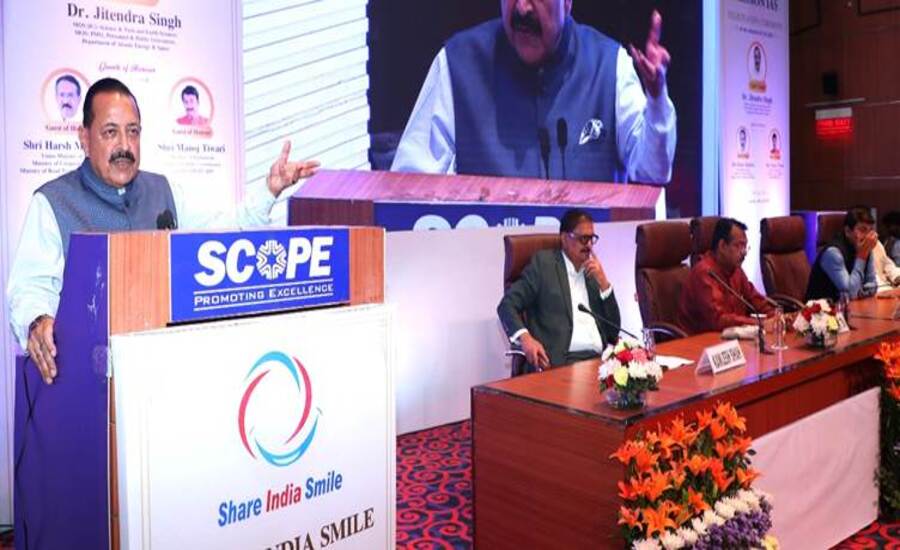
In a hall filled with newly selected civil servants, the conversation could have easily stayed on ranks, results, and recognition. Instead, Union Minister Dr. Jitendra Singh shifted the focus to, what kind of officers India needs in a changing governance landscape.
Speaking at the Mission IAS Felicitation Ceremony organised by the Share India Smile Foundation, the Minister framed civil services not as a destination, but as a responsibility shaped by integrity, inclusion, and self-awareness.
The event, attended by Minister of State Harsh Malhotra, Member of Parliament Manoj Tiwari, Share India CEO Sachin Gupta, mentor Hemant Jha, and educationist Nilesh Tripathi, came at a time when the UPSC Civil Services Examination 2025 has once again proved both, the scale and competitiveness of the system, with 958 candidates recommended for top services.
Yet, as Dr. Singh pointed out, what is changing is not just the scale, but the character of those entering it.
A System Opening Up
One of the most striking shifts, he noted, is the growing inclusivity of the civil services. With over 45% women among selected candidates, the examination is increasingly becoming inclusive, with broader social participation.
Equally important is the changing geography of success. Candidates are no longer concentrated in metropolitan centres. Increasingly, they are emerging from smaller towns, rural belts, and even border regions like Poonch, in the border Indian Union Territory of Jammu& Kashmir, areas once considered distant from the mainstream preparation ecosystem.
This widening base of participation, he suggested, is not accidental. It is the result of expanding access, through both policy and parallel support systems such as initiatives like Mission IAS, which aim to reduce structural barriers in preparation.
Integrity as the Core Administrative Value
But if access is redefining entry, integrity must define service, this was the central argument of Dr. Singh’s address.
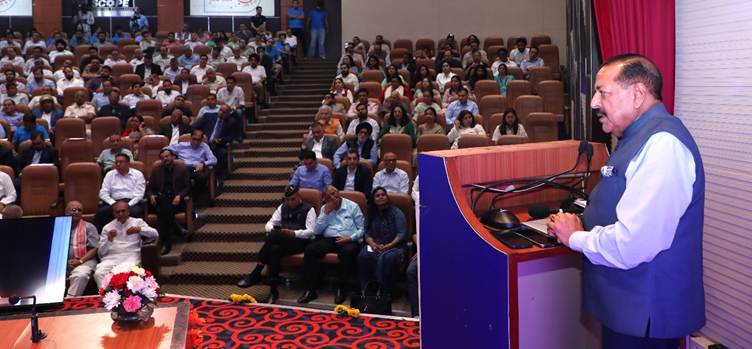
He made a distinction between visible conduct and real character, urging young officers to practice ethical consistency even when decisions are not under scrutiny. In an era where governance is increasingly transparent yet complex, he argued, trust is built not through position but through conduct.
The message was clear: integrity is not situational. It is habitual.
Alongside this, he emphasised self-awareness, an often overlooked but critical human trait. Understanding one’s own strengths and limitations, he noted, is essential in navigating the demands of CSE preparation as well as public service, where decisions carry both immediate and long-term consequences.
Linking Aspirations with Systemic Reform
Dr. Singh’s address also connected individual success stories with broader institutional reforms. He referred to Mission Karmayogi as a step towards continuous capacity building within the bureaucracy, and Pratibha Setu as an attempt to ensure that capable candidates who do not make the final list are not left without pathways.
He also highlighted the National Education Policy 2020 as a structural shift, moving India away from rigid academic choices towards flexibility. This, he suggested, will gradually diversify the intellectual profile of civil servants, making governance more adaptive and grounded.
Voices That Reinforced the Idea
The broader theme of responsibility found resonance across speakers.
MoS Harsh Malhotra reminded candidates that entry into service is the beginning of accountability, urging them to balance ‘sewa’ with ‘samvedna’.
Member of Parliament Manoj Tiwari, mixed humour with lived experience, encouraged officers to stay connected with public representatives and remain grounded in real-world governance.
RJ Raunak, in a lighter moment, remarked how across India, many parents still dream of seeing their children become “collectors”, a cultural reflection of the examination’s enduring significance.
Senior journalist Anand Narasimhan brought a sharper philosophical lens, urging officers to identify their role in nation-building and align it with intent and integrity. Public service, he suggested, must be driven not just by authority, but by purpose.
The Human Side of Success
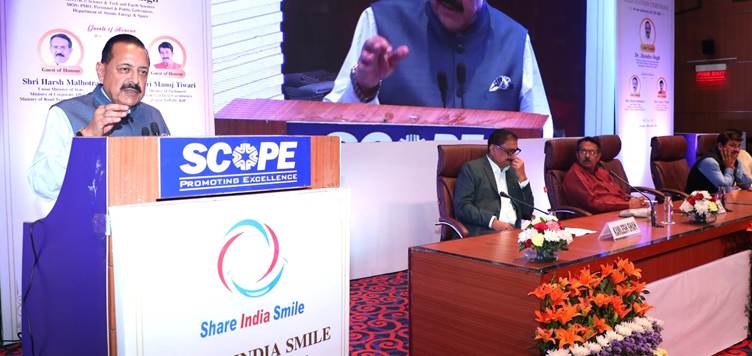
Amid these ideas, the voices of selected candidates added depth to the event. Many spoke about the long, uncertain journey of preparation marked by discipline, doubt, and persistence.
A common thread in their stories was gratitude towards Mission IAS, particularly mentor Hemant Jha. Candidates acknowledged that his guidance extended far beyond academics, helping them navigate strategy, maintain consistency, and build mental resilience through the demanding preparation cycle.
This shows what Mission IAS has come to represent, a structured ecosystem that combines mentorship, financial support, and academic guidance to ensure that talent is not limited by background.
From Gopalganj to Governance
The philosophy behind the initiative is rooted in a longer journey. From grassroots education efforts in flood-affected regions like Gopalganj in Bihar, to advanced mentorship in Delhi, the model attempts to create a continuum, from access to aspiration, and from aspiration to achievement.
In that sense, the ceremony was not just about celebrating results. It was about connecting two ends of the same story, the classroom and the corridor of power.
Beyond the Rank List
As the event concluded, one idea stood out.
The civil services are no longer defined only by who clears the examination. They are increasingly defined by who enters with awareness, and who serves with integrity.
In Dr. Jitendra Singh’s words and in the journeys of the candidates present, that shift was clearly visible.
Because in today’s India, clearing the exam may open the door, but how one walks through it will define the future of governance.