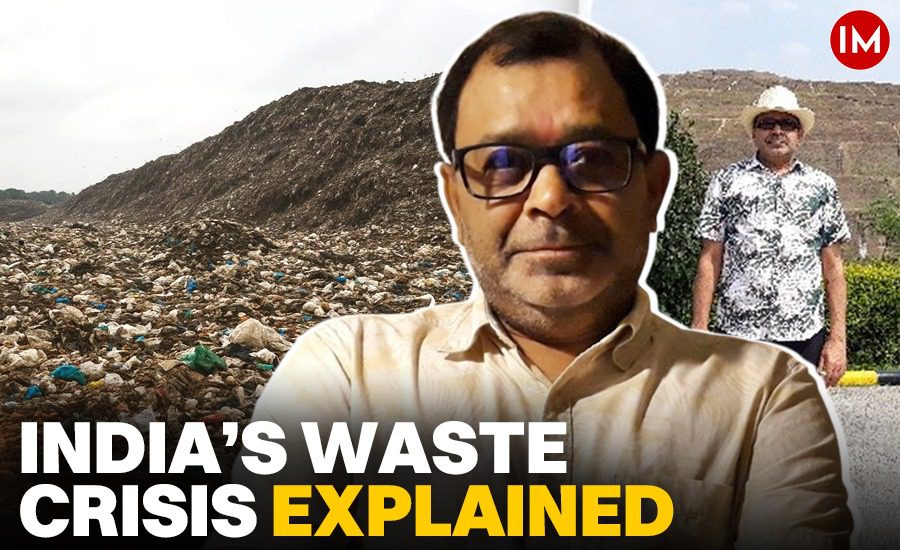
Typically, in the past, the city’s garbage was deposited outside the municipal limits of the city. Gradually, it became a mountain of waste – the uninvited neighbours of our cities. Today, over 24 crore tons of legacy waste lie festering in India’s dump yards spread across 2400 odd dumpsites.
The downward discharge from these dumps, called leachate, is packed with heavy metals, organic pollutants and pathogens. Exposure to such toxic waste is linked to gastrointestinal disorders, neurological conditions and cancer. In India, 16.3 crore people rely on untreated groundwater for drinking. There are far-reaching repercussions for health, the economy, the environment and climate. These toxic mountains are ticking bombs!
Municipal Solid Waste Generation in India
| Year (Urban India) | Daily MSW Generation (lakh tons) | Annual (lakh tons) | Waste generated by an urban Indian per day (Grams) |
| 2021 | 1.70 | 622 | 400 |
| 2025 | 2.66 | 970 | 624 |
| 2030 | 4.52 | 1650 | 1061 |
- Today, the waste generated by an urban Indian per day is 620 grams.
- India generates 970 lakh tons of Municipal Solid Waste per annum now.
- This will increase to 1650 lakh tons per annum in 2030.
Management of MSW in India now
- Today, 89% of MSW is collected.
- Only 53% is processed and disposed of – the rest is dumped on land and water.
- This is an environmental catastrophe!
Why do we need to manage Waste?
- India is in the midst of tremendous infrastructure & industrial growth.
- Greater growth means greater waste generation.
- The growing waste is impacting the environment (Air, Water, Soil) like never before.
- We need proactive approach to create ‘Waste Management Infrastructure’ for scientific management of waste.
- Waste management infrastructure is a ‘must-have ’ utility in Master Plans of all developed cities across the world.
- India has to do a lot of catching up to be truly called a modern country.
MSW – Waste Segregation at source
Waste segregation is the key to waste management. It is imperative to segregate the waste into Wet and Dry fractions at the source and transport the same to the processing site. There have been sporadic attempts to segregate waste at the local level; however, finally we have to deal with unsegregated waste at the processing site. We have to live with this situation for many years to come and design our solutions, keeping this reality in mind.
MSW Management – Regional Approach – Suitable for Indian Geo-Political Landscape
It makes good techno-economic sense to have processing plants with more than 1000 TPD (tons per day) of municipal waste input. In India, the metropolitan cities generate substantial quality of MSW – Delhi: 11,000 TPD, Mumbai: 8000 TPD, Hyderabad: 8000 TPD, Bengaluru: 6000 TPD, Chennai: 6000 TPD. Indore, the cleanest city in India, generates 1200 TPD waste.
However, most cities in India generate less than 500 TPD of MSW. Therefore, we should aim for a Regional Approach – establish Processing Plants, combining many towns and cities. We will get the best advantage – both Technical & ‘Economies of Scale’. This will also obviate the land availability problem at multiple locations. Land is a scarce resource when it comes to the establishment of a Processing & Disposal facility for MSW management. The common refrain and excuse for not doing MSW management is the unavailability of land.
Political Considerations
Our experience tells that the waste management happens only when there is Political Will. Because the waste management does not catch votes. Generally, politicians avoid /postpone it for reasons of NIMBY & NIMET.
- NIMBY: Not In My Back Yard
- NIMET: Not In My Elected Term.
Municipal Solid Waste Management – Legal Framework in India
The umbrella legislation for environmental protection and waste management in India is the “Environment (Protection) Act, 1986”. Rules have been framed under this Act for the regulation and management of MSW, i.e. “Municipal Solid Wastes (Management & Handling) Rules, 2026”.
It is to note here that as per the ‘Constitution of India’, only the Central Government is competent to make laws on environment – ‘Ministry of Environment, Forest and Climate Change’.
In addition, the ‘Manual on Municipal Solid Waste Management (2016)’ has been published by the Central Public Health and Environmental Engineering Organisation (CPHEEO).
This Manual is a comprehensive guide for urban local bodies, providing technologies, case studies, financial models, and guidelines for designing, operating, and maintaining effective municipal solid waste management projects as envisaged in the Municipal Solid Wastes (Management & Handling) Rules, 2026.
Municipal Solid Waste – Decomposition of Organic Matter
- Decomposition is the process by which dead organic substances break down into simpler matter.
- All Organic matter (dead bodies, fruits, vegetables, etc.) decays when dead.
- The decay in both cases is facilitated by micro-organisms, which are naturally present in our ecosystem
- The organic matter decays in 2 ways
(1) In the presence of Oxygen (Air): Called Aerobic Decomposition
Here, the micro-organisms (Bacteria, Fungi), which use oxygen, feed upon the organic matter
Aerobic microorganisms break down organic matter into carbon dioxide, ammonia, water, heat and Compost.
(2) Without Oxygen: Called Anaerobic Decomposition
The Organic matter decays in the absence of Oxygen (In sealed Containers)
The specialised Methanogens break down the organic matter into end products, namely Methane, carbon dioxide, and trace levels of hydrogen sulfide. This is called BioGas.
Methane is a greenhouse gas which is 24 times deadlier than Carbon dioxide.
Methane, if captured by human intervention, is an excellent clean fuel.
Municipal Solid Waste – Components
Recyclables (Paper, Plastic, Glass, Metal, Fabric, etc.)
- Informal, unhygienic system operates through rag pickers & most of the Recyclables are recovered before they reach the Processing Site.
Organic Matter (Green Waste, like food, garden waste)
- Dead organic matter decays with oxygen (Aerobic) and without oxygen (Anaerobic) – if uncontrolled, it causes damage to the environment.
- The decay of organic matter needs to be controlled by human intervention.
- The organic matter is processed & stabilized as follows:
- Converted into Compost – Aerobic,
- Bio Gas (Bio-methanation) -Anaerobic.
Inerts (Silt, Ash, Rejects of Composting)
- Deposited safely in an engineered Sanitary Landfill.
Scientific Waste Management
- Waste Management Hierarchy (Endeavour): Reduce, Reuse, Recycle, Recover, Dispose.
- All waste material, after exhausting the options of recycling and recovery, needs to be safely disposed.
- The scientific Disposal is done in two ways, namely:
- Bury (Engineered Landfill) or Burn (Incinerator)
- The process at the “Processing & Disposal” sites has to be done without causing any damage to the environment (Air, Water & Soil) now or later.
Municipal Waste Management – Execution at “Processing & Disposal” site
The MSW management of the City’s waste means two major activities.
- Collection & Transportation
- Processing & Disposal.
- The World’s experience demonstrates that government agencies cannot manage waste.
- Waste management is a 24×7, highly specialised and zero tolerance service – which is best provided by a private sector ‘Operator’. [called Concessionaire in a PPP mode]
- The PPP (Public–Private–Partnership) in waste management is the best solution for scientific waste management.
- The government agencies select the competent private Operator through a transparent, competitive bidding process.
- The government provides suitable land (at a nominal rate) to the Operator for the establishment of the Processing & Disposal Facility.
- The government signs a long-term ‘Concession Agreement’ with the Operator (called Concessionaire) for providing the service.
- The Private Operator brings in Capital, Technology and Manpower to establish and operate the ‘Waste Processing & Disposal’ Facility as a commercial entity till the validity of the Concession period.
- The environmental responsibility of the private Operator extends beyond the Concession period, e.g. integrity of the secured landfill.
Municipal Waste Management – PPP
- The Operator manages municipal waste generated in the ULB (Urban Local Body) area.
- The Operator charges ‘Tipping Fees’ (Fee per ton of MSW) from the ULB for providing the service.
- Tipping Fees – The fees charged on a monthly basis for “Collection & Transportation” and “Processing & Disposal”.
- The Operator recovers his investment & operational expenditure over the period of the Concession Agreement (say 20 years).
- The PPP in waste management is a ‘win-win-win’ proposition for the Waste Generator, the Government and the Operator.
- Of course, the greatest winner is the ‘Environment’.
- We will have sustainable growth & development only when we manage our waste scientifically and protect the environment.
MSW Management in India – Recommended pathways for Processing & Disposal
(with empirical numbers from our big projects in India)
Input: Unsegregated Municipal Waste of the City.
Processing Output: Recyclables, Compost, Refined Bio-Gas (also called Bio-CNG, RNG), Electricity.
Disposal: Secured Landfill
Leachate: Treatment Plant
The unsegregated waste from the city is collected and transported to the “Processing & Disposal” site, where it is weighed at the entry gate, and then the waste is processed as follows 👇
Presorting
The mixed waste is segregated into different fractions like organic waste, dry waste, recyclables and silt & debris. The Dry waste is also called RDF (Refuse Derived Fuel), which is the feed for a Waste to Electricity Plant.
Composting & Bio-methanation
Ideally, the organic wet waste should be processed through the bio-methanation (anaerobic) mode. However, not all wet waste is amenable to bio-methanation. Therefore, we resort to aerobic composting for the waste which cannot be put under bio-methanation.
Compost
Through the aerobic decomposition process, we get compost. By the way, compost is not a fertiliser – it is a great soil additive. Also, RDF (dry waste) is generated in the process which becomes feed/fuel for Waste to Electricity. Leachate is also generated in the process, which needs to be managed and treated separately. The inerts of the composting process is disposed of in a scientific landfill.
Bio-Methanation
This is anaerobic decomposition of the organic waste, and we generate Bio-Gas. This Bio-Gas, which is mainly Methane and with major impurity of carbon dioxide, is cleaned to obtain refined Bio-Gas. This refined gas is also called RNG (Renewable Natural Gas). RNG is clean Gas equivalent of naturally occurring fossil fuel called Natural Gas or CNG (Compressed Natural Gas).
This RNG is used as a clean fuel for Vehicles and dispensed at Fuel stations. RNG is also pressurised and filled into Cylinders for commercial and industrial use. Indore & Hyderabad are pioneers in this venture. RNG is the future of India and the answer to the burgeoning waste challenge. This is truly ‘Waste to Wealth’. After the bio-methanation process and extraction of bio-gas, we get process Digestate from the Bio Gas Plant. This is a wonderful raw material (purest organic matter) for aerobic composting. This is processed into compost.
Waste to Electricity
The RDF is burnt in an environment compliant Incinerator to produce electric power. RDF is obtained as dry waste after pre-sorting, plus rejects of the composting process. The principle of electricity generation is applicable here as it is in any thermal or Nuclear Plant. We only need fuel to boil water and generate steam. The steam moves the turbine in a magnetic field, which generates EMF (Electromotive Force), i.e. Electricity. This generated electricity after meeting the power consumption of the “Processing & Disposal” Plant is wheeled (sold) into the State Power Grid. The preferential tariff for this ‘renewable’ power is determined by the “State Electricity Regulatory Commission”. This tariff is an additional source of income for the private Operator (Concessionaire).
MSW Incineration – Future for India
- Incineration is an efficient way to reduce the burgeoning waste volumes of urban India (97 million tons per annum already and counting) and demand for scarce landfill space.
- Waste to Energy (Combustion) is a process that burns MSW as fuel through a controlled, environmentally friendly combustion process at high temperatures.
- This reduces the waste by 90% of its original volume (or 80% of its original weight).
- The Indian Electricity Act has been amended to include ‘Waste to Energy’ as renewable energy.
- We are converting Municipal Waste into Electric Power and RNG. These are merely the byproducts. The core objective is to treat and dispose of the Municipal waste. We want to reduce the quantity and volume of waste and dispose of it scientifically so that the Waste does not create environmental problems for our planet and occupy precious land for creating unnecessary high-capacity Landfills. Land is a scarce resource!
- MSW incineration process generates ash. Most of this ash (65%) is recycled, and the rest goes to the secured landfill for safe disposal.
MSW Management in India – Recommended pathways for Processing & Disposal
(Empirical Numbers derived from our large projects)
This number discovery is recent. I have been professionally associated with many MSW Projects in India, and the data below is not available on any platform, including the Government of India websites.
Let us consider a city generating 1000 tons per day of waste (1000 TPD).
The following Table depicts the useful and unwanted products of MSW processing as a percentage of the input waste stream. 👇
| Waste & Useful Products | Number | Unit | Percentage by Weight (of Input Waste) |
| Input unsegregated Municipal Waste | 1000 | TPD | 100% |
| Products after Processing (Waste to Wealth) | |||
| Compost (Aerobic & Anaerobic process) | 112 | TPD | 11% |
| In the process (all of the above), we generate unwanted material which needs to be treated and ensure treatment and safe disposal in secured landfills | 5 | TPD | 0.5% |
| RDF (Feed to W2E) – Power | 10 MW Electric Power (55 TPD of RDF generates 1 MW of Power) | ||
| Recyclables (Useful) | 20 | TPD | 2% |
| In the process (all of the above) we generate unwanted material which needs to be treated and ensure treatment and safe disposal in secured landfills | |||
| Inerts (Secured Landfill) | 200 | TPD | 20% |
| Leachate (Treatment Plant) | 172 | TPD | 17% |
MSW Processing & Disposal – (Technical & Commercial Numbers)
(Based on empirical evidence of our large MSW Projects in India)
Incoming Mixed Waste 1000 TPD – Fractions after Presorting the incoming Waste
After Pre-Sorting
| Fraction | Quantity (TPD) | Percentage |
| Dry Waste [RDF] | 500 | 50% |
| Wet Waste | 470 | 47% |
| Recyclables (Useful) | 20 | 2% |
| Inerts | 10 | 1% |
- Wet Waste amenable for Bio-methanation to produce Bio-Gas = 32%
- Wet Waste amenable for aerobic Composting = 68%
Waste to Electricity (WtE)
- 55 TPD of RDF generates 1 MW of Power.
- The Capital Expense of the WtE Plant today is Rs. 22 crores per MW of power produced.
- The annual Operational Expense is 10% of Capex.
- Sale of Power @ Rs. 7.00 – Rs. 7.90 per Unit (KWH) as per preferential tariff determined by the State Electricity Regulatory Commission.
Tipping Fees and Revenues – Current
The Tipping fees are the fees paid to the private Operator (called Concessionaire) by the Urban Local Body per ton of waste transported/treated/disposed. The Tipping fees are in addition to revenues accruing to the Operator from useful products of the processing like Compost, Bio-Gas, Recyclables, and Power). These are ballpark figures depending upon the size of the project, i.e. total TPD. Economies of Scale play an important role here.
- Tipping fees for ‘Processing & disposal’ = Rs. 1700 per Ton
- Tipping fees for ‘Collection & Transport’ = Rs. 2200 per Ton
(from households & establishments till Processing Site)
Note: Tipping fees are escalated YoY based on WPI and measurable input costs. Also, the Tipping fees may be escalated once every 3 or 5 years.
Revenues
- RNG Sale Price = Rs. 68 per kg.
- Compost Sale Price = Rs. 2000 per ton (after adding additives to raw compost)
- Recyclables Sale = Rs. 3000 per ton.
MSW Processing & Disposal Infrastructure – Capital Cost
We have recently designed an innovative, integrated MSW processing & disposal Project for a major metropolitan City in India with input waste of 4000 TPD. The Capital costs of various waste management infrastructure components are as follows 👇
| Component | Cost (Rs. Crore) | Basis/Benchmark |
| Pre-sorting Line | 399.90 | SBM 2.0 |
| RDF to Waste-to-Energy (WTE) | 880.00 | CERC 24-25 (Rs. 22 Cr per MW) |
| Bio-methanation Plant | 127.00 | SBM 2.0 |
| Composting | 173.10 | SBM 2.0 |
| Sanitary Landfill (SLF) | 33.81 | SBM 2.0 |
| Leachate Plant | 75.00 | Market Standards |
| Land Development | 75.00 | Market Standards |
| Vehicles | 50.00 | Market Standards |
| Ash Recycling Unit | 30.80 | SBM 2.0 (C&D reference) |
| Interest During Construction (IDC) | 202.80 | |
| Total Capex | 2,046.56 | |
| Grant @ 30% | 613.97 | Government Grant |
| Net Investment | 1,432.59 |
Legacy MSW Landfills – India’s mounting Waste Crisis
Mountains of waste are uninvited neighbours of our cities. The cities have been dumping their municipal waste beyond the city limits for years. Over 24 crore tons of legacy waste lie festering in India’s dump yards spread across 2400 odd dumpsites. The downward discharge called leachate is packed with heavy metals, organic pollutants and pathogens, causing irreversible damage to air, water and soil. In India 16.3 crore people rely on untreated ground water for drinking.
Exposure to such toxic waste is linked to gastrointestinal disorders, neurological conditions and cancer. These dumps have far-reaching repercussions for health, economy, the environment and climate. Ticking Bombs!
Legacy MSW Mountains of Landfills – Solution
Biomining is an ideal solution for long-standing waste. Biomining is a process where old accumulated waste is excavated and scientifically treated to separate the usable fraction. Inert materials are generated during the biomining of the legacy waste at the landfill sites. These are called inert because they do not react chemically. The material mostly comprises construction and demolition debris and other stable matter. This material is being successfully used in embankment construction for roads and highways.
After two successful experiments -on the urban extension Road-II in Delhi and the Ahmedabad Dholera Expressway in Gujarat – where around 27 lakh tons of inert waste from legacy dumpsites were repurposed. The Ministry of Highways has drawn up an ambitious plan. Fifteen major upcoming highway projects across the country, all within 50 metres of large landfills, are now being eyed for similar experiments.
The initiative began in 2014 within the Delhi Meerut Expressway, where officials first tried using landfill material to reduce enormous piles of garbage at the Delhi-UP border. A detailed study was carried out by the Central Road Research Institute, which concluded that the material could be safely used. And these materials are over 15 years old; there was no question of foul smell.
Thus, after testing and validation by CRRI and NHAI, the materials are successfully used in embankment construction. To ensure safety and quality, NHAI has issued detailed guidelines for using inert waste material in highway construction.
Legacy MSW Landfills – Capping & Biogas Capture
Many a time, the Concessionaire is also given the responsibility to scientifically cap the existing waste dump at the site allocated for processing and disposal. When the dump is capped, the methane gas being produced by the decomposing municipal waste inside the dump increases pressure inside. This Gas is captured through a system of pipe network and then stored in Gas Balloons. The gas, like Bio-Gas, is purified to obtain RNG. Then this RNG is pressurised and filled into cylinders for commercial and industrial use.
India – Case Study of Model MSW Projects – Beacon of light for others ⚡
Indore Project
- The first commercial Plant in India to produce RNG (purified Bio-Gas) from the current waste has been established at Indore (the cleanest City in India).
- The Plant was inaugurated by the Prime Minister on 19.02.2022.
- This is an important breakthrough for India – not a day too late!
- And this is the future for our cities.
Plant Data
Input: Wet Organic Waste: 500 TPD.
Output:
RNG: 17,000 kgs per day (50% gas offtake to Corporation City Buses & 50% used for Industrial, Commercial & Fuel Outlets)
Fermented Organic Manure: 100 Tons per day: Direct sale to farmers and via Chemical Fertiliser companies.
- Project Cost: Rs. 150 crores.
- Technology: Semi-Dry Mesophilic Process.
- Environmental Benefit: 1,30,000 tons CO2 (per year emission) reduction from the project.
Hyderabad Integrated Waste Management Project – The biggest and the Best in India
- Largest MSW Management Project in India. It caters to 8000 TPD of Hyderabad’s Municipal Waste.
- I commissioned the Plant in 2012.
- Processing & Disposal Site: 300 Acres, Jawaharnagar, Hyderabad.
- Project Brief: Aerobic Windrow Composting, RDF, Waste to Energy, Plastic Recycling, Sanitary Landfill, Capped Landfill Gas Capture & RNG, Legacy Waste Management.
Waste to Energy
The Waste to Energy Plant generates 19.8 MW of electricity, and in the second phase, with a capacity of 24 MW, is expected to start operations soon.
RNG from Capped Landfill
The Plant has been designed to capture biogas from the capped landfill, and then the gas is cleaned (gets rid of Carbon dioxide, etc.) and compressed and packed in cylinders for industrial use and automobile fuel. The plant was inaugurated in October 2021, and this is India’s largest plant to convert landfill gas to compressed biogas.
Conclusion
Given Political Will and good intentions, waste management can be done easily. It’s not rocket science. We have successfully established and demonstrated all sustainable and impactful facets of various waste management processes in India, where unsegregated waste is a grim reality, and the position is not going to change in the near future. Therefore, our solutions have to be innovative with community involvement.
We need not reinvent the wheel. It is here already – we just need to roll it everywhere. We cannot have Viksit Bharat without Sustainable Bharat. When the going gets tough, the tough get going. Winners do not curse darkness; they light a candle. 🕯️And then one candle lights others.
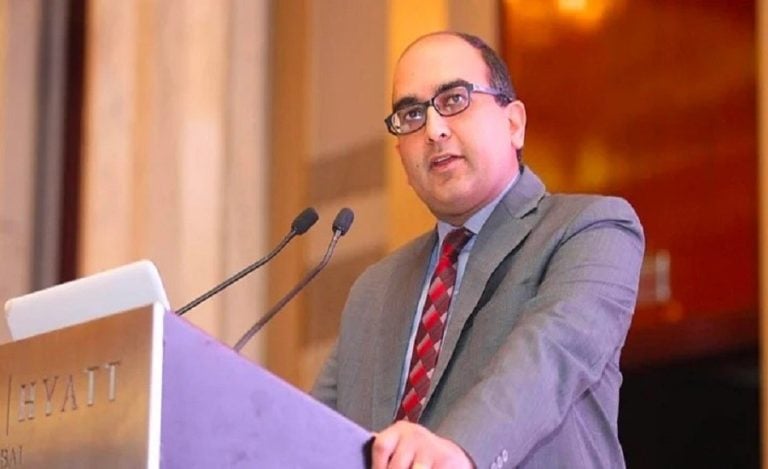
(Ravi Kant is a 1985-batch IAS officer (West Bengal cadre) turned environmental expert who pivoted to the corporate sector to pioneer large-scale sustainable waste management projects in India.)