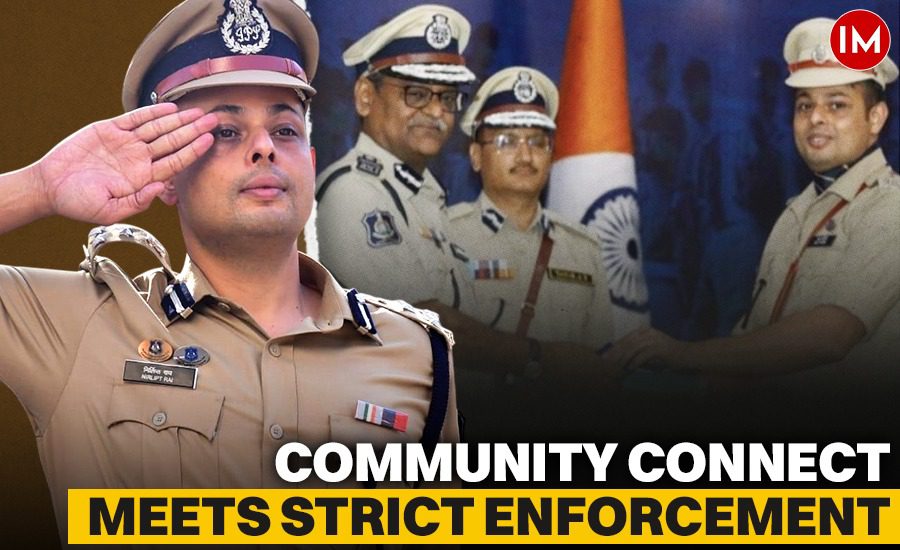
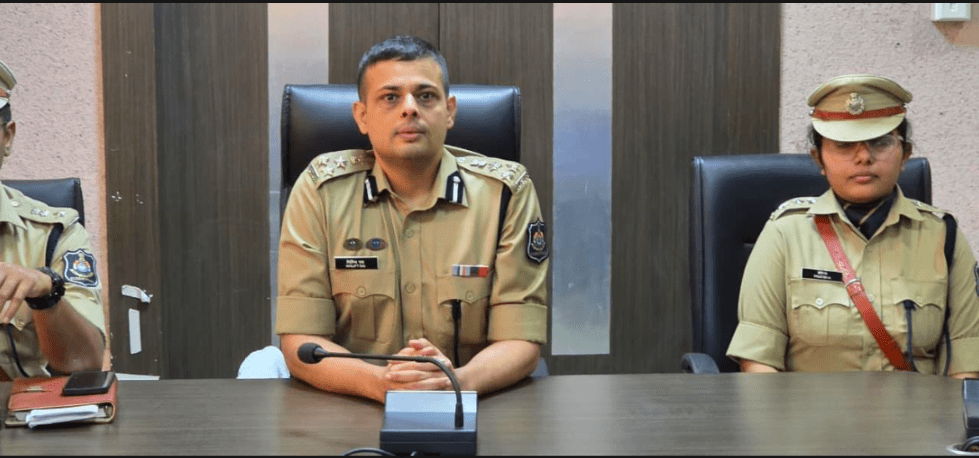
The room wasn’t filled with files or formalities. It was filled with people—ordinary citizens, many anxious, some hesitant, all carrying stories of distress. At the centre of it sat Nirlipt Rai, listening patiently.
In an era where policing is often seen as distant and rigid, Rai chose a different starting point—he opened his doors.
A 2010-batch IPS officer of the Gujarat cadre, currently serving as Deputy Inspector General of Police, Rajkot Range, Rai is often described as a “tough cop.” But spend a few minutes observing his approach, and a different picture emerges—one where firmness and empathy go hand in hand.
LISTENING BEFORE ACTING
Soon after taking charge, Rai turned his attention to a growing concern—illegal money lending. Instead of relying only on reports, he wanted to understand the issue directly from those affected.
He announced open hours and invited citizens, especially victims, to meet him and share their grievances.
Also Read- Mission IAS Redefining Access, Aspiration, and Achievement
“For my own understanding and to help the public at large, I made myself available—especially to victims of illegal money lending—so they could come and convey their grievances,” he told Indian Masterminds.
The response was immediate. Over just two days, several victims came forward. Their testimonies revealed not just financial exploitation, but also fear and helplessness.
Seven FIRs were registered based on these interactions. More importantly, the police initiated action to recover properties that had been forcibly taken as collateral.
For many families, this meant reclaiming not just assets, but dignity.
TOUGHNESS WITH A PURPOSE
Rai’s reputation as a strict officer is well known. But he is clear about where that toughness is directed.
“Law enforcement is for the accused, not for victims. The police have the responsibility to listen to victims, understand them, and solve their grievances,” he said.
For him, toughness is not about being harsh with people—it is about being uncompromising with crime.
“Law is supposed to be tough with crime and criminals. So I am tough with them,” he added.
This distinction defines his style of policing. While criminals face strict action, victims find a system that is accessible and responsive.
CRACKING DOWN ON ABSCONDERS
Beyond addressing immediate grievances, Rai has also focused on strengthening enforcement mechanisms.
One of his key initiatives has been identifying absconding accused across the Rajkot Range. His team prepared a list of 29 such individuals and began targeted efforts to track them down.
To make this process more effective, Rai activated the government’s reward policy for informants.
By offering incentives, the police encouraged citizens to share credible information, turning the public into active partners in law enforcement.
This approach not only accelerates arrests but also builds trust between the police and the community.
A LEARNING PHASE WITH A LONG-TERM VISION
Despite his proactive measures, Rai believes in understanding the ground before implementing large-scale changes.
Having recently assumed charge, he is currently focused on studying the region—its population, geography, and crime patterns.
He acknowledges that effective policing requires context.
Only after gaining a deeper understanding does he plan to roll out long-term and medium-term strategies.
These will not only address crime but also strengthen public engagement and improve the overall functioning of the police force.
TECHNOLOGY IN EVERYDAY POLICING
Rai’s approach also reflects a strong reliance on technology.
From investigation tools to technical analysis, his team actively uses modern software to strengthen cases.
On the role of Artificial Intelligence, Rai offers a grounded perspective.
He sees AI not as a separate tool but as something already embedded in daily work.
From image recognition to data analysis, AI-driven processes are quietly shaping modern policing.
For Rai, the focus is not on adopting technology for the sake of it, but on using it effectively to improve outcomes.
THE “SUPERCOP” MYTH
Despite his growing reputation, Rai remains unfazed by labels. He does not see himself as extraordinary.
In fact, he avoids the term “supercop” altogether. For him, policing is not about individual heroism but collective effort. He credits his team for every success and emphasizes that everyone—from senior officers to field staff—is working towards the same goal.
There is a certain humility in his perspective. He insists that what he does is simply routine policing—done properly. No shortcuts. No spectacle. Just consistent work.
POLICING WITH PURPOSE
What stands out in Rai’s approach is its balance.
He listens, but he also acts.
He plans, but he also adapts.
He uses technology, but he relies on human connection.
In a system often criticized for being reactive, his method feels refreshingly proactive. By opening his doors, focusing on victims, and strengthening enforcement, he has created a model that is both firm and fair. For the people of Rajkot, this means more than just law enforcement.
It means having a system they can approach, trust, and rely on. And for Rai, it is simply about doing his job. Quietly. Consistently. And without labels.
Also Read – From Constable to UP PCS Success: How UP Police Officer Ashish Shukla Cracked the Exam After Night Duties