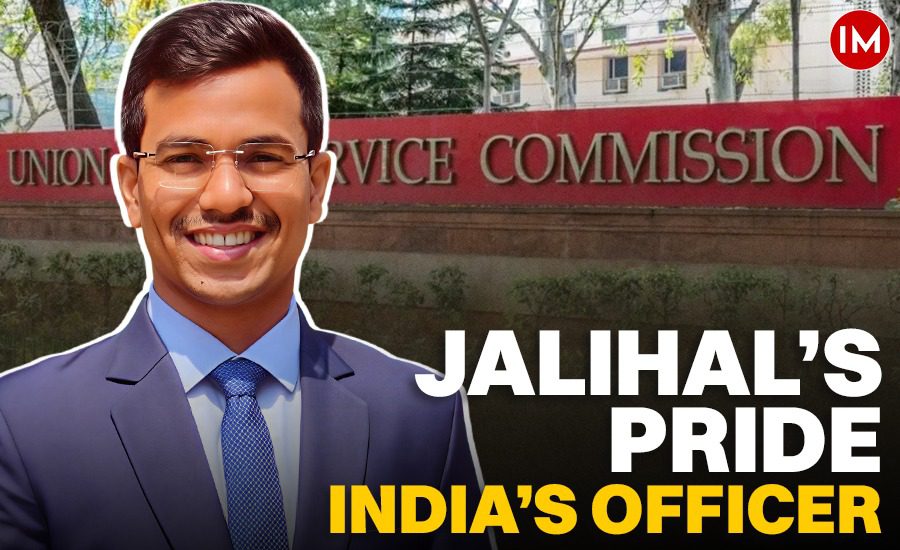
When the Union Public Service Commission announced the final results of the Civil Services Examination 2025, celebrations erupted in Jalihal, a drought-hit village in the southern part of Mangalvedhe taluka in Solapur district, Maharashtra.
For the first time in the village’s history, one of its sons had cracked India’s toughest examination.
Manoj Ramchandra Patil had secured All India Rank 493.
In a village known more for drought than opportunity, Manoj’s success became more than a personal achievement; it became a moment of collective pride.
People gathered outside his home. Congratulations poured in from villagers and local leaders. For Jalihal, this was history!
In an exclusive conversation with Indian Masterminds, he shared details about his journey and success.
A VILLAGE THAT MIGRATES FOR SURVIVAL
Jalihal is not an ordinary village. It is a place where drought shapes daily life.
Every year, during the sugarcane harvesting season, many families migrate to other areas in search of work because local employment opportunities are scarce.
The village’s farmers struggle because they do not have sustainable water sources. Many landowners, unable to cultivate regularly, have leased their land to solar companies.
The village has educational facilities only till Class 4. After that, children must leave to continue their education elsewhere. In such circumstances, many young people from Jalihal have started seeing competitive examinations as a path to change their future.
A BRIGHT CHILD FROM HUMBLE BEGINNINGS
Manoj comes from a simple family. His father is a retired teacher, and his mother is a homemaker. He began his education at Zilla Parishad Primary School, Solankarwadi, where he studied till Class 4.
He then completed his secondary education at Laxmidevi Vidya Mandir, Radde. Later, he pursued higher secondary and college education at Sangameshwar College, Solapur, choosing the science stream.
For engineering, he moved to Government College of Engineering, Sambhajinagar and completed a degree in Civil Engineering.
Even as a child, Manoj stood out.
He made it to the district merit list in the Class 4 and Class 7 scholarship examinations. He also ranked among the top at the state level and stood first in the taluka in Class 10.
A FATHER’S DREAM, A SON’S MISSION
Manoj often says his father planted the first seed of the UPSC dream.
“My father always told me that if I keep getting top ranks, I should go for UPSC,” he told Indian Masterminds. “Thanks to the support given by my father, I was able to pass that exam,” Manoj says. “Because of him, I became an officer.”
THE TURNING POINT DURING ENGINEERING
Though Manoj was academically gifted, the dream of civil services became real during his engineering days.
While studying in his third year, he attended a lecture by IAS officer Pravin Gedam, who was posted in Sambhajinagar.
“When I saw him and heard his speech, the plan within me got concretised,” Manoj says.
At the same time, discussions with friends about careers pushed him further.
“Five or six of us were discussing what to do after engineering, and we all decided to go for civil services.”
After a short stint in a real estate company as a civil engineer, he left the job and began preparing full-time.
SIX ATTEMPTS, FIVE MAINS, THREE INTERVIEWS
Manoj’s UPSC journey was long. He appeared for his first attempt in 2017. Then he took a break before returning seriously. Over the years, he wrote five mains and appeared in three UPSC interviews.
He also appeared for two Indian Forest Service mains and one Indian Forest Service interview.
“This was my fifth mains and my third UPSC interview,” he says. “This year, I secured 493 rank.”
He cleared the exam in his sixth attempt. He spent the last four years preparing seriously for the examination.
PUNE, DELHI AND 8–10 HOURS OF DAILY STUDY
Manoj prepared in Pune and Delhi. In Delhi, he joined the Hamdard Institute for optional subject coaching. For the rest, he relied largely on self-study. He studied 8 to 10 hours every day.
Coming from a modest background, coaching expenses were a challenge. He joined classes only for Political Science and International Relations (PSIR) and prepared General Studies on his own.
The shift from Maharashtra to Delhi was not easy.
“The first challenge was the food and the climate of Delhi,” he told Indian Masterminds.
But as an athlete who exercised regularly, he managed to adapt.
THE STRATEGY THAT CHANGED EVERYTHING
When Manoj wrote his first mains in 2021, he scored only 640 marks. That became a wake-up call.
“I realised my mains preparation was weak. Mains is a game of writing.”
He began focusing heavily on:
- Answer writing
- Brainstorming
- Conceptual clarity
- Group discussions
- Learning from seniors and rank holders
Living in study circles in Delhi exposed him to selected candidates who guided him on how to frame better answers and understand UPSC’s question demands.
That strategy steadily improved his scores. This year, his interview marks improved too.
AN INTERVIEW BUILT AROUND HIS WORK PROFILE
At the time of the interview, Manoj had been working for the last four months as an Assistant Advisor/Associate Consultant in the Skill Development Department of the Ministry in Maharashtra.
His interview board was chaired by Lieutenant General Raj Shukla.
Most questions revolved around:
- Skill development in India
- Why only 5% Indians receive formal skilling
- Civil engineering and roads
- Potholes and road durability
- Water conservation projects
- Maharashtra cooperative societies
- Solapur’s food, tourism and marketing
The interview lasted 32–35 minutes. It proved to be a decisive step toward the final list.
SMART STUDY OVER EMOTIONAL STUDY
Manoj’s advice to aspirants is clear and practical.
“Smart study is required in UPSC.”
He says aspirants should avoid emotional preparation and instead think strategically.
“We should not prepare emotionally. We should prepare practically.”
He warns against information overload.
“There is an infodemic. We must know what to read and what not to read.”
He also speaks openly about mental health.
“Multiple failures can lead to mental breakdown. Aspirants should not feel they are lacking something. This is a competition.”
Manoj’s journey proves that talent can rise from places with no water, no coaching institutes, and no easy opportunities.
From a drought-hit village where families migrate for sugarcane cutting…
To Delhi’s study circles…
To India’s most prestigious exam…
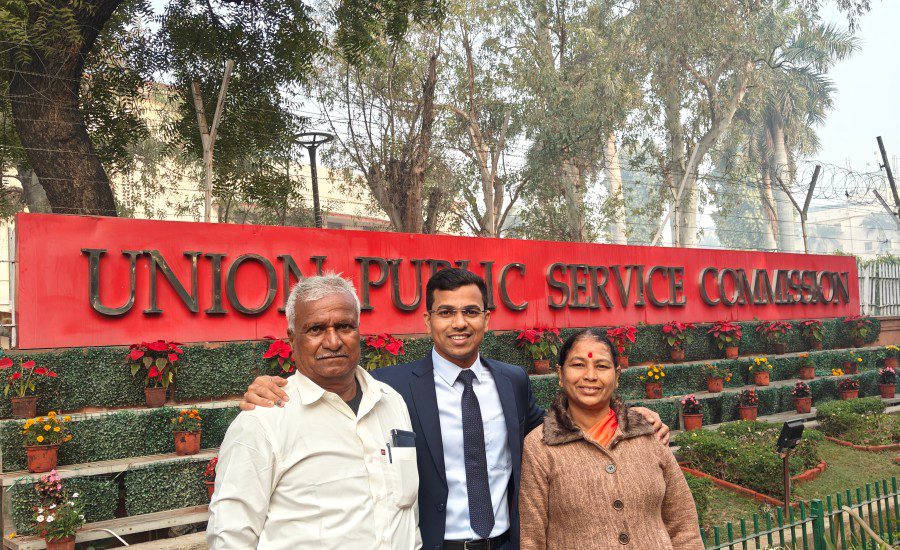
Manoj Ramchandra Patil has become the first UPSC officer from Jalihal and the first chapter of a new story for his village.