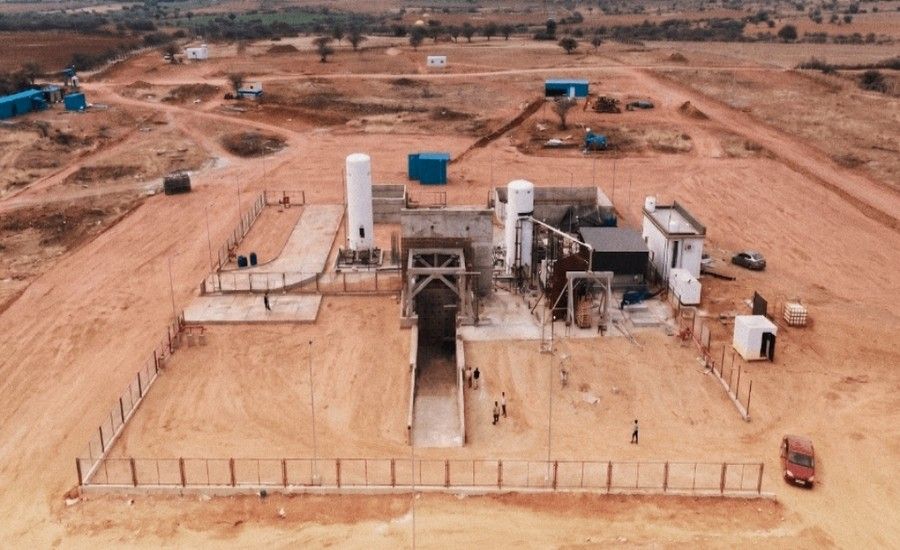
New Delhi: Astrobase Space Technologies has taken a major step forward with the launch of India’s first private FFSC engine test facility. This development is a key milestone for India’s growing private space sector. The new facility will help test high-thrust methane-based rocket engines designed for reusable launch vehicles.
With global demand rising for low-cost and reusable space missions, this initiative strengthens India’s position in the commercial space race.
Details of Astrobase FFSC engine Test Facility
Astrobase Space Technologies has established a dedicated test facility to support the development of advanced rocket engines.
- The facility is designed to handle high-thrust cryogenic engines.
- It focuses on LOX–LNG (liquid oxygen–methane) propulsion systems.
- These engines are cleaner, more efficient, and suitable for reuse.
This marks a significant shift, as such high-end testing infrastructure was earlier limited mostly to government agencies like ISRO.
Key Focus Areas of Astrobase FFSC engine Test Facility
At the core of this development is Astrobase’s Full-Flow Staged Combustion (FFSC) engine, one of the most advanced propulsion systems in the world.
- The engine produces around 800 kN thrust.
- It uses methane and liquid oxygen, improving efficiency and reducing cost.
- FFSC cycle improves reliability, performance, and engine life.
This technology is considered the “gold standard” in rocket propulsion and is used by only a few global players.
Built for Reusable Launch Vehicles
The new facility is not just for testing engines—it supports a bigger goal. Astrobase is developing a reusable medium-lift launch vehicle:
- Powered by multiple FFSC engines (cluster of 7 engines)
- Designed for low-cost satellite launches
- Focused on rapid turnaround and reusability
Reusable rockets are key to reducing launch costs and increasing mission frequency worldwide.
Key Milestones Achieved So Far
Astrobase has already reached several important milestones:
- Successful sub-scale hot-fire test in September 2025
- Validation of combustion stability and engine systems
- Progress in turbopump testing, a critical engine component
Full-scale engine tests are expected to accelerate further development in 2026.
Role of 3D Printing in Engine Development
A unique feature of Astrobase’s approach is the use of advanced 3D printing technology.
- Core engine parts are 3D printed for faster production
- Helps reduce manufacturing time and cost
- Enables rapid design improvements
This approach supports faster scaling and innovation in rocket engine production.
What is the Importance of Astrobase FFSC engine Test Facility
This development has strong national and global implications:
- Reduces reliance on foreign launch services
- Encourages private sector participation in space
- Supports India’s goal of becoming a global space hub
It also aligns with India’s policy push under IN-SPACe to promote private innovation.
Future Roadmap and Launch Plans
Astrobase has outlined a clear long-term roadmap:
- Full-scale engine tests in 2026
- Integrated stage testing in coming years
- First orbital launch targeted by 2029
The company aims to compete globally in satellite launch services.