Twenty-five years ago, I rolled out a mat for the first time, looking for nothing more than fitness. What I found instead was a quieter kind of strength — one that has stayed with me long after the uniform was folded away. That, more than anything else, is what Yoga teaches: it outlasts every other discipline you pick up in life.
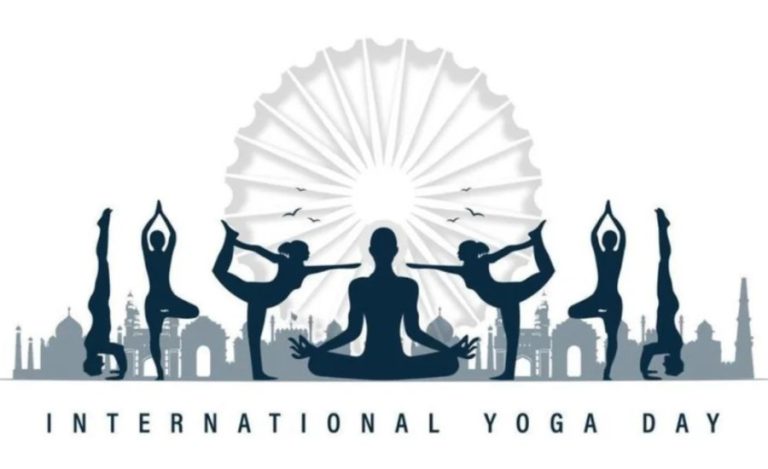
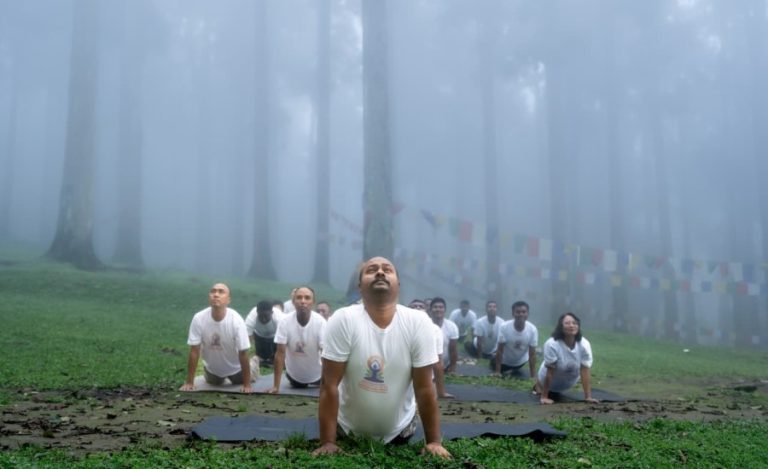
Tomorrow, June 21, the world marks the 12th International Day of Yoga. The lead event moves to Kolkata this year. The Ministry of Ayush has set the theme as “Yoga for Healthy Ageing” — a deliberate pivot, given that the global population above 60 is set to double by 2050. New Delhi has also relaunched the Yoga Sangam Portal and a new Yoga Park Portal, alongside a “Yoga 365” push to take the practice beyond one symbolic morning. A Guinness World Record livestream earlier this month, with over four lakh viewers, was the warm-up act. The real test, as always, is what happens on June 22, when the mats are rolled back up and ordinary life resumes.
Also read: Sovereignty First: Why India’s Defence Budget Signals a Strategic Shift in a Dangerous World
The Geopolitics of a Breath
Soft power rarely announces itself with such clarity. Yoga is one of the few Indian exports that arrived in 195 countries without a single trade negotiation. When the United Nations adopted Resolution 69/131 in 2014, backed by a record 175 member states, it was not merely a calendar entry. It was India placing a civilisational asset on the world’s table — unforced, unmatched, and entirely its own.
In a world where influence is so often measured in tanks, tariffs and treaties, Yoga remains a rare instance of a nation exporting calm instead of coercion. That, to my mind, is strategic soft power in its purest form — built over decades, not negotiated overnight.
What makes this remarkable is how little India has had to push. Yoga studios in New York, wellness retreats in Bali, and corporate mindfulness programmes from Tokyo to Toronto have all, in their own way, borrowed from a six-thousand-year-old Indian tradition without India spending a rupee on advertising. Few civilisational exports travel that far on goodwill alone.
A Personal Note on Toxins and Triggers
I still remember the discipline of reading a situation before reacting to it — a habit picked up in uniform years ago. Yoga, I have found, teaches the same instinct turned inward: read your own mind before you let it run away with you.
The ancient texts speak of two toxins that corrode a human system — one bodily, one mental. The mental toxin breeds three unsettled states: the restless mind (Kshipta), the scattered mind (Vikshipta), and the clouded mind (Mudha). Left unchecked, these states erode Sadhana — disciplined effort — and prevent Ekagratha, that single-pointed focus we all chase, whether on a sports field or simply through a demanding week. Pranayama is the quiet counter-move — using breath to calm the nervous system and clear the static.
I have leaned on this more times than I can count — not in any dramatic crisis, but in the ordinary friction of daily life, where a few conscious breaths have done more for me than any amount of willpower.
Healthy Ageing: This Year’s Real Story
This year’s theme deserves attention beyond ceremony. India’s Ministry of Ayush has rolled out ten Yoga Protocols targeted at non-communicable diseases and specific age groups, including a dedicated geriatric protocol focused on mobility, balance and cognitive retention. This is preventive healthcare, not folklore.
India is ageing faster than most policy conversations acknowledge. Yoga is not about defying the calendar — it is about negotiating better terms with it. Sustained mobility, sharper cognition, and the simple dignity of ageing well rather than ageing in decline. For a country with a rapidly greying population, this year’s theme is less a slogan and more a public health signal worth taking seriously.
Lessons From the Sporting Field
Sport has taught me, perhaps more than anything else, that the margin between winning and losing is rarely physical. It is the calm before the shot, the breath before the swing, the stillness before the decisive move.
Yoga’s asanas train the body across all three planes of movement — sagittal, coronal and transverse — building a kind of all-round resilience that conventional single-plane workouts simply miss. Most of us move through life the same way we move through a gym routine — back and forth, rarely sideways, rarely with rotation. Yoga corrects that imbalance, on the field and off it.
India’s Gift, the World’s Anchor
As nations race toward artificial intelligence, automation and accelerated everything, Yoga remains a deeply human counterweight. Call it India’s own AI — an Anchor and Imperative for sustainable living in an unsustainable pace of life.
This June 21, the invitation is a simple one. Roll out a mat — at home, in a park, on a terrace, anywhere the morning light reaches. Breathe with intent. In an age that is forever racing forward, Yoga remains India’s enduring gift to the world — and perhaps humanity’s surest anchor against the chaos of our own making.
(Colonel M V Shashidhar (Retd) is a Defence & Strategic Affairs Expert, Certified Independent Director (IICA), ESG Advocate and Governance Thought Leader.)
Also read: When the state becomes the executioner: Encounter killings and Bulldozer Justice are constitutional crisis India cannot afford to ignore