Climate change rarely announces itself through a single disaster. More often, it appears in subtle but dangerous signals—erratic rainfall, rising temperatures, declining groundwater pockets, and shrinking water security. While many administrations respond only after a crisis unfolds, Gadchiroli district in Maharashtra chose a different path.
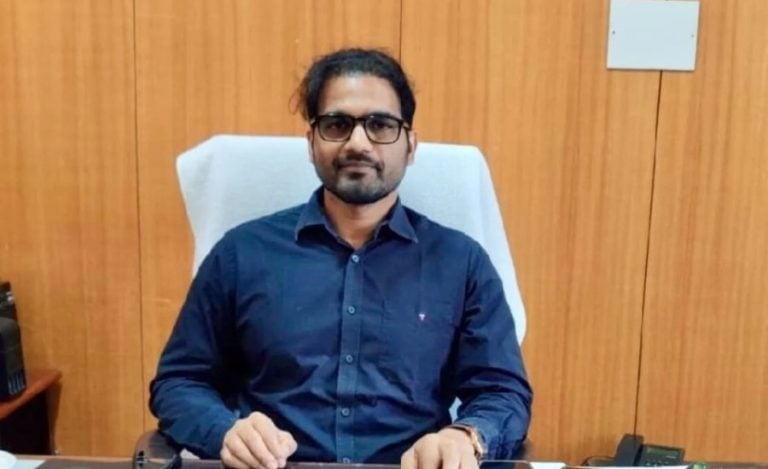
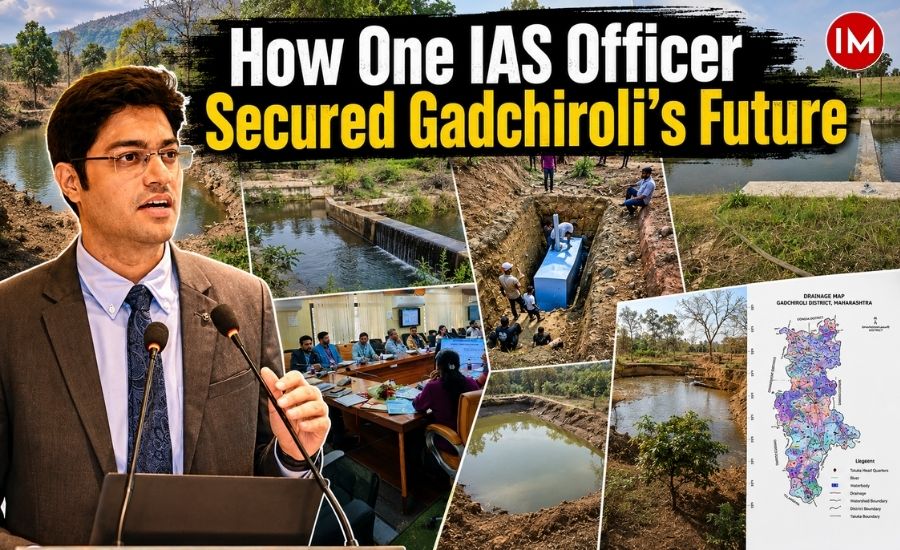
Under the leadership of Avishyant Panda, IAS (2017 batch, Maharashtra cadre), Collector and District Magistrate of Gadchiroli, the district administration initiated one of Maharashtra’s most comprehensive climate-resilient water conservation campaigns.
Instead of waiting for drought, the administration relied on scientific data, watershed mapping, groundwater analysis, GIS technology, and community participation to secure the district’s water future.
The result has been a district-wide movement involving over 5,876 completed water conservation works, nearly 18,750 TCM of additional water storage capacity, extensive afforestation, and village-level ownership of natural resources.
As climate uncertainty becomes the new normal, Gadchiroli’s model demonstrates how proactive governance can prevent a crisis before it begins.
Reading the Warning Signs Before Disaster
Traditionally known as a high-rainfall district, Gadchiroli appeared water-secure on paper. But detailed scientific assessments revealed a more complex reality.
The administration observed increasingly erratic rainfall patterns, faster surface runoff due to inadequate storage structures, rising summer temperatures, and significant variations in groundwater availability.
Monitoring of 112 observation wells showed seasonal fluctuations in groundwater levels. Even more concerning was the watershed-level assessment of 83 watersheds, which found that six watersheds were extracting more than 50 percent of their annual groundwater recharge capacity, creating long-term sustainability concerns.
The possibility of an El Niño year further heightened the risk.
“Although Gadchiroli is traditionally a high-rainfall district, we observed increasingly erratic rainfall, rising summer temperatures, and groundwater stress in certain pockets. These early warning signals convinced us that we needed to act proactively rather than wait for an actual drought,” Avishyant Panda, IAS, told Indian Masterminds.
This shift—from reactive relief to preventive planning—became the foundation of Gadchiroli’s water security strategy.
A Scientific Blueprint for Water Security
Recognising that water management involved multiple departments working in isolation, the administration focused first on convergence.
District-level and sub-divisional committees were formed to integrate planning across departments. Every watershed was scientifically analysed to understand water availability, groundwater recharge potential, extraction patterns, and future vulnerabilities.
Water budgeting became central to planning.
“Every watershed tells a different story. Scientific analysis helped us identify vulnerable areas and prioritise interventions where they were needed the most,” explains Mr Panda.
Based on these assessments, drinking water requirements were prioritised first, followed by irrigation planning.
Rather than implementing scattered projects, the district adopted a saturation approach—ensuring that each watershed received interventions based on its specific hydrological characteristics.
Nearly 6,000 Water Conservation Works in Two Years
The scale of execution has been remarkable.
Over the last two years, Gadchiroli has completed 5,876 water conservation works, while another 692 projects are currently underway.
These interventions have already generated approximately 18,750 TCM of water storage capacity, with ongoing works expected to add another 2,060 TCM.
The completed works include:
- 1,329 Bodi deepening projects
- 1,064 farm ponds
- 387 recharge shafts
- 323 gabion structures
- 207 Kolhapuri Bandharas
- 785 forest water conservation works
- 766 plantation works
Alongside this, the district removed 17.42 lakh cubic metres of silt through large-scale desiltation under the Nala Deepening and Galmukt Dharan initiatives, significantly improving storage capacity and groundwater recharge.
“To maintain transparency, every completed structure has been geo-tagged before fund release, while third-party audits ensure accountability,” says the officer.
Jalyukt Shivar 2.0: Building Water-Neutral Villages
One of the district’s biggest drivers of change has been Jalyukt Shivar Abhiyan 2.0.
Implemented across 184 villages, the programme begins with detailed water budgeting and watershed analysis before any physical work starts.
Each village undergoes a comprehensive assessment of annual water demand, available resources, and groundwater status.
So far, 4,405 structures have been completed, while 496 more are under construction, creating around 9,340 TCM of storage capacity.
Importantly, the programme aims to make villages “water neutral”—where annual water availability meets or exceeds local demand.
More than 185 recharge shafts have also been created under the campaign.
Community Ownership, Not Government Dependency
One of the strongest aspects of Gadchiroli’s model has been community participation.
Village Watershed Development Committees, headed by Gram Panchayat Sarpanches, lead planning, implementation, and monitoring under PMKSY 2.0.
Farmers, Gram Sabhas, and local institutions jointly decide village priorities.
Communities also contribute 5 percent of project costs to a watershed development fund, ensuring long-term maintenance of assets.
The programme further strengthens livelihoods through Farmer Producer Organisations (FPOs) and village-level institutions.
Technology Driving Better Governance
Technology has become the backbone of Gadchiroli’s planning process.
With support from the Maharashtra Remote Sensing Applications Centre (MRSAC), nearly every water conservation asset has been geo-tagged, mapped, and validated.
GIS-based watershed mapping enabled the administration to identify groundwater-stressed regions, compare recharge against extraction, and prioritise interventions scientifically rather than politically.
The district now possesses a comprehensive database of water assets that supports evidence-based planning at both watershed and micro-watershed levels.
Climate Resilience Beyond Water
Recognising that climate resilience extends beyond water conservation, Gadchiroli also launched one of Maharashtra’s largest plantation initiatives.
Under the One Crore Plantation Drive, the district planted 40 lakh saplings in 2025 through convergence between the forest department, agriculture department, CSR partners, and local communities.
Another 30 lakh plantations are planned during the 2026 monsoon.
A district-wide land bank has also been prepared to ensure long-term expansion of green cover.
These interventions complement watershed development by improving soil moisture, reducing erosion, and strengthening ecological resilience.
Khandala: A Village That Rewrote Its Water Story
Few examples illustrate the impact better than Khandala Village in Aheri Block.
Despite receiving 1,200 to 1,400 mm of annual rainfall, the village previously suffered from severe runoff, groundwater decline, soil erosion, crop losses, and summer drinking water shortages.
Through participatory planning, multiple interventions—including farm ponds, gabion structures, drainage line treatment, nala works, Bodi rejuvenation, and horticulture plantations—were implemented.
Among the most transformative assets was a 25 × 25 × 3 metre farm pond built on farmer Shri Sada Rama Pendam’s land.
Today, the pond stores nearly 15 lakh litres of rainwater annually.
The stored water enables irrigation during dry spells, supports fish farming, and allows cultivation of chickpeas and vegetables during the Rabi season.
As a result, the farmer’s annual income increased by approximately ₹60,000 to ₹85,000, demonstrating how water security directly translates into livelihood security.
Looking Ahead
For Collector Avishyant Panda, the work is far from complete.
The district now plans to saturate all 83 watersheds through scientific interventions while expanding recharge structures, promoting compulsory rainwater harvesting, reducing evaporation losses through emerging technologies, increasing forest-based conservation works, and strengthening village-level water governance.
Continuous contour trenches across Gadchiroli’s vast forest landscape, community recharge systems, and evidence-based planning will define the next phase of the mission.
“Our vision is to make every watershed resilient, every village water secure, and every intervention scientifically informed. Climate change demands long-term planning, not short-term responses,” says Mr Panda.
Gadchiroli’s experience offers an important lesson for districts across India. Climate resilience is not built after disaster strikes—it is built through foresight, data, community participation, and sustained administrative leadership.
By combining scientific planning with grassroots ownership, Avishyant Panda and his team have demonstrated that good governance is not merely about responding to crises. It is about preventing them.